


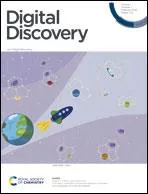
Orchestrating nimble experiments across interconnected labs
Literature Information
Publication Date
2023-10-03
DOI
10.1039/D3DD00166K
Impact Factor
0
Authors
Phillip Donnelly, Helge S. Stein
View Original
Abstract
Advancements in artificial intelligence (AI) for science are continually expanding the value proposition for automation in materials and chemistry experiments. The advent of hierarchical decision-making also motivates automation of not only the individual measurements but also the coordination among multiple research workflows. In a typical lab or network of labs, workflows need to independently start and stop operation while also sharing resources such as centralized or multi-functional equipment. A new paradigm in instrument control is needed to realize the combination of independence with respect to periods of operation and interdependence with respect to shared resources. We present Hierarchical Experimental Laboratory Automation and Orchestration with asynchronous programming (HELAO-async), which is implemented via the Python asyncio package by abstracting each resource manager and experiment orchestrator as a FastAPI server. This framework enables coordinated workflows of adaptive experiments, which will elevate Materials Acceleration Platforms (MAPs) from islands of accelerated discovery to the AI emulation of team science.
Recommended Journals

Bioorganic & Medicinal Chemistry Letters

Colloid Journal

Topics in Catalysis

Acta Metallurgica Sinica-English Letters

Atomization and Sprays

Journal of Chemical Sciences

Critical Reviews in Solid State and Materials Sciences

Chinese Journal of Chemistry

Heteroatom Chemistry

Journal of Asian Natural Products Research
Related Literature
Metal complexes of selenophosphinates from reactions with (R2PSe)2Se: [M(R2PSe2)n] (M = ZnII, CdII, PbII, InIII, GaIII, CuI, BiIII, NiII; R = iPr, Ph) and [MoV2O2Se2(Se2PiPr2)2]
Chinh Q. Nguyen, Adekunle Adeogun, Mohammad Afzaal, Mohammad A. Malik, Paul O'Brien
2006-04-21
Communication
DOI: 10.1039/B603198F
Low pressure Pd-catalyzed carbonylation in an ionic liquid using a multiphase microflow system
Md. Taifur Rahman, Takahide Fukuyama, Naoya Kamata, Masaaki Sato, Ilhyong Ryu
2006-04-28
Communication
DOI: 10.1039/B600970K
ortho-Hydroxylation of benzoic acids with hydrogen peroxide at a non-heme iron center
Sonia Taktak, Margaret Flook, Bruce M. Foxman, Lawrence Que, Jr., Elena V. Rybak-Akimova
2005-09-23
Communication
DOI: 10.1039/B508004E
Bond length and bond multiplicity: σ-bond prevents short π-bonds
R. Bruce King, Henry F. Schaefer III
2006-04-18
Communication
DOI: 10.1039/B602116F
Supramolecular cruciforms
Warren W. Gerhardt, Anthony J. Zucchero, James N. Wilson, Clinton R. South, Uwe H. F. Bunz, Marcus Weck
2006-03-21
Communication
DOI: 10.1039/B602087A
A novel mediatorless microbial fuel cell based on direct biocatalysis of Escherichia coli
Tian Zhang, Changzheng Cui, Shengli Chen, Xinping Ai, Hanxi Yang, Ping Shen, Zhenrong Peng
2006-04-25
Communication
DOI: 10.1039/B600876C
PNA forms an i-motif
Yamuna Krishnan-Ghosh, Elaine Stephens, Shankar Balasubramanian
2005-09-23
Communication
DOI: 10.1039/B510405J
You might also like
Compound Q&A
What are the main uses of 1H-Indazole-6-carbonitrile (CAS: 141290-59-7)?
1H-Indazole-6-carbonitrile finds applications in pharmaceuticals, where it serve...
141290-59-71H-Indazole-6-carbon...
Compound Q&A
How should waste containing Dioctyl (2E)-2-butenedioate (CAS: 2997-85-5) be handled?
Waste containing Dioctyl (2E)-2-butenedioate (CAS: 2997-85-5) should be collecte...
2997-85-5Dioctyl (2E)-2-buten...
Compound Q&A
What industries use Sodium [(1,2-benzoxazol-3-ylmethyl)sulfonyl]azanide (CAS: 68291-98-5)?
Sodium [(1,2-benzoxazol-3-ylmethyl)sulfonyl]azanide is primarily used in pharmac...
68291-98-5Sodium [(1,2-benzoxa...
Compound Q&A
Are there alternatives to Dimethyl 4-(4,4,5,5-tetramethyl-1,3,2-dioxaborolan-2-yl)-2,6-pyridinedicarboxylate (CAS: 741709-66-0) in synthesis?
Dimethyl 4-(4,4,5,5-tetramethyl-1,3,2-dioxaborolan-2-yl)-2,6-pyridinedicarboxyla...
741709-66-0Dimethyl 4-(4,4,5,5-...
Compound Q&A
How should waste containing 2-Fluoro-6-hydrazinopyridine (CAS: 80714-39-2) be handled?
Waste containing 2-Fluoro-6-hydrazinopyridine (CAS: 80714-39-2) should be manage...
80714-39-22-Fluoro-6-hydrazino...
Compound Q&A
What is 6-Formyl-2-pyridinecarboxylic acid (CAS: 499214-11-8)?
6-Formyl-2-pyridinecarboxylic acid is an organic compound with the molecular for...
499214-11-86-Formyl-2-pyridinec...
Compound Q&A
What is the market or research trend for 3-(3,4-dimethoxyphenyl)-2,5-dimethyl-N-(2-morpholin-4-ylethyl)pyrazolo[1,5-a]pyrimidin-7-amine (CAS: 900874-91-1)?
Research trends for this compound indicate a focus on its potential applications...
900874-91-13-(3,4-dimethoxyphen...
Compound Q&A
How is 9H-Tribenzo[b,d,f]azepine (CAS: 29875-73-8) typically synthesized?
9H-Tribenzo[b,d,f]azepine is typically synthesized via a multi-step process invo...
29875-73-89H-Tribenzo[b,d,f]az...
Compound Q&A
How is 1-Cyclopropyl-7-ethoxy-6-fluoro-8-methoxy-4-oxo-1,4-dihydro-3-quinolinecarboxylic acid (CAS: 1797982-51-4) typically synthesized?
1-Cyclopropyl-7-ethoxy-6-fluoro-8-methoxy-4-oxo-1,4-dihydro-3-quinolinecarboxyli...
1797982-51-41-Cyclopropyl-7-etho...
Compound Q&A
How should waste containing Methyl 3-oxo-1,2,3,4-tetrahydro-6-quinoxalinecarboxylate (CAS: 671820-52-3) be handled?
Waste containing Methyl 3-oxo-1,2,3,4-tetrahydro-6-quinoxalinecarboxylate (CAS: ...
671820-52-3Methyl 3-oxo-1,2,3,4...
Source Journal
Recommended Compounds


Recommended Suppliers





Disclaimer
This page provides academic journal information for reference and research purposes only. We are not affiliated with any journal publishers and do not handle publication submissions. For publication-related inquiries, please contact the respective journal publishers directly.
If you notice any inaccuracies in the information displayed, please contact us at support@chemtradehub.com. We will promptly review and address your concerns.