













Low-concentration methane removal: what can we learn from high-concentration methane conversion?
Literature Information
Publication Date
2023-07-20
DOI
10.1039/D3CY00810J
Impact Factor
6.119
Authors
Yun Wang, Haiyuan Zhang, Jie Zhang, Yijie Fu, Yuyin Wang, Yang Bai, Xin Feng, Jiahua Zhu, Xiaohua Lu, Liwen Mu, Wei Li
View Original
Abstract
Methane (CH4) is the world's second most potent greenhouse gas after carbon dioxide (CO2). Removal of low concentrations of CH4 from the environment by an advanced oxidation process (i.e., total oxidation to CO2) powered by solar energy is attractive. However, studies of solar-driven methane oxidation have focused on the selective conversion of CH4 to high-value chemicals, where methane usually occurs in high concentrations. In this paper, the related work of selective conversion of high-concentration CH4 is introduced first, and the mechanism of selective conversion of CH4 is discussed. The “bad” reaction (i.e., total oxidation to CO2) reported in selective conversion of high concentration CH4 is pointed out, hoping to guide the related work of removal of low concentration CH4.
Recommended Journals
Related Literature
Aqueous hydrogenation of carbon dioxide catalysed by water-soluble ruthenium aqua complexes under acidic conditions
Hideki Hayashi, Seiji Ogo, Shunichi Fukuzumi
2004-10-14
Communication
DOI: 10.1039/B411633J
Thermally stable macroporous zirconium phosphates with supermicroporous walls: a self-formation phenomenon of hierarchy
Tie-Zhen Ren, Zhong-Yong Yuan, Bao-Lian Su
2004-10-08
Communication
DOI: 10.1039/B410763B
Unprecedented Barbier-type reactions catalysed by titanocene(iii)
Antonio Rosales, Juan L. Oller-López, José Justicia, Andreas Gansäuer, J. Enrique Oltra, Juan M. Cuerva
2004-10-05
Communication
DOI: 10.1039/B411173G
A mild and efficient procedure for α-bromination of ketones using N-bromosuccinimide catalysed by ammonium acetate
Kiyoshi Tanemura, Tsuneo Suzuki, Yoko Nishida, Koko Satsumabayashi, Takaaki Horaguchi
2004-01-28
Communication
DOI: 10.1039/B315340A
Ordered mesoporous titanosilicates with catalytically stable and active four-coordinated titanium sites
Xiaoyu Yang, Yu Han, Kaifeng Lin, Ge Tian, Yefei Feng, Xiangju Meng, Yan Di, Yuncheng Du, Yonglai Zhang, Feng-Shou Xiao
2004-10-04
Communication
DOI: 10.1039/B410305J
Polyhedral monocarbaborane chemistry. Carboxylic acid derivatives of the [closo-2-CB9H10]− anion
Andreas Franken, Colin A. Kilner, John D. Kennedy
2004-01-08
Communication
DOI: 10.1039/B311853N
Synthesis and structural characterization of the first unsymmetrical diarylpalladium complex trans-Pd(C6F5)(2,4,6-C6F3H2)(PEt3)2, derived from transmetallation between 2,4,6-trifluorophenylboronic acid and trans-Pd(C6F5)I(PEt3)2
Yasushi Nishihara, Hiroyuki Onodera, Kohtaro Osakada
2003-12-04
Communication
DOI: 10.1039/B308741G
Biomimetic synthesis of the pyrrolobenzoxazine core of paeciloxazine
Dirk Schwaebisch, Kirill Tchabanenko, Robert M. Adlington, Andrew M. Cowley, Jack E. Baldwin
2004-10-25
Communication
DOI: 10.1039/B412300J
A copper-complexed rotaxane in motion: pirouetting of the ring on the millisecond timescale
2004-01-23
Communication
DOI: 10.1039/B315080A
Synthesis and photocleavage of a new dimeric bis(o-nitrobenzyl) diether tether
Nandita Madhavan, Mary S. Gin
2004-10-14
Communication
DOI: 10.1039/B408482A
You might also like
Compound Q&A
What precautions should be taken when handling 2-Chloro-1,2-bis(4-methylphenyl)ethanone (CAS: 71193-32-3)?
When handling 2-Chloro-1,2-bis(4-methylphenyl)ethanone (CAS: 71193-32-3), it is ...
71193-32-32-Chloro-1,2-bis(4-m...
Compound Q&A
What industries use 4-Ethoxy-3-(5-methyl-4-oxo-7-propyl-1,4-dihydroimidazo[5,1-f][1,2,4]triazin-2-yl)benzenesulfonyl chloride (CAS: 224789-26-8)?
4-Ethoxy-3-(5-methyl-4-oxo-7-propyl-1,4-dihydroimidazo[5,1-f][1,2,4]triazin-2-yl...
224789-26-84-Ethoxy-3-(5-methyl...
Compound Q&A
How should Methyl 3-Oxo-4-Androsten-17-Carboxylate (CAS: 2681-55-2) be stored?
Methyl 3-Oxo-4-Androsten-17-Carboxylate (CAS: 2681-55-2) should be stored in a c...
2681-55-2Methyl 3-Oxo-4-Andro...
Compound Q&A
What are the main uses of (R)-3-Amino-4-(3-hexylphenylamino)-4-oxobutylphosphonic acid (CAS: 909725-61-7)?
(R)-3-Amino-4-(3-hexylphenylamino)-4-oxobutylphosphonic acid is primarily used i...
909725-61-7(R)-3-Amino-4-(3-hex...
Compound Q&A
What regulatory guidelines apply to 2-Methyl-2-propanyl 3-amino-3-carbamoyl-1-azetidinecarboxylate (CAS: 1254120-14-3)?
2-Methyl-2-propanyl 3-amino-3-carbamoyl-1-azetidinecarboxylate (CAS: 1254120-14-...
1254120-14-32-Methyl-2-propanyl ...
Compound Q&A
Are there alternatives to (E)-4-(tert-Butoxy)-4-oxobut-2-enoic acid (CAS: 135355-96-3) in synthesis?
There are alternative reagents that can be used in synthesis instead of (E)-4-(t...
135355-96-3(E)-4-(tert-Butoxy)-...
Compound Q&A
What are the physical and chemical properties of [2-(3-Chlorophenyl)-1,3-thiazol-4-yl]methanol (CAS: 121202-20-8)?
[2-(3-Chlorophenyl)-1,3-thiazol-4-yl]methanol (CAS: 121202-20-8) is a crystallin...
121202-20-8[2-(3-Chlorophenyl)-...
Compound Q&A
What is the market or research trend for Methyl (2S)-[(4S)-2,2-dimethyl-1,3-dioxolan-4-yl]{[(4-methylphenyl)sulfonyl]oxy}acetate (CAS: 166249-17-8)?
The market and research trends for Methyl (2S)-[(4S)-2,2-dimethyl-1,3-dioxolan-4...
166249-17-8Methyl (2S)-[(4S)-2,...
Compound Q&A
What is the market or research trend for 1-Bromo-2-isocyanatoethane (CAS: 42865-19-0)?
The market for 1-Bromo-2-isocyanatoethane (CAS: 42865-19-0) is driven by its use...
42865-19-01-Bromo-2-isocyanato...
Compound Q&A
What are the main uses of 4-Nitro-D-phenylalanine hydrochloride (CAS: 147065-06-3)?
4-Nitro-D-phenylalanine hydrochloride (CAS: 147065-06-3) is primarily used in re...
147065-06-34-Nitro-D-phenylalan...
Source Journal
Catalysis Science & Technology

CiteScore:
5.91
Self-citation Rate:
4.5%
Articles per Year:
600
Catalysis Science & Technology is committed to publishing research reporting high-quality, cutting-edge developments across the catalysis community at large. The journal places equal focus on publications from the heterogeneous, homogeneous, thermo-, electro-, photo-, organo- and biocatalysis communities. Works published in the journal feature a balanced mix of fundamental, technology-oriented, experimental, computational, digital and data-driven original research, thus appealing to catalysis practitioners in both academic and industrial environments. Original research articles published in the journal must demonstrate new catalytic discoveries and/or methodological advances that represent a significant advance on previously published work, from the molecular to the process scales. We welcome rigorous research in a wide range of timely or emerging applications related to the environment, health, energy and materials. Catalysis Science & Technology publishes Communications, Articles, Reviews and Perspectives. More details regarding manuscript types may be found in the Information for Authors section.
Recommended Compounds
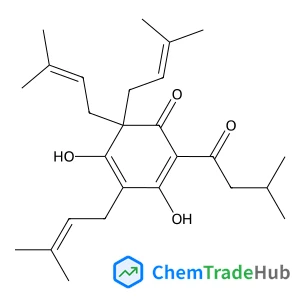
3,5-Dihydroxy-4-(3-methylbutanoyl)-2,6,6-tris(3-methyl-2-buten-1-yl)-2,4-cyclohexadien-1-one
CAS Number:
468-28-0
Molecular Formula:
C26H38O4
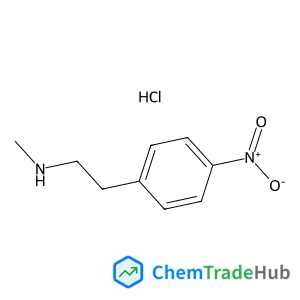
N-Methyl-2-(4-nitrophenyl)ethanamine hydrochloride (1:1)
CAS Number:
166943-39-1
Molecular Formula:
C9H13ClN2O2
Recommended Suppliers




Disclaimer
This page provides academic journal information for reference and research purposes only. We are not affiliated with any journal publishers and do not handle publication submissions. For publication-related inquiries, please contact the respective journal publishers directly.
If you notice any inaccuracies in the information displayed, please contact us at support@chemtradehub.com. We will promptly review and address your concerns.