












Relationships between elastic anisotropy and thermal expansion in A2Mo3O12 materials
Literature Information
Publication Date
2016-10-24
DOI
10.1039/C6CP06356J
Impact Factor
3.676
Authors
Carl P. Romao
View Original
Abstract
We report calculated elastic tensors, axial Gr端neisen parameters, and thermal stress distributions in Al2Mo3O12, ZrMgMo3O12, Sc2Mo3O12, and Y2Mo3O12, a series of isomorphic materials for which the coefficients of thermal expansion range from low-positive to negative. Thermal stress in polycrystalline materials arises from interactions between thermal expansion and mechanical properties, and both can be highly anisotropic. Thermal expansion anisotropy was found to be correlated with elastic anisotropy: axes with negative thermal expansion were less compliant. Calculations of axial Gr端neisen parameters revealed that the thermal expansion anisotropy in these materials is in part due to the Poisson effect. Models of thermal stress due to thermal expansion anisotropy in polycrystals following cooling showed thermal stresses of sufficient magnitude to cause microcracking in all cases. The thermal expansion anisotropy was found to couple to elastic anisotropy, decreasing the bulk coefficient of thermal expansion and leading to lognormal extremes of the thermal stress distributions.
Related Literature
A unified theory of weak-field coherent control of the behavior of a resonance state
2019-03-13
Paper
DOI: 10.1039/C9CP01014A
Vibronic interaction in CO3− photo-detachment: Jahn–Teller effects beyond structural distortion and general formalisms for vibronic Hamiltonians in trigonal symmetries
Prateek Goel, Xiao-Gang Wang, Bo Chen, Xue-Bin Wang, Tao Zeng
2019-04-05
Paper
DOI: 10.1039/C9CP01352K
Structural manifestation of partial proton ordering and defect mobility in ice Ih
2019-03-28
Paper
DOI: 10.1039/C9CP01234F
Study of electronic structure in the L-edge spectroscopy of actinide materials: UO2 as an example
Harry Ramanantoanina, Goutam Kuri, Matthias Martin, Johannes Bertsch
2019-03-18
Paper
DOI: 10.1039/C9CP01021A
Activation of CO2 at the electrode–electrolyte interface by a co-adsorbed cation and an electric field
Sathish Ponnurangam
2019-04-01
Paper
DOI: 10.1039/C8CP07807F
Uncovering the role of the stationary points in the dynamics of the F− + CH3I reaction
Balázs Olasz, Gábor Czakó
2018-12-21
Paper
DOI: 10.1039/C8CP06207B
Dimers of polycyclic aromatic hydrocarbons: the missing pieces in the soot formation process
X. Mercier, O. Carrivain, A. Faccinetto, E. Therssen
2019-03-22
Paper
DOI: 10.1039/C9CP00394K
Quantum cutting using organic molecules
Michael D. LaCount, Mark T. Lusk
2019-03-26
Paper
DOI: 10.1039/C9CP00329K
Electric field-responsive photoluminescence color switching and reversible properties via Tb/Eu co-doped ergodic relaxor ferroelectrics
Hailing Sun, Yi Lok Chan, K. W. Kwok
2019-03-14
Paper
DOI: 10.1039/C9CP00324J
Electric charge of nanopatterned silica surfaces
H. Gokberk Ozcelik, Murat Barisik
2019-03-13
Paper
DOI: 10.1039/C9CP00706G
You might also like
Compound Q&A
Are there alternatives to 1-(4-Chlorophenyl)-N-hydroxymethanimine (CAS: 3848-36-0) in synthesis?
When considering alternatives to 1-(4-Chlorophenyl)-N-hydroxymethanimine (CAS: 3...
3848-36-01-(4-Chlorophenyl)-N...
Compound Q&A
How should (1R,9S,10S,12S,14E,16S,19R,20R,21S,22R)-3,9,21-Trihydroxy-5,10,12,14,16,20,22-heptamethyl-23,24-dioxatetracyclo[17.3.1.1~6,9~.0~2,7~]tetracosa-2,5,7,14-tetraen-4-one (CAS: 183202-73-5) be stored?
This compound should be stored in a cool, dry place away from direct sunlight. I...
183202-73-5(1R,9S,10S,12S,14E,1...
Compound Q&A
How is 3-(4-Bromophenyl)-5-(2-fluorophenyl)-1,2,4-oxadiazole (CAS: 419553-16-5) typically synthesized?
3-(4-Bromophenyl)-5-(2-fluorophenyl)-1,2,4-oxadiazole is synthesized through a m...
419553-16-53-(4-Bromophenyl)-5-...
Compound Q&A
How is 5-Chloro-2-(4-chlorophenyl)-4-methyl-6-[3-(1-piperidinyl)propoxy]pyrimidine (CAS: 1639220-19-1) typically synthesized?
5-Chloro-2-(4-chlorophenyl)-4-methyl-6-[3-(1-piperidinyl)propoxy]pyrimidine (CAS...
1639220-19-15-Chloro-2-(4-chloro...
Compound Q&A
What industries use 2-Chloro-4-(difluoromethoxy)pyridine (CAS: 1206978-15-5)?
2-Chloro-4-(difluoromethoxy)pyridine is used in the pharmaceutical industry for ...
1206978-15-52-Chloro-4-(difluoro...
Compound Q&A
What regulatory guidelines apply to 3-Chloro-6-methylpyridazine (CAS: 1121-79-5)?
3-Chloro-6-methylpyridazine (CAS: 1121-79-5) is classified under the Globally Ha...
1121-79-53-Chloro-6-methylpyr...
Compound Q&A
Are there alternatives to Methyl 4,5-dimethyl-2-nitrobenzoate in synthesis?
Several alternatives can be used in the synthesis of Methyl 4,5-dimethyl-2-nitro...
90922-74-0Methyl 4,5-dimethyl-...
Compound Q&A
Are there alternatives to (2E,2'E)-3,3'-(1,4-Phenylene)bisacrylaldehyde in synthesis?
Alternatives to (2E,2'E)-3,3'-(1,4-Phenylene)bisacrylaldehyde include other acry...
63405-68-5(2E,2'E)-3,3'-(1,4-P...
Compound Q&A
What is 3-Amino-5-chloropyridin-2-ol hydrochloride (CAS: 1261906-29-9)?
3-Amino-5-chloropyridin-2-ol hydrochloride is an organic compound with the CAS n...
1261906-29-93-Amino-5-chloropyri...
Compound Q&A
What precautions should be taken when handling 6,7-Difluoro-2,3-dihydro-4H-chromen-4-one (CAS: 1092349-93-3)?
When handling 6,7-Difluoro-2,3-dihydro-4H-chromen-4-one, it is essential to wear...
1092349-93-36,7-Difluoro-2,3-dih...
Source Journal
Physical Chemistry Chemical Physics

CiteScore:
5.5
Self-citation Rate:
10.3%
Articles per Year:
3036
Physical Chemistry Chemical Physics (PCCP) is an international journal co-owned by 19 physical chemistry and physics societies from around the world. This journal publishes original, cutting-edge research in physical chemistry, chemical physics and biophysical chemistry. To be suitable for publication in PCCP, articles must include significant innovation and/or insight into physical chemistry; this is the most important criterion that reviewers and Editors will judge against when evaluating submissions. The journal has a broad scope and welcomes contributions spanning experiment, theory, computation and data science. Topical coverage includes spectroscopy, dynamics, kinetics, statistical mechanics, thermodynamics, electrochemistry, catalysis, surface science, quantum mechanics, quantum computing and machine learning. Interdisciplinary research areas such as polymers and soft matter, materials, nanoscience, energy, surfaces/interfaces, and biophysical chemistry are welcomed if they demonstrate significant innovation and/or insight into physical chemistry. Joined experimental/theoretical studies are particularly appreciated when complementary and based on up-to-date approaches.
Recommended Compounds



5-(3,4-Dimethoxybenzyl)-2,4-pyrimidinediamine hydrochloride (1:1)
CAS Number:
2507-23-5
Molecular Formula:
C13H17ClN4O2
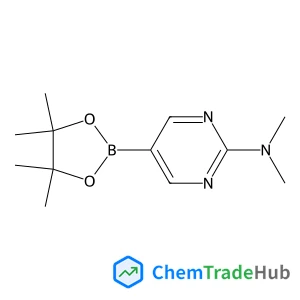
N,N-Dimethyl-5-(4,4,5,5-tetramethyl-1,3,2-dioxaborolan-2-yl)-2-pyrimidinamine
CAS Number:
1032759-30-0
Molecular Formula:
C12H20BN3O2
Recommended Suppliers





Disclaimer
This page provides academic journal information for reference and research purposes only. We are not affiliated with any journal publishers and do not handle publication submissions. For publication-related inquiries, please contact the respective journal publishers directly.
If you notice any inaccuracies in the information displayed, please contact us at support@chemtradehub.com. We will promptly review and address your concerns.