












A unified theory of weak-field coherent control of the behavior of a resonance state
Literature Information
Publication Date
2019-03-13
DOI
10.1039/C9CP01014A
Impact Factor
3.676
Authors
View Original
Abstract
A unified weak-field control scheme to modify the two properties that determine the whole behavior of a resonance state, namely the lifetime and the asymptotic fragment distribution produced upon resonance decay, is proposed. Control is exerted through quantum interference induced between overlapping resonances of the system, by exciting two different energies at which the resonances overlap. The scheme applies a laser field consisting of a first pulse that excites the energy of the resonance to be controlled, and two additional pulses that excite another different energy to induce interference, with a delay time with respect to the first pulse. Each of the two additional pulses is used to control one of the two resonance properties, by adjusting its corresponding delay time: with a relatively short delay time the second pulse controls the resonance lifetime, while with a very long delay time the third pulse modifies the asymptotic fragment distribution produced. The efficiency of the control of each resonance property is found to be strongly dependent on the choice of the second interfering energy, which allows for a more flexible control optimization by choosing a different energy for each property. The theory underlying the interference mechanism of the control scheme is developed and presented, and is applied to analyze and explain the results obtained. The present scheme thus appears to be a useful tool for controlling resonance-mediated molecular processes.
Recommended Journals
Related Literature
A novel chiral porous metal–organic framework: asymmetric ring opening reaction of epoxide with amine in the chiral open space
Koichi Tanaka, Shinji Oda, Motoo Shiro
2007-12-17
Communication
DOI: 10.1039/B714083E
Synthesis of a stable radical anion via the one electron reduction of a 1,1-bis-phosphinosulfide alkene derivative
Thibault Cantat, Frédéric Biaso, Aurélien Momin, Louis Ricard, Michel Geoffroy, Nicolas Mézailles, Pascal Le Floch
2007-12-19
Communication
DOI: 10.1039/B715380E
Biomimetic trifunctional organocatalyst showing a great acceleration for the transesterification between vinyl ester and alcohol
Tadashi Ema, Daisuke Tanida, Tatsuya Matsukawa, Takashi Sakai
2008-01-22
Communication
DOI: 10.1039/B718763G
Controlled synthesis of luminescent polymers using a bis-dithiobenzoate RAFT agent
Ming Chen, Kenneth P. Ghiggino, Ezio Rizzardo, San H. Thang, Gerard J. Wilson
2008-01-03
Communication
DOI: 10.1039/B716471H
Measuring nitrogen quadrupolar coupling with 13C detected wide-line 14N NMR under magic-angle spinning
Zhehong Gan
2007-12-21
Communication
DOI: 10.1039/B716383E
New egg-shaped fullerenes: non-isolated pentagon structures of Tm3N@Cs(51 365)-C84 and Gd3N@Cs(51 365)-C84‡
Tianming Zuo, Kenneth Walker, Marilyn M. Olmstead, Frederic Melin, Brian C. Holloway, Luis Echegoyen, Harry C. Dorn, Manuel N. Chaur, Christopher J. Chancellor, Christine M. Beavers, Alan L. Balch, Andreas J. Athans
2008-01-31
Communication
DOI: 10.1039/B716037B
Direct synthesis of the 1,2,3-[C6H4PPP]− anion, isoelectronic with the indenyl anion [C6H4CHCHCH]−
Felipe García, Robert J. Less, Vesal Naseri, Mary McPartlin, Jeremy M. Rawson, Maria Sancho Tomas, Dominic S. Wright
2008-01-15
Communication
DOI: 10.1039/B718425E
Reversible lithium insertion and copper extrusion in layered oxysulfides
Oliver J. Rutt, Gareth R. Williams, Simon J. Clarke
2006-06-06
Communication
DOI: 10.1039/B605105G
Determination of the absolute configuration of the sex pheromone of the obscure mealybug by vibrational circular dichroism analysis
Frank J. Devlin, Philip J. Stephens
2008-01-08
Communication
DOI: 10.1039/B717440C
You might also like
Compound Q&A
Are there alternatives to 1-(4-Chlorophenyl)-N-hydroxymethanimine (CAS: 3848-36-0) in synthesis?
When considering alternatives to 1-(4-Chlorophenyl)-N-hydroxymethanimine (CAS: 3...
3848-36-01-(4-Chlorophenyl)-N...
Compound Q&A
How should (1R,9S,10S,12S,14E,16S,19R,20R,21S,22R)-3,9,21-Trihydroxy-5,10,12,14,16,20,22-heptamethyl-23,24-dioxatetracyclo[17.3.1.1~6,9~.0~2,7~]tetracosa-2,5,7,14-tetraen-4-one (CAS: 183202-73-5) be stored?
This compound should be stored in a cool, dry place away from direct sunlight. I...
183202-73-5(1R,9S,10S,12S,14E,1...
Compound Q&A
How is 3-(4-Bromophenyl)-5-(2-fluorophenyl)-1,2,4-oxadiazole (CAS: 419553-16-5) typically synthesized?
3-(4-Bromophenyl)-5-(2-fluorophenyl)-1,2,4-oxadiazole is synthesized through a m...
419553-16-53-(4-Bromophenyl)-5-...
Compound Q&A
How is 5-Chloro-2-(4-chlorophenyl)-4-methyl-6-[3-(1-piperidinyl)propoxy]pyrimidine (CAS: 1639220-19-1) typically synthesized?
5-Chloro-2-(4-chlorophenyl)-4-methyl-6-[3-(1-piperidinyl)propoxy]pyrimidine (CAS...
1639220-19-15-Chloro-2-(4-chloro...
Compound Q&A
What industries use 2-Chloro-4-(difluoromethoxy)pyridine (CAS: 1206978-15-5)?
2-Chloro-4-(difluoromethoxy)pyridine is used in the pharmaceutical industry for ...
1206978-15-52-Chloro-4-(difluoro...
Compound Q&A
What regulatory guidelines apply to 3-Chloro-6-methylpyridazine (CAS: 1121-79-5)?
3-Chloro-6-methylpyridazine (CAS: 1121-79-5) is classified under the Globally Ha...
1121-79-53-Chloro-6-methylpyr...
Compound Q&A
Are there alternatives to Methyl 4,5-dimethyl-2-nitrobenzoate in synthesis?
Several alternatives can be used in the synthesis of Methyl 4,5-dimethyl-2-nitro...
90922-74-0Methyl 4,5-dimethyl-...
Compound Q&A
Are there alternatives to (2E,2'E)-3,3'-(1,4-Phenylene)bisacrylaldehyde in synthesis?
Alternatives to (2E,2'E)-3,3'-(1,4-Phenylene)bisacrylaldehyde include other acry...
63405-68-5(2E,2'E)-3,3'-(1,4-P...
Compound Q&A
What is 3-Amino-5-chloropyridin-2-ol hydrochloride (CAS: 1261906-29-9)?
3-Amino-5-chloropyridin-2-ol hydrochloride is an organic compound with the CAS n...
1261906-29-93-Amino-5-chloropyri...
Compound Q&A
What precautions should be taken when handling 6,7-Difluoro-2,3-dihydro-4H-chromen-4-one (CAS: 1092349-93-3)?
When handling 6,7-Difluoro-2,3-dihydro-4H-chromen-4-one, it is essential to wear...
1092349-93-36,7-Difluoro-2,3-dih...
Source Journal
Physical Chemistry Chemical Physics

CiteScore:
5.5
Self-citation Rate:
10.3%
Articles per Year:
3036
Physical Chemistry Chemical Physics (PCCP) is an international journal co-owned by 19 physical chemistry and physics societies from around the world. This journal publishes original, cutting-edge research in physical chemistry, chemical physics and biophysical chemistry. To be suitable for publication in PCCP, articles must include significant innovation and/or insight into physical chemistry; this is the most important criterion that reviewers and Editors will judge against when evaluating submissions. The journal has a broad scope and welcomes contributions spanning experiment, theory, computation and data science. Topical coverage includes spectroscopy, dynamics, kinetics, statistical mechanics, thermodynamics, electrochemistry, catalysis, surface science, quantum mechanics, quantum computing and machine learning. Interdisciplinary research areas such as polymers and soft matter, materials, nanoscience, energy, surfaces/interfaces, and biophysical chemistry are welcomed if they demonstrate significant innovation and/or insight into physical chemistry. Joined experimental/theoretical studies are particularly appreciated when complementary and based on up-to-date approaches.
Recommended Compounds
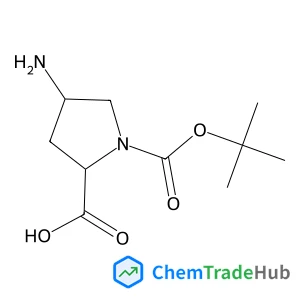
(2R,4R)-1-Boc-4-Aminopyrrolidine-2-carboxylic acid
CAS Number:
132622-98-1
Molecular Formula:
C10H18N2O4
![4-[(3-Chloro-2-fluorophenyl)amino]-7-methoxy-6-quinazolinyl acetate structure](https://static.chemtradehub.com/structs/740/740081-22-5-f58f.webp "4-[(3-Chloro-2-fluorophenyl)amino]-7-methoxy-6-quinazolinyl acetate structure")
4-[(3-Chloro-2-fluorophenyl)amino]-7-methoxy-6-quinazolinyl acetate
CAS Number:
740081-22-5
Molecular Formula:
C17H13ClFN3O3
Recommended Suppliers




Disclaimer
This page provides academic journal information for reference and research purposes only. We are not affiliated with any journal publishers and do not handle publication submissions. For publication-related inquiries, please contact the respective journal publishers directly.
If you notice any inaccuracies in the information displayed, please contact us at support@chemtradehub.com. We will promptly review and address your concerns.