












Fluorescence measurements of peroxynitrite/peroxynitrous acid in cold air plasma treated aqueous solutions
Literature Information
Publication Date
2019-04-01
DOI
10.1039/C9CP00871C
Impact Factor
3.676
Authors
Barbora Tarabová, Petr Lukeš, Malte U. Hammer, Helena Jablonowski, Thomas von Woedtke, Stephan Reuter, Zdenko Machala
View Original
Abstract
Qualitative detection of peroxynitrite/peroxynitrous acid (ONOO−/ONOOH) as one of the key bactericidal agents produced in cold air plasma activated aqueous solutions is presented. We examined the use of the 2,7-dichlorodihydrofluorescein diacetate (H2DCFDA) fluorescent dye to detect ONOO−/ONOOH in plasma activated non-buffered water (PAW) or buffered solution (PAPB) generated by DC-driven self-pulsed transient spark discharge at atmospheric pressure in ambient air. The diagnostic selectivity of H2DCFDA to reactive oxygen and nitrogen species (RONS) typical of plasma activated aqueous solutions was examined by using various scavengers of RONS. This cross-reactivity study showed the highest sensitivity of the H2DCFDA dye to ONOO−/ONOOH. However, besides ONOO−/ONOOH, H2DCFDA also exhibited sensitivity to hypochlorite anions/hypochlorous acid (OCl−/HOCl), showing that for a selective study it is important to have an idea about the possible constituents in the studied solutions. The sensitivity of H2DCFDA to other RONS even in much higher concentrations was negligible. The presence of nitrites (NO2−) and hydrogen peroxide (H2O2) in PAW led predominantly to the production of peroxynitrous acid with a strong fluorescence response of H2DCFDA in PAW. Plasma treatment of buffered solutions led to the weak response of H2DCFDA. The fluorescence induced in PAW decreased after scavenging individual reactants, namely NO2− and H2O2, as well as by scavenging the product of the peroxynitrite forming reaction, proving that the fluorescence response of H2DCFDA is primarily due to the formation of ONOO−/ONOOH. A chemical kinetics analysis of post-discharge processes and the pseudo-second order reaction between H2O2 and NO2− confirms formation of peroxynitrous acid in PAW with a rate in the order of tens of nM per second. The post-discharge evolution of the ONOOH formation rate was clearly correlated with the parallel detection of ONOO−/ONOOH by fluorescence spectroscopy using the H2DCFDA dye.
Related Literature
A molecular 1 : 2 demultiplexer
Ezequiel Perez-Inestrosa, Jose-María Montenegro, Daniel Collado, Rafael Suau
2008-01-09
Communication
DOI: 10.1039/B717690B
Dendrimer-assisted low-temperature growth of carbon nanotubes by plasma-enhanced chemical vapor deposition
Placidus B. Amama, Oluwaseyi Ogebule
2006-06-02
Communication
DOI: 10.1039/B602623K
Capturing a [c2]daisy chain using the threading-followed-by-swelling approach
Shau-Hua Ueng, Sheng-Yao Hsueh, Chien-Chen Lai, Yi-Hung Liu, Shie-Ming Peng, Sheng-Hsien Chiu
2007-12-11
Communication
DOI: 10.1039/B716331B
Solvent-induced configuration mixing and triplet excited state inversion exemplified in a Pt(ii) complex
Sébastien Goeb, Aaron A. Rachford, Felix N. Castellano
2007-11-12
Communication
DOI: 10.1039/B713285A
Supramolecular PhanePhos-analogous ligands through hydrogen-bonding for asymmetric hydrogenation
Andy Ch. Laungani, Bernhard Breit
2007-12-18
Communication
DOI: 10.1039/B716529C
2,2′-Disubstituted F12binaphthyl derivatives: stannanes, boranes, and (R)-F12BINOL
Darryl J. Morrison, Susanne D. Riegel, Warren E. Piers, Masood Parvez, Robert McDonald
2006-06-19
Communication
DOI: 10.1039/B605716K
A facile approach to synthesize uniform hydrogel shells with controllable loading and releasing properties
Joo-Hyun Han, Bo-Mi Koo, Jin-Woong Kim, Kyung-Do Suh
2008-01-21
Communication
DOI: 10.1039/B715557C
An imidazole-functionalized polyacetylene: convenient synthesis and selective chemosensor for metal ions and cyanide
Qi Zeng, Ping Cai, Zhen Li, Jingui Qin, Ben Zhong Tang
2008-01-29
Communication
DOI: 10.1039/B717764J
Simple dimer containing dissociatively stable mono-imidazole ligated ferrohemes
Qing-Zheng Yang, Daria Khvostichenko, John D. Atkinson, Roman Boulatov
2008-01-04
Communication
DOI: 10.1039/B717858A
You might also like
Compound Q&A
Are there alternatives to 1-(4-Chlorophenyl)-N-hydroxymethanimine (CAS: 3848-36-0) in synthesis?
When considering alternatives to 1-(4-Chlorophenyl)-N-hydroxymethanimine (CAS: 3...
3848-36-01-(4-Chlorophenyl)-N...
Compound Q&A
How should (1R,9S,10S,12S,14E,16S,19R,20R,21S,22R)-3,9,21-Trihydroxy-5,10,12,14,16,20,22-heptamethyl-23,24-dioxatetracyclo[17.3.1.1~6,9~.0~2,7~]tetracosa-2,5,7,14-tetraen-4-one (CAS: 183202-73-5) be stored?
This compound should be stored in a cool, dry place away from direct sunlight. I...
183202-73-5(1R,9S,10S,12S,14E,1...
Compound Q&A
How is 3-(4-Bromophenyl)-5-(2-fluorophenyl)-1,2,4-oxadiazole (CAS: 419553-16-5) typically synthesized?
3-(4-Bromophenyl)-5-(2-fluorophenyl)-1,2,4-oxadiazole is synthesized through a m...
419553-16-53-(4-Bromophenyl)-5-...
Compound Q&A
How is 5-Chloro-2-(4-chlorophenyl)-4-methyl-6-[3-(1-piperidinyl)propoxy]pyrimidine (CAS: 1639220-19-1) typically synthesized?
5-Chloro-2-(4-chlorophenyl)-4-methyl-6-[3-(1-piperidinyl)propoxy]pyrimidine (CAS...
1639220-19-15-Chloro-2-(4-chloro...
Compound Q&A
What industries use 2-Chloro-4-(difluoromethoxy)pyridine (CAS: 1206978-15-5)?
2-Chloro-4-(difluoromethoxy)pyridine is used in the pharmaceutical industry for ...
1206978-15-52-Chloro-4-(difluoro...
Compound Q&A
What regulatory guidelines apply to 3-Chloro-6-methylpyridazine (CAS: 1121-79-5)?
3-Chloro-6-methylpyridazine (CAS: 1121-79-5) is classified under the Globally Ha...
1121-79-53-Chloro-6-methylpyr...
Compound Q&A
Are there alternatives to Methyl 4,5-dimethyl-2-nitrobenzoate in synthesis?
Several alternatives can be used in the synthesis of Methyl 4,5-dimethyl-2-nitro...
90922-74-0Methyl 4,5-dimethyl-...
Compound Q&A
Are there alternatives to (2E,2'E)-3,3'-(1,4-Phenylene)bisacrylaldehyde in synthesis?
Alternatives to (2E,2'E)-3,3'-(1,4-Phenylene)bisacrylaldehyde include other acry...
63405-68-5(2E,2'E)-3,3'-(1,4-P...
Compound Q&A
What is 3-Amino-5-chloropyridin-2-ol hydrochloride (CAS: 1261906-29-9)?
3-Amino-5-chloropyridin-2-ol hydrochloride is an organic compound with the CAS n...
1261906-29-93-Amino-5-chloropyri...
Compound Q&A
What precautions should be taken when handling 6,7-Difluoro-2,3-dihydro-4H-chromen-4-one (CAS: 1092349-93-3)?
When handling 6,7-Difluoro-2,3-dihydro-4H-chromen-4-one, it is essential to wear...
1092349-93-36,7-Difluoro-2,3-dih...
Source Journal
Physical Chemistry Chemical Physics

CiteScore:
5.5
Self-citation Rate:
10.3%
Articles per Year:
3036
Physical Chemistry Chemical Physics (PCCP) is an international journal co-owned by 19 physical chemistry and physics societies from around the world. This journal publishes original, cutting-edge research in physical chemistry, chemical physics and biophysical chemistry. To be suitable for publication in PCCP, articles must include significant innovation and/or insight into physical chemistry; this is the most important criterion that reviewers and Editors will judge against when evaluating submissions. The journal has a broad scope and welcomes contributions spanning experiment, theory, computation and data science. Topical coverage includes spectroscopy, dynamics, kinetics, statistical mechanics, thermodynamics, electrochemistry, catalysis, surface science, quantum mechanics, quantum computing and machine learning. Interdisciplinary research areas such as polymers and soft matter, materials, nanoscience, energy, surfaces/interfaces, and biophysical chemistry are welcomed if they demonstrate significant innovation and/or insight into physical chemistry. Joined experimental/theoretical studies are particularly appreciated when complementary and based on up-to-date approaches.
Recommended Compounds
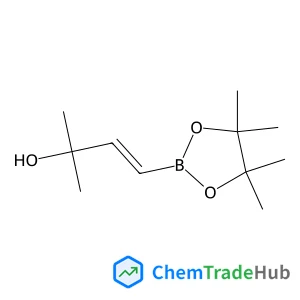
(E)-2-methyl-4-(4,4,5,5-tetramethyl-1,3,2-dioxaborolan-2-yl)but-3-en-2-ol
CAS Number:
581802-26-8
Molecular Formula:
C11H21BO3
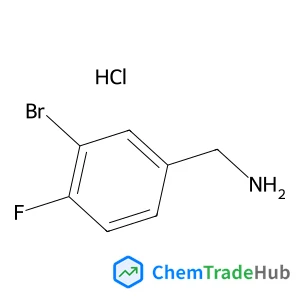
1-(3-Bromo-4-fluorophenyl)methanamine hydrochloride (1:1)
CAS Number:
202865-68-7
Molecular Formula:
C7H8BrClFN
Recommended Suppliers



Disclaimer
This page provides academic journal information for reference and research purposes only. We are not affiliated with any journal publishers and do not handle publication submissions. For publication-related inquiries, please contact the respective journal publishers directly.
If you notice any inaccuracies in the information displayed, please contact us at support@chemtradehub.com. We will promptly review and address your concerns.