












Ag nanoparticle modified porous Si microspheres as high-performance anodes for Li-ion batteries
Literature Information
Publication Date
2023-11-04
DOI
10.1039/D3CP03677D
Impact Factor
3.676
Authors
Wenhao Pan, Changjiang Yang, Lei Zhou, Xiaolan Cai, Yankun Wang, Junhao Tan, Jun Chang
View Original
Abstract
This study aimed to address the challenges associated with silicon (Si) anode materials in Li-ion batteries, such as their large volume effect and poor electrical conductivity. To overcome these limitations, a novel composite microsphere called pSi/Ag was developed using quartz waste through a combination of high-energy ball-milling, spray drying, and magnesiothermic reduction techniques. The morphology and structure of the pSi/Ag composite were thoroughly characterized using various methods, including X-ray diffraction, field-emission scanning electron microscopy, and transmission electron microscopy. The results revealed that the Ag nanoparticles were uniformly dispersed within the porous micron-sized Si sphere particles, leading to enhanced electrochemical performance compared to pure porous silicon that did not undergo the spray drying process. The use of micron-sized Si prevented the excessive formation of the solid electrolyte interphase film, and the pSi/Ag-5 anode, prepared with 5 wt% AgNO3 as a precursor, demonstrated an impressive initial Coulombic efficiency of 92.8%. Moreover, a high specific capacity of 1251.4 mA h g−1 over 300 cycles at a current density of 4000 mA g−1 was attributed to the improved conductivity provided by the Ag nanoparticles in the Si matrix. The straightforward synthesis method employed in this study to produce pSi/Ag presents a promising approach for the future development of high-performance silicon anodes in Li-ion batteries.
Related Literature
Density functional theory calculations and thermodynamic analysis of bridgmanite surface structure
2018-12-03
Communication
DOI: 10.1039/C8CP06702C
Symmetry-breaking induced large piezoelectricity in Janus tellurene materials
Yu Chen, Junyi Liu, Jiabing Yu
2018-11-16
Paper
DOI: 10.1039/C8CP04669G
A unified theory of weak-field coherent control of the behavior of a resonance state
2019-03-13
Paper
DOI: 10.1039/C9CP01014A
Dynamics of electronically excited states in the eumelanin building block 5,6-dihydroxyindole
Stuart W. Crane, Omair Ghafur, Thomas Y. Cowie, Anita G. Lindsay, James O. F. Thompson, Jason B. Greenwood
2019-04-01
Paper
DOI: 10.1039/C9CP00620F
Fluorescence correlation spectroscopy for multiple-site equilibrium binding: a case of doxorubicin–DNA interaction
Andrzej Poniewierski, Krzysztof Sozański, Ying Zhou, Anna Brzozowska-Elliott, Robert Holyst
2019-01-08
Paper
DOI: 10.1039/C8CP06752J
Ionic structure and transport properties of KF–NaF–AlF3 fused salt: a molecular dynamics study
Xiaojun Lv, Zexun Han, Hengxing Zhang, Qingsheng Liu, Jiangan Chen, Liangxing Jiang
2019-03-06
Paper
DOI: 10.1039/C9CP00377K
The relationship between the asymmetric magnetoresistive effect and the magnetocaloric effect in Ni43Co7Mn39−xCrxSn11 Heusler alloys
Yunli Xu, Dongchao Yang, Linjie Ding, Lizhi Yi, Shuaiwei Fan, Liqing Pan, Jia Li, Fengxia Hu, Guanghua Yu, John Q. Xiao
2019-03-19
Paper
DOI: 10.1039/C9CP00145J
Thermodynamics of adsorption of lysozyme on gold nanoparticles from second harmonic light scattering
Kamini Mishra, Puspendu K. Das
2019-03-13
Paper
DOI: 10.1039/C8CP07299J
DFT study of furfural conversion on a Re/Pt bimetallic surface: synergetic effect on the promotion of hydrodeoxygenation
He Dong, P. Hu
2019-03-22
Paper
DOI: 10.1039/C8CP07806H
The canonical behavior of the entropic component of thermodynamic effective molarity. An attempt at unifying covalent and noncovalent cyclizations
Stefano Di Stefano, Luigi Mandolini
2018-12-17
Perspective
DOI: 10.1039/C8CP06344C
You might also like
Compound Q&A
Are there alternatives to 1-(4-Chlorophenyl)-N-hydroxymethanimine (CAS: 3848-36-0) in synthesis?
When considering alternatives to 1-(4-Chlorophenyl)-N-hydroxymethanimine (CAS: 3...
3848-36-01-(4-Chlorophenyl)-N...
Compound Q&A
How should (1R,9S,10S,12S,14E,16S,19R,20R,21S,22R)-3,9,21-Trihydroxy-5,10,12,14,16,20,22-heptamethyl-23,24-dioxatetracyclo[17.3.1.1~6,9~.0~2,7~]tetracosa-2,5,7,14-tetraen-4-one (CAS: 183202-73-5) be stored?
This compound should be stored in a cool, dry place away from direct sunlight. I...
183202-73-5(1R,9S,10S,12S,14E,1...
Compound Q&A
How is 3-(4-Bromophenyl)-5-(2-fluorophenyl)-1,2,4-oxadiazole (CAS: 419553-16-5) typically synthesized?
3-(4-Bromophenyl)-5-(2-fluorophenyl)-1,2,4-oxadiazole is synthesized through a m...
419553-16-53-(4-Bromophenyl)-5-...
Compound Q&A
How is 5-Chloro-2-(4-chlorophenyl)-4-methyl-6-[3-(1-piperidinyl)propoxy]pyrimidine (CAS: 1639220-19-1) typically synthesized?
5-Chloro-2-(4-chlorophenyl)-4-methyl-6-[3-(1-piperidinyl)propoxy]pyrimidine (CAS...
1639220-19-15-Chloro-2-(4-chloro...
Compound Q&A
What industries use 2-Chloro-4-(difluoromethoxy)pyridine (CAS: 1206978-15-5)?
2-Chloro-4-(difluoromethoxy)pyridine is used in the pharmaceutical industry for ...
1206978-15-52-Chloro-4-(difluoro...
Compound Q&A
What regulatory guidelines apply to 3-Chloro-6-methylpyridazine (CAS: 1121-79-5)?
3-Chloro-6-methylpyridazine (CAS: 1121-79-5) is classified under the Globally Ha...
1121-79-53-Chloro-6-methylpyr...
Compound Q&A
Are there alternatives to Methyl 4,5-dimethyl-2-nitrobenzoate in synthesis?
Several alternatives can be used in the synthesis of Methyl 4,5-dimethyl-2-nitro...
90922-74-0Methyl 4,5-dimethyl-...
Compound Q&A
Are there alternatives to (2E,2'E)-3,3'-(1,4-Phenylene)bisacrylaldehyde in synthesis?
Alternatives to (2E,2'E)-3,3'-(1,4-Phenylene)bisacrylaldehyde include other acry...
63405-68-5(2E,2'E)-3,3'-(1,4-P...
Compound Q&A
What is 3-Amino-5-chloropyridin-2-ol hydrochloride (CAS: 1261906-29-9)?
3-Amino-5-chloropyridin-2-ol hydrochloride is an organic compound with the CAS n...
1261906-29-93-Amino-5-chloropyri...
Compound Q&A
What precautions should be taken when handling 6,7-Difluoro-2,3-dihydro-4H-chromen-4-one (CAS: 1092349-93-3)?
When handling 6,7-Difluoro-2,3-dihydro-4H-chromen-4-one, it is essential to wear...
1092349-93-36,7-Difluoro-2,3-dih...
Source Journal
Physical Chemistry Chemical Physics

CiteScore:
5.5
Self-citation Rate:
10.3%
Articles per Year:
3036
Physical Chemistry Chemical Physics (PCCP) is an international journal co-owned by 19 physical chemistry and physics societies from around the world. This journal publishes original, cutting-edge research in physical chemistry, chemical physics and biophysical chemistry. To be suitable for publication in PCCP, articles must include significant innovation and/or insight into physical chemistry; this is the most important criterion that reviewers and Editors will judge against when evaluating submissions. The journal has a broad scope and welcomes contributions spanning experiment, theory, computation and data science. Topical coverage includes spectroscopy, dynamics, kinetics, statistical mechanics, thermodynamics, electrochemistry, catalysis, surface science, quantum mechanics, quantum computing and machine learning. Interdisciplinary research areas such as polymers and soft matter, materials, nanoscience, energy, surfaces/interfaces, and biophysical chemistry are welcomed if they demonstrate significant innovation and/or insight into physical chemistry. Joined experimental/theoretical studies are particularly appreciated when complementary and based on up-to-date approaches.
Recommended Compounds
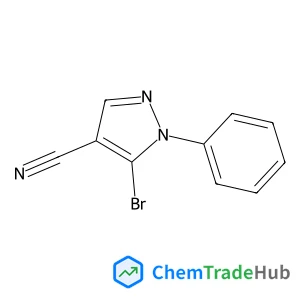
![6-Bromo-2,3-dihydro-1H-pyrido[2,3-b][1,4]oxazine structure](https://static.chemtradehub.com/structs/120/1203499-17-5-b4d1.webp "6-Bromo-2,3-dihydro-1H-pyrido[2,3-b][1,4]oxazine structure")
6-Bromo-2,3-dihydro-1H-pyrido[2,3-b][1,4]oxazine
CAS Number:
1203499-17-5
Molecular Formula:
C7H7BrN2O

5-(3,4-Dimethoxybenzyl)-2,4-pyrimidinediamine hydrochloride (1:1)
CAS Number:
2507-23-5
Molecular Formula:
C13H17ClN4O2
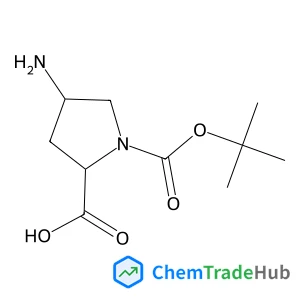
(2R,4R)-1-Boc-4-Aminopyrrolidine-2-carboxylic acid
CAS Number:
132622-98-1
Molecular Formula:
C10H18N2O4
Recommended Suppliers






Disclaimer
This page provides academic journal information for reference and research purposes only. We are not affiliated with any journal publishers and do not handle publication submissions. For publication-related inquiries, please contact the respective journal publishers directly.
If you notice any inaccuracies in the information displayed, please contact us at support@chemtradehub.com. We will promptly review and address your concerns.