












Ionic structure and transport properties of KF–NaF–AlF3 fused salt: a molecular dynamics study
Literature Information
Publication Date
2019-03-06
DOI
10.1039/C9CP00377K
Impact Factor
3.676
Authors
Xiaojun Lv, Zexun Han, Hengxing Zhang, Qingsheng Liu, Jiangan Chen, Liangxing Jiang
View Original
Abstract
We used the first-principles molecular dynamics simulations combined with the interatomic potential molecular dynamics to study the ionic structure and transport properties of KF–NaF–AlF3 fused salt. Simulation results show that the ionic structure of KF–NaF–AlF3 fused salt is principally dominated by the distorted five-coordinated [AlF5]2− and six-coordinated [AlF6]3− groups. When melting to a liquid, a part of the six-coordinated [AlF6]3− group dissociated into the four-coordinated [AlF4]− and five-coordinated [AlF5]2− groups. Four, five and six-coordinated aluminum–fluoro complexes coexist in KF–NaF–AlF3 fused salt, while the tetrahedral [AlF4]− groups are relatively rare. The content of the bridging fluorine atom is relatively small, about 5–11%, which indicates that the polymerization degree of the ionic structure of the KF–NaF–AlF3 fused salt system is lower. The KF–NaF–AlF3 fused salt has better liquidity and ionic conductivity due to the high self-diffusion coefficients of all particles in the fused salt system. KF can effectively break the F atom bridges, which reduces the polymerization degree of the ionic structure of the fused salt system and increases its ionic conductivity.
Related Literature
Solvent-induced configuration mixing and triplet excited state inversion exemplified in a Pt(ii) complex
Sébastien Goeb, Aaron A. Rachford, Felix N. Castellano
2007-11-12
Communication
DOI: 10.1039/B713285A
Direct synthesis of the 1,2,3-[C6H4PPP]− anion, isoelectronic with the indenyl anion [C6H4CHCHCH]−
Felipe García, Robert J. Less, Vesal Naseri, Mary McPartlin, Jeremy M. Rawson, Maria Sancho Tomas, Dominic S. Wright
2008-01-15
Communication
DOI: 10.1039/B718425E
A novel porous carbon based on diatomaceous earth
S. M. Holmes, B. E. Graniel-Garcia, P. Foran, P. Hill, E. P. L. Roberts, B. H. Sakakini, J. M. Newton
2006-05-17
Communication
DOI: 10.1039/B600708B
Regulation of α-chymotrypsin activity on the surface of substrate-functionalized gold nanoparticles
Chang-Cheng You, Rochelle R. Arvizo, Vincent M. Rotello
2006-06-02
Communication
DOI: 10.1039/B605508G
[Zn(H2O)4][Zn2Sn3Se9(MeNH2)]: a robust open framework chalcogenide with a large nonlinear optical response
Manolis J. Manos, Joon I. Jang, John B. Ketterson, Mercouri G. Kanatzidis
2007-12-18
Communication
DOI: 10.1039/B712732D
A phase separable polycarbonate polymerization catalyst
Chayanant Hongfa, Jianhua Tian, Jeremy Andreatta, Donald J. Darensbourg, David E. Bergbreiter
2007-12-17
Communication
DOI: 10.1039/B711861A
Inhibition of C(2)-H/D exchange of a bis(imidazolium) dication upon complexation with cucubit[7]uril
Ruibing Wang, Lina Yuan, Donal H. Macartney
2006-06-02
Communication
DOI: 10.1039/B605919H
Controlled synthesis of luminescent polymers using a bis-dithiobenzoate RAFT agent
Ming Chen, Kenneth P. Ghiggino, Ezio Rizzardo, San H. Thang, Gerard J. Wilson
2008-01-03
Communication
DOI: 10.1039/B716471H
Nanomechanical properties of reversed surfactant bilayers formed in micrometre-sized holes
Jian Jin, Yukihiro Sugiyama, Keita Mitsui, Hideo Arakawa, Izumi Ichinose
2008-01-14
Communication
DOI: 10.1039/B717485C
Nickel catalyzed stereoselective conjugate addition of dimethylzinc upon aldimines across 1,3-dien-8-ynes and 1,3-dien-9-ynes
Masanari Kimura, Masahiko Mori, Nahoko Mukai, Keisuke Kojima, Yoshinao Tamaru
2006-05-31
Communication
DOI: 10.1039/B605728D
You might also like
Compound Q&A
Are there alternatives to 1-(4-Chlorophenyl)-N-hydroxymethanimine (CAS: 3848-36-0) in synthesis?
When considering alternatives to 1-(4-Chlorophenyl)-N-hydroxymethanimine (CAS: 3...
3848-36-01-(4-Chlorophenyl)-N...
Compound Q&A
How should (1R,9S,10S,12S,14E,16S,19R,20R,21S,22R)-3,9,21-Trihydroxy-5,10,12,14,16,20,22-heptamethyl-23,24-dioxatetracyclo[17.3.1.1~6,9~.0~2,7~]tetracosa-2,5,7,14-tetraen-4-one (CAS: 183202-73-5) be stored?
This compound should be stored in a cool, dry place away from direct sunlight. I...
183202-73-5(1R,9S,10S,12S,14E,1...
Compound Q&A
How is 3-(4-Bromophenyl)-5-(2-fluorophenyl)-1,2,4-oxadiazole (CAS: 419553-16-5) typically synthesized?
3-(4-Bromophenyl)-5-(2-fluorophenyl)-1,2,4-oxadiazole is synthesized through a m...
419553-16-53-(4-Bromophenyl)-5-...
Compound Q&A
How is 5-Chloro-2-(4-chlorophenyl)-4-methyl-6-[3-(1-piperidinyl)propoxy]pyrimidine (CAS: 1639220-19-1) typically synthesized?
5-Chloro-2-(4-chlorophenyl)-4-methyl-6-[3-(1-piperidinyl)propoxy]pyrimidine (CAS...
1639220-19-15-Chloro-2-(4-chloro...
Compound Q&A
What industries use 2-Chloro-4-(difluoromethoxy)pyridine (CAS: 1206978-15-5)?
2-Chloro-4-(difluoromethoxy)pyridine is used in the pharmaceutical industry for ...
1206978-15-52-Chloro-4-(difluoro...
Compound Q&A
What regulatory guidelines apply to 3-Chloro-6-methylpyridazine (CAS: 1121-79-5)?
3-Chloro-6-methylpyridazine (CAS: 1121-79-5) is classified under the Globally Ha...
1121-79-53-Chloro-6-methylpyr...
Compound Q&A
Are there alternatives to Methyl 4,5-dimethyl-2-nitrobenzoate in synthesis?
Several alternatives can be used in the synthesis of Methyl 4,5-dimethyl-2-nitro...
90922-74-0Methyl 4,5-dimethyl-...
Compound Q&A
Are there alternatives to (2E,2'E)-3,3'-(1,4-Phenylene)bisacrylaldehyde in synthesis?
Alternatives to (2E,2'E)-3,3'-(1,4-Phenylene)bisacrylaldehyde include other acry...
63405-68-5(2E,2'E)-3,3'-(1,4-P...
Compound Q&A
What is 3-Amino-5-chloropyridin-2-ol hydrochloride (CAS: 1261906-29-9)?
3-Amino-5-chloropyridin-2-ol hydrochloride is an organic compound with the CAS n...
1261906-29-93-Amino-5-chloropyri...
Compound Q&A
What precautions should be taken when handling 6,7-Difluoro-2,3-dihydro-4H-chromen-4-one (CAS: 1092349-93-3)?
When handling 6,7-Difluoro-2,3-dihydro-4H-chromen-4-one, it is essential to wear...
1092349-93-36,7-Difluoro-2,3-dih...
Source Journal
Physical Chemistry Chemical Physics

CiteScore:
5.5
Self-citation Rate:
10.3%
Articles per Year:
3036
Physical Chemistry Chemical Physics (PCCP) is an international journal co-owned by 19 physical chemistry and physics societies from around the world. This journal publishes original, cutting-edge research in physical chemistry, chemical physics and biophysical chemistry. To be suitable for publication in PCCP, articles must include significant innovation and/or insight into physical chemistry; this is the most important criterion that reviewers and Editors will judge against when evaluating submissions. The journal has a broad scope and welcomes contributions spanning experiment, theory, computation and data science. Topical coverage includes spectroscopy, dynamics, kinetics, statistical mechanics, thermodynamics, electrochemistry, catalysis, surface science, quantum mechanics, quantum computing and machine learning. Interdisciplinary research areas such as polymers and soft matter, materials, nanoscience, energy, surfaces/interfaces, and biophysical chemistry are welcomed if they demonstrate significant innovation and/or insight into physical chemistry. Joined experimental/theoretical studies are particularly appreciated when complementary and based on up-to-date approaches.
Recommended Compounds
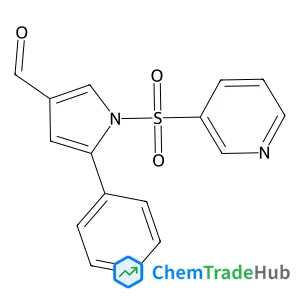
5-Phenyl-1-(pyridin-3-ylsulfonyl)-1H-pyrrole-3-carbaldehyde
CAS Number:
881676-90-0
Molecular Formula:
C16H12N2O3S
![(2S)-2-{[(9H-Fluoren-9-ylmethoxy)carbonyl]amino}-4-(methylselanyl)butanoic acid structure](https://static.chemtradehub.com/structs/121/1217852-49-7-f252.webp "(2S)-2-{[(9H-Fluoren-9-ylmethoxy)carbonyl]amino}-4-(methylselanyl)butanoic acid structure")
(2S)-2-{[(9H-Fluoren-9-ylmethoxy)carbonyl]amino}-4-(methylselanyl)butanoic acid
CAS Number:
1217852-49-7
Molecular Formula:
C20H21NO4Se

Recommended Suppliers




Disclaimer
This page provides academic journal information for reference and research purposes only. We are not affiliated with any journal publishers and do not handle publication submissions. For publication-related inquiries, please contact the respective journal publishers directly.
If you notice any inaccuracies in the information displayed, please contact us at support@chemtradehub.com. We will promptly review and address your concerns.