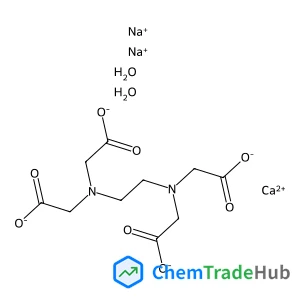
EthylenediaminetetraaceticacidcalciumDisodiumsalthydrate
CAS Number:
23411-34-9
Molecular Formula:
C10H16CaN2Na2O10
Hong Liu
Pre-stretching as a method for directing polymer crystallization offers a promising solution for addressing the limitations of solid polymer electrolytes in flexible batteries at ambient temperatures. In this study, we have investigated the ionic conductivity, mechanical behaviour, and microstructural and thermal properties of polyethylene oxide (PEO)-based polymer electrolytes with varying pre-strain levels. The results indicate that thermal stretching-induced pre-deformation can significantly increase the through-plane ionic conductivity, in-plane strength, stiffness of solid electrolytes, and cell-specific capacity. However, modulus and hardness decrease for pre-stretched films in the thickness direction. Notably, applying 50–80% pre-strain to the PEO matrix composites through thermal stretching may be preferred for improving the electrochemical cycling performance, as it can increase through-plane ionic conductivity by at least 1.6 times while maintaining compressive stiffness at 80% compared to their unstretched counterparts, while the in-plane strength and stiffness can be boosted by 120–140%. Besides, adding nanoceramics contributes to lithiated PEO exhibiting a higher enhancement coefficient than the pristine sample. This positive effect is because the pre-strain and nano-inorganic filler decrease crystallinity and increase the free volume size of pre-stretched PEO-based electrolytes.

Molecular Pharmacology

Israel Journal of Chemistry

Journal of Organometallic Chemistry

Proceedings of the National Academy of Sciences of the United States of America

Pharmacological Reviews

Journal of Heterocyclic Chemistry

Kinetics and Catalysis

Pure and Applied Chemistry

Organic Preparations and Procedures International

Science Progress
Sergey A. Kislenko, Victoria A. Nikitina, Renat R. Nazmutdinov
DOI: 10.1039/C5CP04566E
Luis Gutiérrez-Arzaluz, Fernando Cortés-Guzmán, Tomás Rocha-Rinza, Jorge Peón
DOI: 10.1039/C5CP03699B
Cathal Smyth, Daniel G. Oblinsky, Gregory D. Scholes
DOI: 10.1039/C5CP00295H
Gaosheng Nie, Jun Xu, Jianying He, Qingchi Xu, Zhiliang Zhang
DOI: 10.1039/C5CP05435D
Qianli Ma, Eva-Maria Hammer
DOI: 10.1039/C5CP05337D
Elizabeth S. Foreman, Kara M. Kapnas, YiTien Jou, Jarosław Kalinowski, David Feng, Craig Murray
DOI: 10.1039/C5CP04977F
Tomofumi Tada, Kazunari Yoshizawa
DOI: 10.1039/C5CP05423K
Monica Marinescu, Teng Zhang, Gregory J. Offer
DOI: 10.1039/C5CP05755H
DOI: 10.1039/C5CP07025B
Markus Martincic, Elzbieta Pach, Belén Ballesteros, Gerard Tobias
DOI: 10.1039/C5CP04664E
1H-Indazole-6-carbonitrile finds applications in pharmaceuticals, where it serve...
Waste containing Dioctyl (2E)-2-butenedioate (CAS: 2997-85-5) should be collecte...
Sodium [(1,2-benzoxazol-3-ylmethyl)sulfonyl]azanide is primarily used in pharmac...
Dimethyl 4-(4,4,5,5-tetramethyl-1,3,2-dioxaborolan-2-yl)-2,6-pyridinedicarboxyla...
Waste containing 2-Fluoro-6-hydrazinopyridine (CAS: 80714-39-2) should be manage...
6-Formyl-2-pyridinecarboxylic acid is an organic compound with the molecular for...
Research trends for this compound indicate a focus on its potential applications...
9H-Tribenzo[b,d,f]azepine is typically synthesized via a multi-step process invo...
1-Cyclopropyl-7-ethoxy-6-fluoro-8-methoxy-4-oxo-1,4-dihydro-3-quinolinecarboxyli...
Waste containing Methyl 3-oxo-1,2,3,4-tetrahydro-6-quinoxalinecarboxylate (CAS: ...

Physical Chemistry Chemical Physics (PCCP) is an international journal co-owned by 19 physical chemistry and physics societies from around the world. This journal publishes original, cutting-edge research in physical chemistry, chemical physics and biophysical chemistry. To be suitable for publication in PCCP, articles must include significant innovation and/or insight into physical chemistry; this is the most important criterion that reviewers and Editors will judge against when evaluating submissions. The journal has a broad scope and welcomes contributions spanning experiment, theory, computation and data science. Topical coverage includes spectroscopy, dynamics, kinetics, statistical mechanics, thermodynamics, electrochemistry, catalysis, surface science, quantum mechanics, quantum computing and machine learning. Interdisciplinary research areas such as polymers and soft matter, materials, nanoscience, energy, surfaces/interfaces, and biophysical chemistry are welcomed if they demonstrate significant innovation and/or insight into physical chemistry. Joined experimental/theoretical studies are particularly appreciated when complementary and based on up-to-date approaches.