












Ultrafast excited state hydrogen atom transfer in salicylideneaniline driven by changes in aromaticity
Literature Information
Publication Date
2015-08-06
DOI
10.1039/C5CP03699B
Impact Factor
3.676
Authors
Luis Gutiérrez-Arzaluz, Fernando Cortés-Guzmán, Tomás Rocha-Rinza, Jorge Peón
View Original
Abstract
We investigated two important unresolved issues on excited state intramolecular proton transfer (ESIPT) reactions, i.e., their driving force and the charge state of the transferred species by means of quantum chemical topology. We related changes in the aromaticity of a molecule after electron excitation to reaction dynamics in an excited state. Additionally, we found that the conveyed particle has a charge intermediate between that of a bare proton and a neutral hydrogen atom. We anticipate that the analysis presented in this communication will yield valuable insights into ESIPT and other similar photochemical reactions.
Related Literature
Design and biophysical characterization of atrazine-sensing peptides mimicking the Chlamydomonas reinhardtiiplastoquinone binding niche
Viviana Scognamiglio, Pasquale Stano, Amina Antonacci, Maya Dimova Lambreva, Giorgio Pochetti, Maria Teresa Giardi, Giuseppina Rea
2013-06-03
Paper
DOI: 10.1039/C3CP51955D
Growth of nanostructured nickel sulfide films on Ni foam as high-performance cathodes for lithium ion batteries
Na Feng, Duokai Hu, Peng Wang, Xiaolei Sun, Xiuwan Li, Deyan He
2013-04-23
Paper
DOI: 10.1039/C3CP50615K
Orbital-based insights into parallel-displaced and twisted conformations in π–π interactions
Patricia B. Lutz, Craig A. Bayse
2013-03-21
Paper
DOI: 10.1039/C3CP51077H
Can mitochondrial dysfunction be initiated by dissociative electron attachment to xenobiotics?
Stanislav A. Pshenichnyuk
2013-04-08
Paper
DOI: 10.1039/C3CP50614B
Atomic insight into copper nanostructures nucleation on bending graphene
Yezeng He, Hui Li, Yunfang Li, Kun Zhang, Yanyan Jiang, Xiufang Bian
2013-04-10
Paper
DOI: 10.1039/C3CP50876E
Remarks on time-dependent [current]-density functional theory for open quantum systems
2013-06-07
Paper
DOI: 10.1039/C3CP51127H
β-MnO2 as a cathode material for lithium ion batteries from first principles calculations
Li-Min Liu, Shi-Jin Zhao, Bai-Hai Li, Hao Liu, Xiu-Feng Lang
2013-04-05
Paper
DOI: 10.1039/C3CP50392E
Photodissociation dynamics of fulvenallene, C7H6
Jens Giegerich, Ingo Fischer
2013-06-14
Paper
DOI: 10.1039/C3CP52274A
Facile deposition of nanostructured cobalt oxide catalysts from molecular cobaloximes for efficient water oxidation
Ali Han, Haotian Wu, Zijun Sun, Hongxing Jia, Pingwu Du
2013-06-03
Communication
DOI: 10.1039/C3CP52275J
Atomic structure and edge magnetism in MoS2+x parallelogram shaped platelets
J. Karthikeyan, P. Murugan
2013-05-30
Paper
DOI: 10.1039/C3CP51499D
You might also like
Compound Q&A
What are the main uses of 1H-Indazole-6-carbonitrile (CAS: 141290-59-7)?
1H-Indazole-6-carbonitrile finds applications in pharmaceuticals, where it serve...
141290-59-71H-Indazole-6-carbon...
Compound Q&A
How should waste containing Dioctyl (2E)-2-butenedioate (CAS: 2997-85-5) be handled?
Waste containing Dioctyl (2E)-2-butenedioate (CAS: 2997-85-5) should be collecte...
2997-85-5Dioctyl (2E)-2-buten...
Compound Q&A
What industries use Sodium [(1,2-benzoxazol-3-ylmethyl)sulfonyl]azanide (CAS: 68291-98-5)?
Sodium [(1,2-benzoxazol-3-ylmethyl)sulfonyl]azanide is primarily used in pharmac...
68291-98-5Sodium [(1,2-benzoxa...
Compound Q&A
Are there alternatives to Dimethyl 4-(4,4,5,5-tetramethyl-1,3,2-dioxaborolan-2-yl)-2,6-pyridinedicarboxylate (CAS: 741709-66-0) in synthesis?
Dimethyl 4-(4,4,5,5-tetramethyl-1,3,2-dioxaborolan-2-yl)-2,6-pyridinedicarboxyla...
741709-66-0Dimethyl 4-(4,4,5,5-...
Compound Q&A
How should waste containing 2-Fluoro-6-hydrazinopyridine (CAS: 80714-39-2) be handled?
Waste containing 2-Fluoro-6-hydrazinopyridine (CAS: 80714-39-2) should be manage...
80714-39-22-Fluoro-6-hydrazino...
Compound Q&A
What is 6-Formyl-2-pyridinecarboxylic acid (CAS: 499214-11-8)?
6-Formyl-2-pyridinecarboxylic acid is an organic compound with the molecular for...
499214-11-86-Formyl-2-pyridinec...
Compound Q&A
What is the market or research trend for 3-(3,4-dimethoxyphenyl)-2,5-dimethyl-N-(2-morpholin-4-ylethyl)pyrazolo[1,5-a]pyrimidin-7-amine (CAS: 900874-91-1)?
Research trends for this compound indicate a focus on its potential applications...
900874-91-13-(3,4-dimethoxyphen...
Compound Q&A
How is 9H-Tribenzo[b,d,f]azepine (CAS: 29875-73-8) typically synthesized?
9H-Tribenzo[b,d,f]azepine is typically synthesized via a multi-step process invo...
29875-73-89H-Tribenzo[b,d,f]az...
Compound Q&A
How is 1-Cyclopropyl-7-ethoxy-6-fluoro-8-methoxy-4-oxo-1,4-dihydro-3-quinolinecarboxylic acid (CAS: 1797982-51-4) typically synthesized?
1-Cyclopropyl-7-ethoxy-6-fluoro-8-methoxy-4-oxo-1,4-dihydro-3-quinolinecarboxyli...
1797982-51-41-Cyclopropyl-7-etho...
Compound Q&A
How should waste containing Methyl 3-oxo-1,2,3,4-tetrahydro-6-quinoxalinecarboxylate (CAS: 671820-52-3) be handled?
Waste containing Methyl 3-oxo-1,2,3,4-tetrahydro-6-quinoxalinecarboxylate (CAS: ...
671820-52-3Methyl 3-oxo-1,2,3,4...
Source Journal
Physical Chemistry Chemical Physics

CiteScore:
5.5
Self-citation Rate:
10.3%
Articles per Year:
3036
Physical Chemistry Chemical Physics (PCCP) is an international journal co-owned by 19 physical chemistry and physics societies from around the world. This journal publishes original, cutting-edge research in physical chemistry, chemical physics and biophysical chemistry. To be suitable for publication in PCCP, articles must include significant innovation and/or insight into physical chemistry; this is the most important criterion that reviewers and Editors will judge against when evaluating submissions. The journal has a broad scope and welcomes contributions spanning experiment, theory, computation and data science. Topical coverage includes spectroscopy, dynamics, kinetics, statistical mechanics, thermodynamics, electrochemistry, catalysis, surface science, quantum mechanics, quantum computing and machine learning. Interdisciplinary research areas such as polymers and soft matter, materials, nanoscience, energy, surfaces/interfaces, and biophysical chemistry are welcomed if they demonstrate significant innovation and/or insight into physical chemistry. Joined experimental/theoretical studies are particularly appreciated when complementary and based on up-to-date approaches.
Recommended Compounds

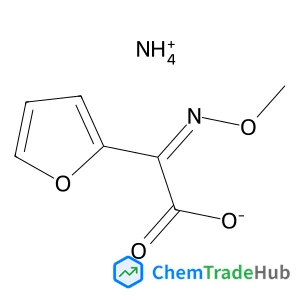
Ammonium (Z)-2-(furan-2-yl)-2-(methoxyimino)acetate
CAS Number:
97148-39-5
Molecular Formula:
C7H10N2O4
Recommended Suppliers





Disclaimer
This page provides academic journal information for reference and research purposes only. We are not affiliated with any journal publishers and do not handle publication submissions. For publication-related inquiries, please contact the respective journal publishers directly.
If you notice any inaccuracies in the information displayed, please contact us at support@chemtradehub.com. We will promptly review and address your concerns.