












Retraction: Carbon content drives high temperature superconductivity in a carbonaceous sulfur hydride below 100 GPa
Literature Information
Publication Date
2024-01-15
DOI
10.1039/D3CC90410E
Impact Factor
6.222
Authors
Ines E. Collings, Elliot Snider, Dean Smith, Sylvain Petitgirard, Jesse S. Smith, Elyse Jones, Paul Ellison, Keith V. Lawler
View Original
Abstract
Retraction of ‘Carbon content drives high temperature superconductivity in a carbonaceous sulfur hydride below 100 GPa’ by G. Alexander Smith et al., Chem. Commun., 2022, 58, 9064–9067, https://doi.org/10.1039/D2CC03170A.
Related Literature
A new approach to stereospecific synthesis of P-chiral phosphorothioates. Preparation of diastereomeric dithymidyl-(3′-5′) phosphorothioates
Helena Almer, Tomas Szabo
2003-12-19
Communication
DOI: 10.1039/B311912B
Manipulation of the stereochemical outcome and product distribution in the Henry reaction using CO2 pressure
Andrew J. Parratt, Dave J. Adams, Anthony A. Clifford, Christopher M. Rayner
2004-10-08
Communication
DOI: 10.1039/B409451D
The substituent-dependent base-treatment chemistry of (η5-C5H5)Fe(CO)2SiR2SiR2Cl: formation of 1,2-disila-3-metallacyclobutanes, their ring-opened polymers, migrations and substitutions
Hemant K. Sharma, Keith H. Pannell
2004-10-06
Communication
DOI: 10.1039/B410822A
Photochemical regulation of the activity of an endonuclease BamHI using an azobenzene moiety incorporated site-selectively into the dimer interface
Koji Nakayama, Masayuki Endo, Tetsuro Majima
2004-09-20
Communication
DOI: 10.1039/B409844G
Synthesis and structural characterization of the first unsymmetrical diarylpalladium complex trans-Pd(C6F5)(2,4,6-C6F3H2)(PEt3)2, derived from transmetallation between 2,4,6-trifluorophenylboronic acid and trans-Pd(C6F5)I(PEt3)2
Yasushi Nishihara, Hiroyuki Onodera, Kohtaro Osakada
2003-12-04
Communication
DOI: 10.1039/B308741G
First example of chiral N-heterocyclic carbenes as catalysts for kinetic resolution
Yumiko Suzuki, Kaori Yamauchi, Kazuyuki Muramatsu, Masayuki Sato
2004-10-11
Communication
DOI: 10.1039/B411855C
Thermally stable macroporous zirconium phosphates with supermicroporous walls: a self-formation phenomenon of hierarchy
Tie-Zhen Ren, Zhong-Yong Yuan, Bao-Lian Su
2004-10-08
Communication
DOI: 10.1039/B410763B
Nitrile oxide cycloadditions in supercritical carbon dioxide
Connie K. Y. Lee, Andrew B. Holmes, Bushra Al-Duri, Gary A. Leeke, Regina C. D. Santos, Jonathan P. K. Seville
2004-10-05
Communication
DOI: 10.1039/B411561A
In flagrante metallo-cyclophane self-assembly?
Peter J. Cragg, Fenton R. Heirtzler, Mark J. Howard, Ivan Prokes, Thomas Weyhermüller
2004-01-07
Communication
DOI: 10.1039/B310558J
A photo-responsive organogel
Julian Eastoe, Margarita Sánchez-Dominguez, Paul Wyatt, Richard K. Heenan
2004-10-01
Communication
DOI: 10.1039/B410158H
You might also like
Compound Q&A
What precautions should be taken when handling 2-Chloro-1,2-bis(4-methylphenyl)ethanone (CAS: 71193-32-3)?
When handling 2-Chloro-1,2-bis(4-methylphenyl)ethanone (CAS: 71193-32-3), it is ...
71193-32-32-Chloro-1,2-bis(4-m...
Compound Q&A
What industries use 4-Ethoxy-3-(5-methyl-4-oxo-7-propyl-1,4-dihydroimidazo[5,1-f][1,2,4]triazin-2-yl)benzenesulfonyl chloride (CAS: 224789-26-8)?
4-Ethoxy-3-(5-methyl-4-oxo-7-propyl-1,4-dihydroimidazo[5,1-f][1,2,4]triazin-2-yl...
224789-26-84-Ethoxy-3-(5-methyl...
Compound Q&A
How should Methyl 3-Oxo-4-Androsten-17-Carboxylate (CAS: 2681-55-2) be stored?
Methyl 3-Oxo-4-Androsten-17-Carboxylate (CAS: 2681-55-2) should be stored in a c...
2681-55-2Methyl 3-Oxo-4-Andro...
Compound Q&A
What are the main uses of (R)-3-Amino-4-(3-hexylphenylamino)-4-oxobutylphosphonic acid (CAS: 909725-61-7)?
(R)-3-Amino-4-(3-hexylphenylamino)-4-oxobutylphosphonic acid is primarily used i...
909725-61-7(R)-3-Amino-4-(3-hex...
Compound Q&A
What regulatory guidelines apply to 2-Methyl-2-propanyl 3-amino-3-carbamoyl-1-azetidinecarboxylate (CAS: 1254120-14-3)?
2-Methyl-2-propanyl 3-amino-3-carbamoyl-1-azetidinecarboxylate (CAS: 1254120-14-...
1254120-14-32-Methyl-2-propanyl ...
Compound Q&A
Are there alternatives to (E)-4-(tert-Butoxy)-4-oxobut-2-enoic acid (CAS: 135355-96-3) in synthesis?
There are alternative reagents that can be used in synthesis instead of (E)-4-(t...
135355-96-3(E)-4-(tert-Butoxy)-...
Compound Q&A
What are the physical and chemical properties of [2-(3-Chlorophenyl)-1,3-thiazol-4-yl]methanol (CAS: 121202-20-8)?
[2-(3-Chlorophenyl)-1,3-thiazol-4-yl]methanol (CAS: 121202-20-8) is a crystallin...
121202-20-8[2-(3-Chlorophenyl)-...
Compound Q&A
What is the market or research trend for Methyl (2S)-[(4S)-2,2-dimethyl-1,3-dioxolan-4-yl]{[(4-methylphenyl)sulfonyl]oxy}acetate (CAS: 166249-17-8)?
The market and research trends for Methyl (2S)-[(4S)-2,2-dimethyl-1,3-dioxolan-4...
166249-17-8Methyl (2S)-[(4S)-2,...
Compound Q&A
What is the market or research trend for 1-Bromo-2-isocyanatoethane (CAS: 42865-19-0)?
The market for 1-Bromo-2-isocyanatoethane (CAS: 42865-19-0) is driven by its use...
42865-19-01-Bromo-2-isocyanato...
Compound Q&A
What are the main uses of 4-Nitro-D-phenylalanine hydrochloride (CAS: 147065-06-3)?
4-Nitro-D-phenylalanine hydrochloride (CAS: 147065-06-3) is primarily used in re...
147065-06-34-Nitro-D-phenylalan...
Source Journal
Chemical Communications

CiteScore:
8.6
Self-citation Rate:
4.7%
Articles per Year:
2458
ChemComm publishes urgent research which is of outstanding significance and interest to experts in the field, while also appealing to the journal’s broad chemistry readership. Our communication format is ideally suited to short, urgent studies that are of such importance that they require accelerated publication. Our scope covers all topics in chemistry, and research at the interface of chemistry and other disciplines (such as materials science, nanoscience, physics, engineering and biology) where there is a significant novelty in the chemistry aspects. Major topic areas covered include: Analytical Chemistry Catalysis Chemical Biology and medicinal chemistry Computational Chemistry and Machine Learning Energy and sustainable chemistry Environmental Chemistry Green Chemistry Inorganic Chemistry Materials Chemistry Nanoscience Organic Chemistry Physical Chemistry Polymer Chemistry Supramolecular Chemistry
Recommended Compounds
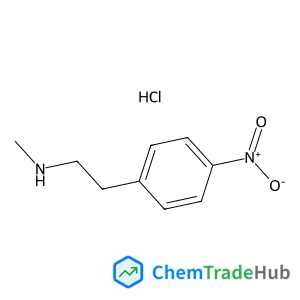
N-Methyl-2-(4-nitrophenyl)ethanamine hydrochloride (1:1)
CAS Number:
166943-39-1
Molecular Formula:
C9H13ClN2O2
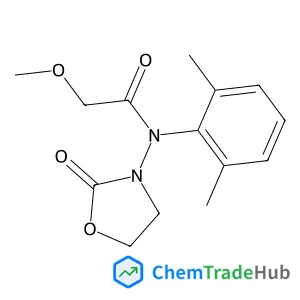
N-(2,6-Dimethylphenyl)-2-methoxy-N-(2-oxo-1,3-oxazolidin-3-yl)acetamide
CAS Number:
77732-09-3
Molecular Formula:
C14H18N2O4
Recommended Suppliers





Disclaimer
This page provides academic journal information for reference and research purposes only. We are not affiliated with any journal publishers and do not handle publication submissions. For publication-related inquiries, please contact the respective journal publishers directly.
If you notice any inaccuracies in the information displayed, please contact us at support@chemtradehub.com. We will promptly review and address your concerns.