


A robust depolymerization route for polysiloxanes
Literature Information
Publication Date
2024-01-09
DOI
10.1039/D3CC05509D
Impact Factor
6.222
Authors
Matthew J. Warner, Jessica W. Kopatz, David P. Schafer, Jessica Kustas, Patricia S. Sawyer, Anne M. Grillet, Brad H. Jones, Koushik Ghosh
View Original
Abstract
A versatile, robust, and stable tetrabutylammonium difluorotriphenylsilicate (TBAT) catalyst has been deployed for efficient depolymerization of silicones. This catalyst is soluble in a variety of organic solvents and is stable up to 170 °C, enabling a wide range of reaction conditions under which F−-catalysed siloxane bond cleavage can be initiated. This effort offers significant advancement overcoming the traditional limitations of silicone depolymerization, such as high catalyst loading, storage and handling, and few viable reaction media.
Recommended Journals

Medicinal Chemistry Research

Colloid Journal

Journal of the Indian Institute of Science

Journal of Chemical Sciences

Critical Reviews in Solid State and Materials Sciences

Acta Metallurgica Sinica-English Letters

Herald of the Russian Academy of Sciences

Atomization and Sprays

Chinese Journal of Chemistry

Heteroatom Chemistry
Related Literature
Growth of CdS nanoparticles on the aligned carbon nanotubes
A. V. Okotrub, I. P. Asanov, S. V. Larionov, T. G. Leonova, L. G. Bulusheva
2010-07-07
Paper
DOI: 10.1039/C000189A
Nitrogen oxide reaction with six-atom silver clusters supported on LTA zeolite
Amgalanbaatar Baldansuren, Rüdiger-A. Eichel, Emil Roduner
2009-06-23
Paper
DOI: 10.1039/B903870A
Temperature effects on COadsorption/desorption at Pt film electrodes: an electrochemical in situ infrared spectroscopic study
Bin Geng, Jun Cai, Sangzi Liang, Shao Xiong Liu, Ming Fang Li, Yan-Xia Chen
2010-07-26
Paper
DOI: 10.1039/C002665D
Molecular nanomagnets and magnetic nanoparticles: the EMR contribution to a common approach
M. Fittipaldi, L. Sorace, A.-L. Barra, C. Sangregorio, R. Sessoli, D. Gatteschi
2009-07-09
Perspective
DOI: 10.1039/B905880J
Solvent-shift Monte Carlo: a cluster algorithm for solvated systems
Christopher Adam Hixson, James P. Benigni, David J. Earl
2009-06-15
Communication
DOI: 10.1039/B905254B
The influence of concentration on the molecular surface structure of simple and mixed aqueous electrolytes
Niklas Ottosson, Jan Heyda, Erik Wernersson, Wandared Pokapanich, Svante Svensson, Bernd Winter, Gunnar Öhrwall, Pavel Jungwirth, Olle Björneholm
2010-07-08
Paper
DOI: 10.1039/C0CP00365D
In situ infrared (FTIR) study of the mechanism of the borohydride oxidation reaction
B. Molina Concha, M. Chatenet, F. Maillard, E. A. Ticianelli, F. H. B. Lima, R. B. de Lima
2010-08-02
Paper
DOI: 10.1039/C003652H
Structure and bonding of [VIVO(acac)2] on the surface of AlF3 as studied by pulsed electron nuclear double resonance and hyperfine sublevel correlation spectroscopy
Vijayasarathi Nagarajan, Barbara Müller, Oksana Storcheva, Klaus Köhler, Andreas Pöppl
2009-06-10
Paper
DOI: 10.1039/B903826B
The effect of PAMAM G6 dendrimers on the structure of lipidvesicles
Anna Åkesson, Kristian Moss Bendtsen, Manja A. Beherens, Jan Skov Pedersen, Viveka Alfredsson, Marité Cárdenas Gómez
2010-08-16
Paper
DOI: 10.1039/C0CP00172D
Determining the structure of α-phenylethyl isocyanide in chloroform by VCD spectroscopy and DFT calculations—simple case or challenge?
Christian Merten, Marc Amkreutz, Andreas Hartwig
2010-08-16
Paper
DOI: 10.1039/C004009F
You might also like
Compound Q&A
What precautions should be taken when handling 2-Chloro-1,2-bis(4-methylphenyl)ethanone (CAS: 71193-32-3)?
When handling 2-Chloro-1,2-bis(4-methylphenyl)ethanone (CAS: 71193-32-3), it is ...
71193-32-32-Chloro-1,2-bis(4-m...
Compound Q&A
What industries use 4-Ethoxy-3-(5-methyl-4-oxo-7-propyl-1,4-dihydroimidazo[5,1-f][1,2,4]triazin-2-yl)benzenesulfonyl chloride (CAS: 224789-26-8)?
4-Ethoxy-3-(5-methyl-4-oxo-7-propyl-1,4-dihydroimidazo[5,1-f][1,2,4]triazin-2-yl...
224789-26-84-Ethoxy-3-(5-methyl...
Compound Q&A
How should Methyl 3-Oxo-4-Androsten-17-Carboxylate (CAS: 2681-55-2) be stored?
Methyl 3-Oxo-4-Androsten-17-Carboxylate (CAS: 2681-55-2) should be stored in a c...
2681-55-2Methyl 3-Oxo-4-Andro...
Compound Q&A
What are the main uses of (R)-3-Amino-4-(3-hexylphenylamino)-4-oxobutylphosphonic acid (CAS: 909725-61-7)?
(R)-3-Amino-4-(3-hexylphenylamino)-4-oxobutylphosphonic acid is primarily used i...
909725-61-7(R)-3-Amino-4-(3-hex...
Compound Q&A
What regulatory guidelines apply to 2-Methyl-2-propanyl 3-amino-3-carbamoyl-1-azetidinecarboxylate (CAS: 1254120-14-3)?
2-Methyl-2-propanyl 3-amino-3-carbamoyl-1-azetidinecarboxylate (CAS: 1254120-14-...
1254120-14-32-Methyl-2-propanyl ...
Compound Q&A
Are there alternatives to (E)-4-(tert-Butoxy)-4-oxobut-2-enoic acid (CAS: 135355-96-3) in synthesis?
There are alternative reagents that can be used in synthesis instead of (E)-4-(t...
135355-96-3(E)-4-(tert-Butoxy)-...
Compound Q&A
What are the physical and chemical properties of [2-(3-Chlorophenyl)-1,3-thiazol-4-yl]methanol (CAS: 121202-20-8)?
[2-(3-Chlorophenyl)-1,3-thiazol-4-yl]methanol (CAS: 121202-20-8) is a crystallin...
121202-20-8[2-(3-Chlorophenyl)-...
Compound Q&A
What is the market or research trend for Methyl (2S)-[(4S)-2,2-dimethyl-1,3-dioxolan-4-yl]{[(4-methylphenyl)sulfonyl]oxy}acetate (CAS: 166249-17-8)?
The market and research trends for Methyl (2S)-[(4S)-2,2-dimethyl-1,3-dioxolan-4...
166249-17-8Methyl (2S)-[(4S)-2,...
Compound Q&A
What is the market or research trend for 1-Bromo-2-isocyanatoethane (CAS: 42865-19-0)?
The market for 1-Bromo-2-isocyanatoethane (CAS: 42865-19-0) is driven by its use...
42865-19-01-Bromo-2-isocyanato...
Compound Q&A
What are the main uses of 4-Nitro-D-phenylalanine hydrochloride (CAS: 147065-06-3)?
4-Nitro-D-phenylalanine hydrochloride (CAS: 147065-06-3) is primarily used in re...
147065-06-34-Nitro-D-phenylalan...
Source Journal
Chemical Communications

CiteScore:
8.6
Self-citation Rate:
4.7%
Articles per Year:
2458
ChemComm publishes urgent research which is of outstanding significance and interest to experts in the field, while also appealing to the journal’s broad chemistry readership. Our communication format is ideally suited to short, urgent studies that are of such importance that they require accelerated publication. Our scope covers all topics in chemistry, and research at the interface of chemistry and other disciplines (such as materials science, nanoscience, physics, engineering and biology) where there is a significant novelty in the chemistry aspects. Major topic areas covered include: Analytical Chemistry Catalysis Chemical Biology and medicinal chemistry Computational Chemistry and Machine Learning Energy and sustainable chemistry Environmental Chemistry Green Chemistry Inorganic Chemistry Materials Chemistry Nanoscience Organic Chemistry Physical Chemistry Polymer Chemistry Supramolecular Chemistry
Recommended Compounds
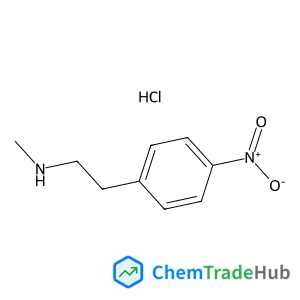
N-Methyl-2-(4-nitrophenyl)ethanamine hydrochloride (1:1)
CAS Number:
166943-39-1
Molecular Formula:
C9H13ClN2O2


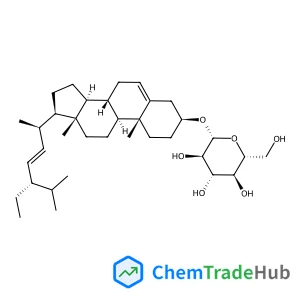
(3beta,22E)-Stigmasta-5,22-dien-3-yl beta-D-glucopyranoside
CAS Number:
19716-26-8
Molecular Formula:
C35H58O6
Recommended Suppliers




Disclaimer
This page provides academic journal information for reference and research purposes only. We are not affiliated with any journal publishers and do not handle publication submissions. For publication-related inquiries, please contact the respective journal publishers directly.
If you notice any inaccuracies in the information displayed, please contact us at support@chemtradehub.com. We will promptly review and address your concerns.