












Covalent PROTAC design method based on a sulfonyl pyridone probe
Literature Information
Publication Date
2023-11-29
DOI
10.1039/D3CC05127G
Impact Factor
6.222
Authors
Yaqi Wang, Zhanfeng Hou, Licheng Tu, Chuan Wan, Jianbo Liu, Rui Wang, Wei Han, Jianlong Wu, Fei Lu
View Original
Abstract
Covalent proteolysis-targeting chimeras (PROTACs) offer enhanced selectivity, prolonged action, and increased efficacy against challenging target proteins. The conventional approach relies on covalent ligands, but our study presents an innovative method employing an N-sulfonyl pyridone warhead to selectively target tyrosine (Tyr) residues. The von Hippel–Lindau (VHL) moiety is transferred from the warhead to the exposed Tyr, allowing us to design a STING degrader (DC50 0.53 μM, Dmax 56.65%). This approach showcases the potential of nucleophilic amino acid labeling probes, particularly for proteins lacking easily accessible cysteine residues, opening new possibilities for covalent PROTAC design and targeted protein degradation therapies.
Related Literature
Deep traps can reduce memory effects of shallower ones in scintillators
Federico Moretti, Gaël Patton, Andrei Belsky, Ashot G. Petrosyan, Christophe Dujardin
2015-12-01
Paper
DOI: 10.1039/C5CP05711F
Dielectric relaxations of polyether-based polyurethanes containing ionic liquids as antistatic agents
Keti Vezzù, Enrico Negro
2015-12-07
Paper
DOI: 10.1039/C5CP04090F
Fabrication of hierarchically structured novel redox-mediator-free ZnIn2S4 marigold flower/Bi2WO6 flower-like direct Z-scheme nanocomposite photocatalysts with superior visible light photocatalytic efficiency
Wan-Kuen Jo, Joon Yeob Lee, Thillai Sivakumar Natarajan
2015-11-27
Paper
DOI: 10.1039/C5CP06176H
Thermodynamics of solvent interaction with the metal–organic framework MOF-5
Di Wu, Carl K. Brozek, Mircea Dincă
2015-11-26
Paper
DOI: 10.1039/C5CP05370F
Mechanisms and energetics for N-glycosidic bond cleavage of protonated 2′-deoxyguanosine and guanosine
R. R. Wu, Yu Chen, M. T. Rodgers
2015-12-17
Paper
DOI: 10.1039/C5CP05738H
Characterization of nitrogen species incorporated into graphite using low energy nitrogen ion sputtering
Hisao Kiuchi, Takahiro Kondo, Masataka Sakurai, Donghui Guo, Junji Nakamura, Maki Kawai, Masaharu Oshima
2015-11-16
Paper
DOI: 10.1039/C5CP02305J
High-performance lithium storage in an ultrafine manganese fluoride nanorod anode with enhanced electrochemical activation based on conversion reaction
Kun Rui, Zhaoyin Wen, Xiao Huang, Yan Lu, Jun Jin, Chen Shen
2016-01-04
Paper
DOI: 10.1039/C5CP07361H
New routes for improving adhesion at the metal/α-Al2O3(0001) interface
Alexey Koltsov, Didier Loison
2015-12-18
Paper
DOI: 10.1039/C5CP06435J
Probing the microsolvation of a quaternary ion complex: gas phase vibrational spectroscopy of (NaSO4−)2(H2O)n=0–6, 8
Torsten Wende, Nadja Heine, Tara I. Yacovitch
2015-11-18
Paper
DOI: 10.1039/C5CP05762K
Geometrical and energetical structural changes in organic dyes for dye-sensitized solar cells probed using photoelectron spectroscopy and DFT
Susanna K. Eriksson, Ida Josefsson, Hanna Ellis, Anna Amat, Mariachiara Pastore, Johan Oscarsson, Rebecka Lindblad, Anna I. K. Eriksson, Erik M. J. Johansson, Gerrit Boschloo, Anders Hagfeldt, Simona Fantacci, Michael Odelius, Håkan Rensmo
2015-11-05
Paper
DOI: 10.1039/C5CP04589D
You might also like
Compound Q&A
How should waste containing 6-Chloro-5-(2'-hydroxy-3'-methoxy-4-biphenylyl)-3-(3-methoxyphenyl)-1H-pyrrolo[3,2-d]pyrimidine-2,4(3H,5H)-dione (CAS: 1346607-05-3) be handled?
Waste containing 6-Chloro-5-(2'-hydroxy-3'-methoxy-4-biphenylyl)-3-(3-methoxyphe...
1346607-05-36-Chloro-5-(2'-hydro...
Compound Q&A
What are the main uses of (3alpha,5alpha)-3-Hydroxypregnane-11,20-dione (CAS: 23930-19-0)?
(3alpha,5alpha)-3-Hydroxypregnane-11,20-dione is primarily used in the pharmaceu...
23930-19-0(3alpha,5alpha)-3-Hy...
Compound Q&A
What is the market or research trend for 4-Amino-6-chloro-2-pyridinecarboxylic acid (CAS: 546141-56-4)?
The market for 4-Amino-6-chloro-2-pyridinecarboxylic acid (CAS: 546141-56-4) is ...
546141-56-44-Amino-6-chloro-2-p...
Compound Q&A
Are there alternatives to (2-Benzoylethyl)trimethylammonium chloride (CAS: 24472-88-6) in synthesis?
Alternatives to (2-Benzoylethyl)trimethylammonium chloride (CAS: 24472-88-6) in ...
24472-88-6(2-Benzoylethyl)trim...
Compound Q&A
Is N-[4-Nitro-3-(trifluoromethyl)phenyl]acetamide (CAS: 393-12-4) safe?
N-[4-Nitro-3-(trifluoromethyl)phenyl]acetamide (CAS: 393-12-4) is generally safe...
393-12-4N-[4-Nitro-3-(triflu...
Compound Q&A
Are there alternatives to [(4R,5R,6S)-5-hydroxy-10-imino-3,7-dioxa-1,9-diazatricyclo[6.4.0.02,6]dodeca-8,11-dien-4-yl]methyl dihydrogen phosphate (CAS: 39679-56-6) in synthesis?
Alternative reagents such as other phosphates or similar functional groups can b...
39679-56-6[(4R,5R,6S)-5-hydrox...
Compound Q&A
Are there alternatives to N,N'-Bis(3-aminopropyl)-1,3-propanediamine (CAS: 4605-14-5) in synthesis?
There are alternatives to N,N'-Bis(3-aminopropyl)-1,3-propanediamine (CAS: 4605-...
4605-14-5N,N'-Bis(3-aminoprop...
Compound Q&A
What precautions should be taken when handling Aluminium trihexadecanoate (CAS: 555-35-1)?
When handling Aluminium trihexadecanoate, it is important to use appropriate per...
555-35-1Aluminium trihexadec...
Compound Q&A
What is (1,1-Dioxido-3-oxo-1,2-benzothiazol-2(3H)-yl)acetic acid (CAS: 52188-11-1)?
(1,1-Dioxido-3-oxo-1,2-benzothiazol-2(3H)-yl)acetic acid is a chemical compound ...
52188-11-1(1,1-Dioxido-3-oxo-1...
Compound Q&A
Are there alternatives to 5,5-dimethyloxolan-2-one (CAS: 3123-97-5) in synthesis?
Several alternatives to 5,5-dimethyloxolan-2-one (CAS: 3123-97-5) can be used in...
3123-97-55,5-dimethyloxolan-2...
Source Journal
Chemical Communications

CiteScore:
8.6
Self-citation Rate:
4.7%
Articles per Year:
2458
ChemComm publishes urgent research which is of outstanding significance and interest to experts in the field, while also appealing to the journal’s broad chemistry readership. Our communication format is ideally suited to short, urgent studies that are of such importance that they require accelerated publication. Our scope covers all topics in chemistry, and research at the interface of chemistry and other disciplines (such as materials science, nanoscience, physics, engineering and biology) where there is a significant novelty in the chemistry aspects. Major topic areas covered include: Analytical Chemistry Catalysis Chemical Biology and medicinal chemistry Computational Chemistry and Machine Learning Energy and sustainable chemistry Environmental Chemistry Green Chemistry Inorganic Chemistry Materials Chemistry Nanoscience Organic Chemistry Physical Chemistry Polymer Chemistry Supramolecular Chemistry
Recommended Compounds
![N-{[(2-Methyl-2-propanyl)oxy]carbonyl}-L-methionylglycine structure](https://static.chemtradehub.com/structs/234/23446-03-9-e1e5.webp "N-{[(2-Methyl-2-propanyl)oxy]carbonyl}-L-methionylglycine structure")
N-{[(2-Methyl-2-propanyl)oxy]carbonyl}-L-methionylglycine
CAS Number:
23446-03-9
Molecular Formula:
C12H22N2O5S
![1-{3-[4-Amino-3-(4-phenoxyphenyl)-1H-pyrazolo[3,4-d]pyrimidin-1-yl]-1-piperidinyl}-2,3-dihydroxy-1-propanone structure](https://static.chemtradehub.com/structs/122/1226872-27-0-e037.webp "1-{3-[4-Amino-3-(4-phenoxyphenyl)-1H-pyrazolo[3,4-d]pyrimidin-1-yl]-1-piperidinyl}-2,3-dihydroxy-1-propanone structure")
1-{3-[4-Amino-3-(4-phenoxyphenyl)-1H-pyrazolo[3,4-d]pyrimidin-1-yl]-1-piperidinyl}-2,3-dihydroxy-1-propanone
CAS Number:
1226872-27-0
Molecular Formula:
C25H26N6O4

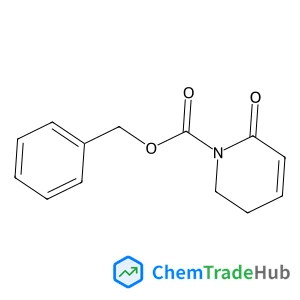
Benzyl 6-oxo-3,6-dihydro-1(2H)-pyridinecarboxylate
CAS Number:
725746-35-0
Molecular Formula:
C13H13NO3
Recommended Suppliers





Disclaimer
This page provides academic journal information for reference and research purposes only. We are not affiliated with any journal publishers and do not handle publication submissions. For publication-related inquiries, please contact the respective journal publishers directly.
If you notice any inaccuracies in the information displayed, please contact us at support@chemtradehub.com. We will promptly review and address your concerns.