












New routes for improving adhesion at the metal/α-Al2O3(0001) interface
Literature Information
Publication Date
2015-12-18
DOI
10.1039/C5CP06435J
Impact Factor
3.676
Authors
Alexey Koltsov, Didier Loison
View Original
Abstract
With the advent of new steel grades, galvanic protection by zinc coating faces a new paradigm. Indeed, enrichment in strengthening elements prone to oxidation, such as Al, Mn, and Si, leads to the formation of oxide films that are poorly wet by zinc. We study herein routes for the improvement of adhesion at the model Zn/α-Al2O3 interface by the addition of metals. As a first step, with the help of ab initio results on the adsorption characteristics of transition metal adatoms at α-alumina surfaces, we establish and rationalize clear trends in both the behavior of metal-alumina interaction strength and the relative thermodynamic stability of configurations with weakly and strongly bound metal adatoms. The reasons for the enhanced binding strength of transition metals, such as Cr, maintained regardless of the precise alumina termination and the surface charge state are pointed out. On these grounds, possible improvements of adhesion under realistic conditions are discussed. It is predicted that enrichment in transition metals, such as Cr, may produce strongly adhesive interfaces that lead to cohesive cleavage.
Recommended Journals
Related Literature
The role of small molecules in cell and gene therapy
Lewis L. Brayshaw, Carlos Martinez-Fleites, Takis Athanasopoulos, Thomas Southgate, Laurent Jespers, Christopher Herring
2020-12-24
Review Article
DOI: 10.1039/D0MD00221F
Expanding the repertoire of methanocarba nucleosides from purinergic signaling to diverse targets
Kenneth A. Jacobson, Veronica Salmaso, R. Rama Suresh, Dilip K. Tosh
2021-07-13
Review Article
DOI: 10.1039/D1MD00167A
Identification of P218 as a potent inhibitor of Mycobacterium ulcerans DHFR
Rachael Zigweid, Bart L. Staker
2020-10-22
Research Article
DOI: 10.1039/D0MD00303D
Virtual screening and in vitro validation identifies the first reported inhibitors of Salmonella enterica HPPK
Ronel Müller, Tiaan M. Gerwel, Magambo Phillip Kimuda, Özlem Tastan Bishop, Clinton G. L. Veale, Heinrich C. Hoppe
2021-08-23
Research Article
DOI: 10.1039/D1MD00237F
Mycobacterial drug discovery
Katherine A. Abrahams, Gurdyal S. Besra
2020-11-06
Review Article
DOI: 10.1039/D0MD00261E
The tridecaptins: non-ribosomal peptides that selectively target Gram-negative bacteria
Samantha J. Bann, Ross D. Ballantine, Stephen A. Cochrane
2021-01-22
Review Article
DOI: 10.1039/D0MD00413H
Discovery, synthesis and biological characterization of a series of N-(1-(1,1-dioxidotetrahydrothiophen-3-yl)-3-methyl-1H-pyrazol-5-yl)acetamide ethers as novel GIRK1/2 potassium channel activators
Swagat Sharma, Lauren Lesiak, Christopher D. Aretz, Yu Du, Sushil Kumar, Nagsen Gautam, Yazen Alnouti, Nikilesh V. Dhuria, Yashpal S. Chhonker, C. David Weaver, Corey R. Hopkins
2021-06-21
Research Article
DOI: 10.1039/D1MD00129A
Synthesis and antitumour evaluation of indole-2-carboxamides against paediatric brain cancer cells
Shahinda S. R. Alsayed, Amreena Suri, Anders W. Bailey, Samuel Lane, Chiang-Ching Huang, Li-Fang Yu, Michael Kassiou, Hendra Gunosewoyo
2021-08-23
Research Article
DOI: 10.1039/D1MD00065A
Human carboxylesterases and fluorescent probes to image their activity in live cells
Anchal Singh, Mingze Gao, Michael W. Beck
2021-05-18
Review Article
DOI: 10.1039/D1MD00073J
You might also like
Compound Q&A
How should waste containing 6-Chloro-5-(2'-hydroxy-3'-methoxy-4-biphenylyl)-3-(3-methoxyphenyl)-1H-pyrrolo[3,2-d]pyrimidine-2,4(3H,5H)-dione (CAS: 1346607-05-3) be handled?
Waste containing 6-Chloro-5-(2'-hydroxy-3'-methoxy-4-biphenylyl)-3-(3-methoxyphe...
1346607-05-36-Chloro-5-(2'-hydro...
Compound Q&A
What are the main uses of (3alpha,5alpha)-3-Hydroxypregnane-11,20-dione (CAS: 23930-19-0)?
(3alpha,5alpha)-3-Hydroxypregnane-11,20-dione is primarily used in the pharmaceu...
23930-19-0(3alpha,5alpha)-3-Hy...
Compound Q&A
What is the market or research trend for 4-Amino-6-chloro-2-pyridinecarboxylic acid (CAS: 546141-56-4)?
The market for 4-Amino-6-chloro-2-pyridinecarboxylic acid (CAS: 546141-56-4) is ...
546141-56-44-Amino-6-chloro-2-p...
Compound Q&A
Are there alternatives to (2-Benzoylethyl)trimethylammonium chloride (CAS: 24472-88-6) in synthesis?
Alternatives to (2-Benzoylethyl)trimethylammonium chloride (CAS: 24472-88-6) in ...
24472-88-6(2-Benzoylethyl)trim...
Compound Q&A
Is N-[4-Nitro-3-(trifluoromethyl)phenyl]acetamide (CAS: 393-12-4) safe?
N-[4-Nitro-3-(trifluoromethyl)phenyl]acetamide (CAS: 393-12-4) is generally safe...
393-12-4N-[4-Nitro-3-(triflu...
Compound Q&A
Are there alternatives to [(4R,5R,6S)-5-hydroxy-10-imino-3,7-dioxa-1,9-diazatricyclo[6.4.0.02,6]dodeca-8,11-dien-4-yl]methyl dihydrogen phosphate (CAS: 39679-56-6) in synthesis?
Alternative reagents such as other phosphates or similar functional groups can b...
39679-56-6[(4R,5R,6S)-5-hydrox...
Compound Q&A
Are there alternatives to N,N'-Bis(3-aminopropyl)-1,3-propanediamine (CAS: 4605-14-5) in synthesis?
There are alternatives to N,N'-Bis(3-aminopropyl)-1,3-propanediamine (CAS: 4605-...
4605-14-5N,N'-Bis(3-aminoprop...
Compound Q&A
What precautions should be taken when handling Aluminium trihexadecanoate (CAS: 555-35-1)?
When handling Aluminium trihexadecanoate, it is important to use appropriate per...
555-35-1Aluminium trihexadec...
Compound Q&A
What is (1,1-Dioxido-3-oxo-1,2-benzothiazol-2(3H)-yl)acetic acid (CAS: 52188-11-1)?
(1,1-Dioxido-3-oxo-1,2-benzothiazol-2(3H)-yl)acetic acid is a chemical compound ...
52188-11-1(1,1-Dioxido-3-oxo-1...
Compound Q&A
Are there alternatives to 5,5-dimethyloxolan-2-one (CAS: 3123-97-5) in synthesis?
Several alternatives to 5,5-dimethyloxolan-2-one (CAS: 3123-97-5) can be used in...
3123-97-55,5-dimethyloxolan-2...
Source Journal
Physical Chemistry Chemical Physics

CiteScore:
5.5
Self-citation Rate:
10.3%
Articles per Year:
3036
Physical Chemistry Chemical Physics (PCCP) is an international journal co-owned by 19 physical chemistry and physics societies from around the world. This journal publishes original, cutting-edge research in physical chemistry, chemical physics and biophysical chemistry. To be suitable for publication in PCCP, articles must include significant innovation and/or insight into physical chemistry; this is the most important criterion that reviewers and Editors will judge against when evaluating submissions. The journal has a broad scope and welcomes contributions spanning experiment, theory, computation and data science. Topical coverage includes spectroscopy, dynamics, kinetics, statistical mechanics, thermodynamics, electrochemistry, catalysis, surface science, quantum mechanics, quantum computing and machine learning. Interdisciplinary research areas such as polymers and soft matter, materials, nanoscience, energy, surfaces/interfaces, and biophysical chemistry are welcomed if they demonstrate significant innovation and/or insight into physical chemistry. Joined experimental/theoretical studies are particularly appreciated when complementary and based on up-to-date approaches.
Recommended Compounds
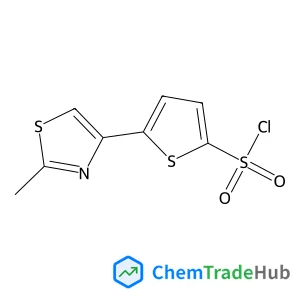
5-(2-Methyl-1,3-thiazol-4-yl)-2-thiophenesulfonyl chloride
CAS Number:
215434-25-6
Molecular Formula:
C8H6ClNO2S3
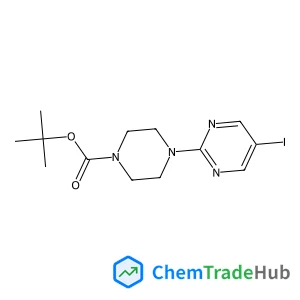
2-Methyl-2-propanyl 4-(5-iodo-2-pyrimidinyl)-1-piperazinecarboxylate
CAS Number:
1027616-32-5
Molecular Formula:
C13H19IN4O2
Recommended Suppliers




Disclaimer
This page provides academic journal information for reference and research purposes only. We are not affiliated with any journal publishers and do not handle publication submissions. For publication-related inquiries, please contact the respective journal publishers directly.
If you notice any inaccuracies in the information displayed, please contact us at support@chemtradehub.com. We will promptly review and address your concerns.