












Water-soluble organic macrocycles based on dye chromophores and their applications
Literature Information
Publication Date
2023-10-20
DOI
10.1039/D3CC04159J
Impact Factor
6.222
Authors
Luying Zhang, Yanqing Xu, Wei Wei
View Original
Abstract
Traditional water-soluble organic macrocyclic receptors generally lack photofunctionality, thus monitoring the drug delivery and the phototheranostic applications of these host–guest macrocyclic systems has been greatly restricted. To address this issue, incorporating π-conjugated dye chromophores as building blocks into macrocyclic molecules is a straightforward and promising strategy. This approach not only imparts intrinsic optical features to the macrocycles themselves but also enhances the host–guest binding ability due to the large planar structures of the dyes. In this feature article, we focus on recent advances in water-soluble macrocyclic compounds based on organic dye chromophores, such as naphthalimide (NDI), perylene diimides (PDI), azobenzene (azo), tetraphenylethylene (TPE) and anthracene, and provide an overview of their various applications including molecular recognition, drug release, biological imaging, photothermal therapy, etc. We hope that this article could be helpful and instructive for the design of water-soluble dye-based macrocycles and the further development of their biomedical applications, particularly in combination with drug therapy and phototheranostics.
Recommended Journals
Related Literature
Enzymatic and non-enzymatic crosslinks found in collagen and elastin and their chemical synthesis
Rafea Naffa
2020-08-04
Review Article
DOI: 10.1039/D0QO00624F
Recent progress in the usage of tetrabromo-substituted naphthalenetetracarboxylic dianhydride as a building block to construct organic semiconductors and their applications
Zongrui Wang, Hua Li, Jianmei Lu
2020-07-22
Review Article
DOI: 10.1039/D0QO00637H
Iron catalyzed ketoalkylation and ketoalkylation/etherification of styrenes initiated by selective C–C bond cleavage
Meng-Ting Suo, Shuo Yang, Jun-Cheng Yang, Ze-Yu Liu, Jun-Jie Zhang, Li-Na Guo
2020-07-15
Research Article
DOI: 10.1039/D0QO00671H
Gram-scale synthesis of luciferins derived from coelenterazine and original insights into their bioluminescence properties‡
Eloi P. Coutant, Sophie Goyard, Vincent Hervin, Racha Baatallah, Yves Jacob, Thierry Rose, Yves L. Janin
2019-03-07
Communication
DOI: 10.1039/C9OB00459A
Recent advances in organocatalytic asymmetric oxa-Michael addition triggered cascade reactions
Yu Wang, Da-Ming Du
2020-08-14
Review Article
DOI: 10.1039/D0QO00631A
An enzymatic acetal/hemiacetal conversion for the physiological temperature activation of the alkoxyamine C–ON bond homolysis
Muriel Albalat, Gérard Audran, Maxence Holzritter, Sylvain R. A. Marque, Nicolas Vanthuyne, Pierre Voisin
2020-07-30
Research Article
DOI: 10.1039/D0QO00559B
Synthesis and application of α-carbonyl nitrile oxides
Li Zhou, Huating Yan, Xin-Qi Hao
2020-07-20
Research Article
DOI: 10.1039/D0QO00780C
Telescoped synthesis of C3-functionalized (E)-arylamidines using Ugi–Mumm and regiospecific quinazolinone rearrangements
Victor A. Jaffett, Alok Nerurkar, Xufeng Cao, Ilia A. Guzei
2019-02-07
Paper
DOI: 10.1039/C9OB00073A
Melanin production by tyrosinase activity on a tyrosine-rich peptide fragment and pH-dependent self-assembly of its lipidated analogue
Jessica A. Hutchinson, Ian W. Hamley, Charlotte J. C. Edwards-Gayle, Valeria Castelletto, Cristian Piras, Rainer Cramer, Radoslaw Kowalczyk, Jani Seitsonen, Janne Ruokolainen, Robert P. Rambo
2019-04-15
Paper
DOI: 10.1039/C9OB00550A
You might also like
Compound Q&A
Is 2-(2-chloroacetamido)-3-phenylpropanoic acid (CAS: 7765-11-9) safe?
2-(2-Chloroacetamido)-3-phenylpropanoic acid (CAS: 7765-11-9) is generally consi...
7765-11-92-(2-chloroacetamido...
Compound Q&A
Is 2-(Benzyloxy)-5-bromobenzoic acid (CAS: 62176-31-2) safe?
2-(Benzyloxy)-5-bromobenzoic acid can be handled safely if appropriate precautio...
62176-31-22-(Benzyloxy)-5-brom...
Compound Q&A
What is (4-Methyl-1,2,5-oxadiazol-3-yl)methanamine hydrochloride (CAS: 1159825-48-5)?
(4-Methyl-1,2,5-oxadiazol-3-yl)methanamine hydrochloride is a chemical compound ...
1159825-48-5(4-Methyl-1,2,5-oxad...
Compound Q&A
What is 2-(5-Hexylthiophen-2-yl)-4,4,5,5-tetramethyl-1,3,2-dioxaborolane (CAS: 917985-54-7)?
2-(5-Hexylthiophen-2-yl)-4,4,5,5-tetramethyl-1,3,2-dioxaborolane (CAS: 917985-54...
917985-54-72-(5-Hexylthiophen-2...
Compound Q&A
Are there alternatives to 4-(8-Methyl-9H-1,3-dioxolo[4,5-h][2,3]benzodiazepin-5-yl)benzenamine (CAS: 102771-26-6) in synthesis?
While 4-(8-Methyl-9H-1,3-dioxolo[4,5-h][2,3]benzodiazepin-5-yl)benzenamine (CAS:...
102771-26-64-(8-Methyl-9H-1,3-d...
Compound Q&A
What is the market or research trend for tert-butyl 3-hydroxy-4,5,7,8-tetrahydro-2H-pyrazolo[3,4-d]azepine-6-carboxylate (CAS: 851376-80-2)?
The market for tert-butyl 3-hydroxy-4,5,7,8-tetrahydro-2H-pyrazolo[3,4-d]azepine...
851376-80-2tert-butyl 3-hydroxy...
Compound Q&A
How should waste containing 3,5-Diamino-1H-pyrazole-4-carbonitrile (CAS: 6844-58-2) be handled?
Waste containing 3,5-Diamino-1H-pyrazole-4-carbonitrile (CAS: 6844-58-2) should ...
6844-58-23,5-Diamino-1H-pyraz...
Compound Q&A
How is (6-Fluoro-3-pyridinyl)boronic acid (CAS: 351019-18-6) typically synthesized?
(6-Fluoro-3-pyridinyl)boronic acid can be synthesized through the reaction of 6-...
351019-18-6(6-Fluoro-3-pyridiny...
Compound Q&A
What industries use Dibenzyl carbonimidoylbiscarbamate (CAS: 10065-79-9)?
Dibenzyl carbonimidoylbiscarbamate (CAS: 10065-79-9) finds applications in vario...
10065-79-9Dibenzyl carbonimido...
Compound Q&A
What is the market or research trend for (beta,beta,2,3,4,5,6-~2~H_7_)Phenylalanine (CAS: 74228-83-4)?
The market for (beta,beta,2,3,4,5,6-~2~H_7_)Phenylalanine (CAS: 74228-83-4) is g...
74228-83-4(beta,beta,2,3,4,5,6...
Source Journal
Chemical Communications

CiteScore:
8.6
Self-citation Rate:
4.7%
Articles per Year:
2458
ChemComm publishes urgent research which is of outstanding significance and interest to experts in the field, while also appealing to the journal’s broad chemistry readership. Our communication format is ideally suited to short, urgent studies that are of such importance that they require accelerated publication. Our scope covers all topics in chemistry, and research at the interface of chemistry and other disciplines (such as materials science, nanoscience, physics, engineering and biology) where there is a significant novelty in the chemistry aspects. Major topic areas covered include: Analytical Chemistry Catalysis Chemical Biology and medicinal chemistry Computational Chemistry and Machine Learning Energy and sustainable chemistry Environmental Chemistry Green Chemistry Inorganic Chemistry Materials Chemistry Nanoscience Organic Chemistry Physical Chemistry Polymer Chemistry Supramolecular Chemistry
Recommended Compounds
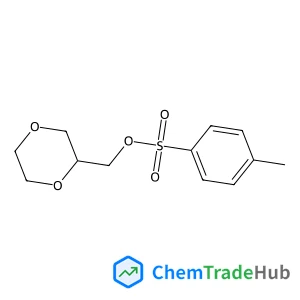
(S)-(1,4-Dioxan-2-yl)methyl 4-methylbenzenesulfonate
CAS Number:
917882-64-5
Molecular Formula:
C12H16O5S
Recommended Suppliers




Disclaimer
This page provides academic journal information for reference and research purposes only. We are not affiliated with any journal publishers and do not handle publication submissions. For publication-related inquiries, please contact the respective journal publishers directly.
If you notice any inaccuracies in the information displayed, please contact us at support@chemtradehub.com. We will promptly review and address your concerns.