












Recent advances in metal–organic framework-based photoelectrochemical and electrochemiluminescence biosensors
Literature Information
Publication Date
2023-03-22
DOI
10.1039/D3AN00222E
Impact Factor
4.616
Authors
Jiao Qin, Jinjin Li, Haisen Zeng, Juan Tang, Dianping Tang
View Original
Abstract
As a newly emerging class of molecular crystal materials, metal–organic frameworks (MOFs) are extensively used in a variety of fields including catalysis, separation, energy storage, and biosensors, by virtue of their large specific surface area, excellent chemical stability, and adjustable pore size. In particular, several functional materials have been integrated into the MOF structure, which greatly improves the conductivity of MOFs and facilitates the application of MOFs in the field of electrochemical biosensing. Herein, this review highlights the recent applications of MOF composites for photoelectrochemical (PEC) and electrochemiluminescence (ECL) biosensors. This paper first briefly describes the classification and various synthesis methods of MOFs. Then, it comprehensively summarizes different types of MOF-based biosensors in PEC and ECL and their applications. Finally, the challenges and outlook for future work in MOF-based PEC and ECL biosensors are tentatively proposed.
Recommended Journals
Related Literature
Enhancing biological analyses with three dimensional field asymmetric ion mobility, low field drift tube ion mobility and mass spectrometry (μFAIMS/IMS-MS) separations
Xing Zhang, Yehia M. Ibrahim, Tsung-Chi Chen, Jennifer E. Kyle, Randolph V. Norheim, Matthew E. Monroe, Richard D. Smith, Erin S. Baker
2015-06-30
Paper
DOI: 10.1039/C5AN00897B
Fluorescent polymer-based post-translational differentiation and subtyping of breast cancer cells
Michael D. Scott, Rinku Dutta, Manas K. Haldar, Anil Wagh, Thomas R. Gustad, Benedict Law, Daniel L. Friesner, Sanku Mallik
2012-10-04
Communication
DOI: 10.1039/C2AN35877H
Determination of ion pairing on capping structures of gold nanoparticles by phase extraction
Mark J. Schadt, Kaylie Young, Jin Luo, Chuan-Jian Zhong
2015-08-12
Communication
DOI: 10.1039/C5AN01165E
Multimodal chemical imaging of molecular messengers in emerging Pseudomonas aeruginosa bacterial communities
Nameera F. Baig, Sage J. B. Dunham, Jonathan V. Sweedler, Paul W. Bohn
2015-08-24
Paper
DOI: 10.1039/C5AN01149C
Ion mobility-mass spectrometry of charge-reduced protein complexes reveals general trends in the collisional ejection of compact subunits
Russell E. Bornschein, Brandon T. Ruotolo
2015-08-24
Paper
DOI: 10.1039/C5AN01242B
Electrochemical incorporation of hemin in a ZnO–PPy nanocomposite on a Pt electrode as NOx sensor
Subash Prakash, Seenivasan Rajesh, Sarkkarai Raja Singh, Chandran Karunakaran, Veerapandy Vasu
2012-10-04
Paper
DOI: 10.1039/C2AN36347J
A biomimetic mussel-inspired photoelectrochemical biosensing chip for the sensitive detection of CD146
Hongmin Ma, Tao Yan, Yong Zhang, Picheng Gao, Xuehui Pang, Bin Du, Qin Wei
2015-06-01
Communication
DOI: 10.1039/C5AN00873E
Controlled growth of polyhedral and plate-like Ag nanocrystals on a nanofiber mat as a SERS substrate
2015-05-15
Paper
DOI: 10.1039/C5AN00305A
Preparation and evaluation of ionic liquid-gold nanoparticles functionalized silica monolithic column for capillary electrochromatography
Junyu Lu, Fanggui Ye, Aizhu Zhang, Xia Chen, Yu Wei, Shulin Zhao
2012-10-02
Paper
DOI: 10.1039/C2AN35923E
You might also like
Compound Q&A
What are the main uses of 4-Nitrophenyl phosphate disodium salt hexahydrate (CAS: 333338-18-4)?
4-Nitrophenyl phosphate disodium salt hexahydrate is primarily used as a substra...
333338-18-44-Nitrophenyl phosph...
Compound Q&A
What are the main uses of 2-(Trifluoromethyl)-1,3-oxazole-4-carboxylic Acid (CAS: 1060816-01-4)?
2-(Trifluoromethyl)-1,3-oxazole-4-carboxylic Acid (CAS: 1060816-01-4) is widely ...
1060816-01-42-(Trifluoromethyl)-...
Compound Q&A
How should 2-Fluoro-4-biphenylcarboxylic acid (CAS: 137045-30-8) be stored?
2-Fluoro-4-biphenylcarboxylic acid should be stored in a cool, dry place at room...
137045-30-82-Fluoro-4-biphenylc...
Compound Q&A
What industries use Prednisolone-21-Carboxylic Acid (CAS: 61549-70-0)?
Prednisolone-21-Carboxylic Acid is primarily used in the pharmaceutical industry...
61549-70-0Prednisolone-21-Carb...
Compound Q&A
How should 4-(Hydrazinomethyl)-1,2,3-benzenetriol (CAS: 3614-72-0) be stored?
4-(Hydrazinomethyl)-1,2,3-benzenetriol (CAS: 3614-72-0) should be stored in a co...
3614-72-04-(Hydrazinomethyl)-...
Compound Q&A
What industries use 4-Amino-1-methyl-1H-pyrazole-5-carboxylic acid hydrochloride (CAS: 92534-70-8)?
4-Amino-1-methyl-1H-pyrazole-5-carboxylic acid hydrochloride (CAS: 92534-70-8) i...
92534-70-84-Amino-1-methyl-1H-...
Compound Q&A
What regulatory guidelines apply to dehydropachymic acid (CAS: 77012-31-8)?
Dehydropachymic acid (CAS: 77012-31-8) is regulated by various agencies. It fall...
77012-31-8Dehydropachymic acid
Compound Q&A
What is the market or research trend for 6-[(2,2-Dimethylpropanoyl)amino]nicotinic acid (CAS: 898561-66-5)?
The market and research trends for 6-[(2,2-Dimethylpropanoyl)amino]nicotinic aci...
898561-66-56-[(2,2-Dimethylprop...
Compound Q&A
How should 1,10-Phenanthroline-2,9-dicarbaldehyde (CAS: 57709-62-3) be stored?
1,10-Phenanthroline-2,9-dicarbaldehyde should be stored in a cool, dry place awa...
57709-62-31,10-Phenanthroline-...
Compound Q&A
How is 5-Carbamoyl-11-oxo-10,11-dihydro-5H-dibenzo[b,f]azepin-10-yl acetate (CAS: 113952-21-9) typically synthesized?
5-Carbamoyl-11-oxo-10,11-dihydro-5H-dibenzo[b,f]azepin-10-yl acetate can be synt...
113952-21-95-Carbamoyl-11-oxo-1...
Source Journal
Analyst

CiteScore:
7.8
Self-citation Rate:
5.6%
Articles per Year:
653
Analyst publishes analytical and bioanalytical research that reports premier fundamental discoveries and inventions, and the applications of those discoveries, unconfined by traditional discipline barriers.
Recommended Compounds
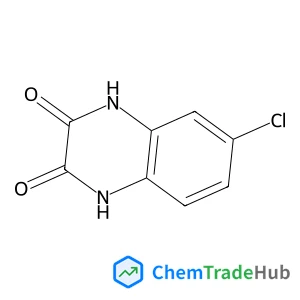
6-CHLORO-2,3-DIOXO-1,2,3,4-TETRAHYDROQUINOXALINE, 97
CAS Number:
169-14-2
Molecular Formula:
C8H5ClN2O2
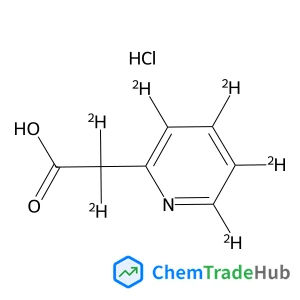
2,2-dideuterio-2-(3,4,5,6-tetradeuterio-2-pyridyl)acetic acid;hydrochloride
CAS Number:
1329799-67-8
Molecular Formula:
C7H2ClD6NO2
Recommended Suppliers






Disclaimer
This page provides academic journal information for reference and research purposes only. We are not affiliated with any journal publishers and do not handle publication submissions. For publication-related inquiries, please contact the respective journal publishers directly.
If you notice any inaccuracies in the information displayed, please contact us at support@chemtradehub.com. We will promptly review and address your concerns.