












Preparation and evaluation of ionic liquid-gold nanoparticles functionalized silica monolithic column for capillary electrochromatography
Literature Information
Publication Date
2012-10-02
DOI
10.1039/C2AN35923E
Impact Factor
4.616
Authors
Junyu Lu, Fanggui Ye, Aizhu Zhang, Xia Chen, Yu Wei, Shulin Zhao
View Original
Abstract
This paper describes the development of silica monolithic column modified with ionic liquids-gold nanoparticles (ILs-GNPs) for capillary electrochromatography (CEC). The novel ILs (1-methyl-2-mercapto-3-butylimidazolium bromide) were synthesized and used to modify GNPs functionalized silica monolithic column via the formation of a Au–S bond. The morphology of the GNPs and ILs-GNPs functionalized silica (ILs-GNPs-silica) monolithic column were characterized by transmission electron microscopy and scanning electron microscope, respectively. A cathodic electroosmotic flow was observed at pH above 6.4 on ILs-GNPs-silica monolithic column, which was reversed at acidic pH. The electrochromatographic performance of ILs-GNPs-silica monolithic column was evaluated by separation of different kinds of analytes such as hydrophobic, polar and basic compounds. The ILs-GNPs-silica monolithic column displayed enhanced hydrophobic retention characteristics in the separation of five hydrophobic n-alkylbenzenes when compared to the ILs bonded silica monolithic column. The column efficiencies for the n-alkylbenzenes were from 62 000 to 110 000 N m−1. The ILs-GNPs-silica monolithic column exhibited reversed-phase electrochromatographic behavior toward neutral solutes. Separation of polar compounds was demonstrated on ILs-GNPs-silica monolithic column in reversed-phase CEC mode using high aqueous mobile phases. The relatively good peak shape and high separation efficiency on ILs-GNPs-silica monolithic column was obtained for basic solutes when compared to silica monolithic column modified GNPs.
Related Literature
Correction: Dibenzofuran-4,6-bis(oxazoline) (DBFOX). A novel trans-chelating bis(oxazoline) ligand for asymmetric reactions
Kennosuke Itoh, Mukund P. Sibi
2018-08-09
Correction
DOI: 10.1039/C8OB90113A
Tandem isonitrile insertion/azacyclopropylidene-annulated cyclohexenone–tropone rearrangement of p-QMs and TosMIC: de novo synthesis of pyrrolotropones with anti-cancer activity
Chuan-Hua Qu, Gui-Ting Song, Jiu-Hong Huang, Run Huang, Yuan Chen, Tong Liu, Dian-Yong Tang, Zhi-Gang Xu, Zhong-Zhu Chen
2021-09-22
Research Article
DOI: 10.1039/D1QO01256H
Multigram synthesis of an orthogonally-protected pentasaccharide for use as a glycan precursor in a Shigella flexneri 3a conjugate vaccine: application to a ready-for-conjugation decasaccharide
Johan Cornil, Zhaoyu Hu, Marion Bouchet, Laurence A. Mulard
2021-07-21
Research Article
DOI: 10.1039/D1QO00761K
Heteroaryl-linked norbornadiene dimers with redshifted absorptions
Behabitu Ergette Tebikachew, Kasper Moth-Poulsen, Mogens Brøndsted Nielsen
2018-07-19
Paper
DOI: 10.1039/C8OB01470A
Synthesis of 2-substituted 3-chlorobenzofurans via TMSCl-mediated nucleophilic annulation of isatin-derived propargylic alcohols
Zhou Sun, Kuirong Xiang, Hua Tao, Liqun Guo, Ying Li
2018-08-08
Paper
DOI: 10.1039/C8OB01731J
Asymmetric iodine catalysis-mediated enantioselective oxidative transformations
Aurélie Claraz, Géraldine Masson
2018-07-13
Review Article
DOI: 10.1039/C8OB01378K
An organocatalytic asymmetric Mannich reaction for the synthesis of 3,3-disubstituted-3,4-dihydro-2-quinolones
Soumendranath Mukhopadhyay, Subhas Chandra Pan
2018-07-11
Communication
DOI: 10.1039/C8OB01399C
You might also like
Compound Q&A
What are the main uses of 4-Nitrophenyl phosphate disodium salt hexahydrate (CAS: 333338-18-4)?
4-Nitrophenyl phosphate disodium salt hexahydrate is primarily used as a substra...
333338-18-44-Nitrophenyl phosph...
Compound Q&A
What are the main uses of 2-(Trifluoromethyl)-1,3-oxazole-4-carboxylic Acid (CAS: 1060816-01-4)?
2-(Trifluoromethyl)-1,3-oxazole-4-carboxylic Acid (CAS: 1060816-01-4) is widely ...
1060816-01-42-(Trifluoromethyl)-...
Compound Q&A
How should 2-Fluoro-4-biphenylcarboxylic acid (CAS: 137045-30-8) be stored?
2-Fluoro-4-biphenylcarboxylic acid should be stored in a cool, dry place at room...
137045-30-82-Fluoro-4-biphenylc...
Compound Q&A
What industries use Prednisolone-21-Carboxylic Acid (CAS: 61549-70-0)?
Prednisolone-21-Carboxylic Acid is primarily used in the pharmaceutical industry...
61549-70-0Prednisolone-21-Carb...
Compound Q&A
How should 4-(Hydrazinomethyl)-1,2,3-benzenetriol (CAS: 3614-72-0) be stored?
4-(Hydrazinomethyl)-1,2,3-benzenetriol (CAS: 3614-72-0) should be stored in a co...
3614-72-04-(Hydrazinomethyl)-...
Compound Q&A
What industries use 4-Amino-1-methyl-1H-pyrazole-5-carboxylic acid hydrochloride (CAS: 92534-70-8)?
4-Amino-1-methyl-1H-pyrazole-5-carboxylic acid hydrochloride (CAS: 92534-70-8) i...
92534-70-84-Amino-1-methyl-1H-...
Compound Q&A
What regulatory guidelines apply to dehydropachymic acid (CAS: 77012-31-8)?
Dehydropachymic acid (CAS: 77012-31-8) is regulated by various agencies. It fall...
77012-31-8Dehydropachymic acid
Compound Q&A
What is the market or research trend for 6-[(2,2-Dimethylpropanoyl)amino]nicotinic acid (CAS: 898561-66-5)?
The market and research trends for 6-[(2,2-Dimethylpropanoyl)amino]nicotinic aci...
898561-66-56-[(2,2-Dimethylprop...
Compound Q&A
How should 1,10-Phenanthroline-2,9-dicarbaldehyde (CAS: 57709-62-3) be stored?
1,10-Phenanthroline-2,9-dicarbaldehyde should be stored in a cool, dry place awa...
57709-62-31,10-Phenanthroline-...
Compound Q&A
How is 5-Carbamoyl-11-oxo-10,11-dihydro-5H-dibenzo[b,f]azepin-10-yl acetate (CAS: 113952-21-9) typically synthesized?
5-Carbamoyl-11-oxo-10,11-dihydro-5H-dibenzo[b,f]azepin-10-yl acetate can be synt...
113952-21-95-Carbamoyl-11-oxo-1...
Source Journal
Analyst

CiteScore:
7.8
Self-citation Rate:
5.6%
Articles per Year:
653
Analyst publishes analytical and bioanalytical research that reports premier fundamental discoveries and inventions, and the applications of those discoveries, unconfined by traditional discipline barriers.
Recommended Compounds
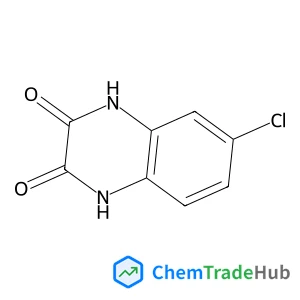
6-CHLORO-2,3-DIOXO-1,2,3,4-TETRAHYDROQUINOXALINE, 97
CAS Number:
169-14-2
Molecular Formula:
C8H5ClN2O2
![N-[2-(4-Hydroxyphenoxy)-4-nitrophenyl]methanesulfonamide structure](https://static.chemtradehub.com/structs/109/109032-22-6-7c88.webp "N-[2-(4-Hydroxyphenoxy)-4-nitrophenyl]methanesulfonamide structure")
N-[2-(4-Hydroxyphenoxy)-4-nitrophenyl]methanesulfonamide
CAS Number:
109032-22-6
Molecular Formula:
C13H12N2O6S
Recommended Suppliers





Disclaimer
This page provides academic journal information for reference and research purposes only. We are not affiliated with any journal publishers and do not handle publication submissions. For publication-related inquiries, please contact the respective journal publishers directly.
If you notice any inaccuracies in the information displayed, please contact us at support@chemtradehub.com. We will promptly review and address your concerns.