












Cellulose hydrogenolysis to alcohol and ketone products using Co@C catalysts in the phosphoric acid aqueous solution
Literature Information
Publication Date
2022-09-21
DOI
10.1039/D2RE00273F
Impact Factor
4.239
Authors
Longlong Ma
View Original
Abstract
Cellulose hydrolysis and further conversion to diketones and alcohols was performed with graphene layer encapsulated cobalt catalysts (Co@C) in phosphoric acid aqueous solution. A total of 60.5% yield of the products mainly including ethanol, 2,5-hexanedione (2,5-HD) and diols could be achieved in 0.06 M H3PO4 solution. A series of characterization methods such as XRD, XPS, TEM, TG-MS, BET, ICP, H2-TPD, NH3-TPD, and Raman were carried out to explore the catalyst formation mechanism and reaction activity. The results of the analysis indicated that the calcination temperature had a deep influence on the structure formation of the Co@C catalysts, thus leading to differences in the reaction activity. While the calcination temperature was determined at 700 °C, the Co@C catalyst meets with the requirements of optimal reaction activity, appropriate particle size, suitable surface area, and pore size. Besides, it was found that H3PO4 is not only favorable in cellulose hydrolysis but also cooperates with the Co@C catalyst in the hydrogenolysis of C–O bond and C–C bonds for the formation of products. This work provides a possible way for renewable cellulose conversion to diketone and alcohols over encapsulated non-noble metal catalyst combined with phosphoric acid aqueous solution.
Related Literature
The photophysics of selectively metallated arrays of quinoxaline-fused tetraarylporphyrins
James A. Hutchison, Paul J. Sintic, Maxwell J. Crossley, Toshihiko Nagamura, Kenneth P. Ghiggino
2009-03-03
Paper
DOI: 10.1039/B820969C
Polyaniline Langmuir–Blodgett films: formation and properties
Jie Zhang, David P. Burt, Anna L. Whitworth, Daniel Mandler, Patrick R. Unwin
2009-02-26
Paper
DOI: 10.1039/B819809H
The structure of oxotitanium phthalocyanine: a gas-phase electron diffraction and computational study
Alexander V. Zakharov, Sergei A. Shlykov, Yuriy A. Zhabanov, Georgy V. Girichev
2009-03-06
Paper
DOI: 10.1039/B820914F
Structure and orientation of small molecules dissolved in the liquid crystalline phases of CsPFO/water system by multinuclear NMR
Silvia Borsacchi, Donata Catalano, Carlo Alberto Veracini
2009-04-22
Paper
DOI: 10.1039/B901895F
In situ characterization of a cold and short pulsed molecular beam by femtosecond ion imaging
Daniel Irimia, Rob Kortekaas, Maurice H. M. Janssen
2009-03-14
Paper
DOI: 10.1039/B822960K
DFT studies of the degradation mechanism of methyl mercury activated by a sulfur-rich ligand
Xichen Li, Rong-Zhen Liao, Wenchang Zhou, Guangju Chen
2010-01-28
Paper
DOI: 10.1039/B918402C
Combining density functional theory (DFT) and pair distribution function (PDF) analysis to solve the structure of metastable materials: the case of metakaolin
Claire E. White, John L. Provis, Thomas Proffen, Daniel P. Riley, Jannie S. J. van Deventer
2010-02-22
Paper
DOI: 10.1039/B922993K
Observation of oscillatory behavior during the dissolution of a pharmaceutical compound and evidence for the existence of an inverse Ostwald rule
2010-02-23
Paper
DOI: 10.1039/B917966F
Two-dimensional network stability of nucleobases and amino acids on graphite under ambient conditions: adenine, l-serine and l-tyrosine
Ilko Bald, Sigrid Weigelt, Xiaojing Ma, Pengyang Xie, Ramesh Subramani, Mingdong Dong, Chen Wang, Wael Mamdouh, Jianguo Wang, Flemming Besenbacher
2010-03-09
Paper
DOI: 10.1039/B924098E
You might also like
Compound Q&A
How should waste containing 2-Ethyl-4-Methyl-1H-Imidazole-5-Carbaldehyde (CAS: 88634-80-4) be handled?
Waste containing 2-Ethyl-4-Methyl-1H-Imidazole-5-Carbaldehyde (CAS: 88634-80-4) ...
88634-80-42-Ethyl-4-Methyl-1H-...
Compound Q&A
What industries use Triethoxy(octyl)silane (CAS: 1385031-14-0)?
Triethoxy(octyl)silane (CAS: 1385031-14-0) is widely used in the pharmaceuticals...
1385031-14-0Triethoxy(octyl)sila...
Compound Q&A
Are there alternatives to 3-iodo-7-nitro-1H-indazole (CAS: 864724-64-1) in synthesis?
Several alternatives to 3-iodo-7-nitro-1H-indazole (CAS: 864724-64-1) exist in t...
864724-64-13-iodo-7-nitro-1H-in...
Compound Q&A
Are there alternatives to Benzene, bis[(trimethoxysilyl)ethyl] (CAS: 266317-71-9) in synthesis?
Yes, there are alternatives to Benzene, bis[(trimethoxysilyl)ethyl] (CAS: 266317...
266317-71-9Benzene, bis[(trimet...
Compound Q&A
Is Isothiazole-3-carbonitrile (CAS: 1452-17-1) safe?
Isothiazole-3-carbonitrile (CAS: 1452-17-1) is generally considered safe when us...
1452-17-1Isothiazole-3-carbon...
Compound Q&A
Is (3-Chlorophenyl)methanol (CAS: 873-63-2) safe?
(3-Chlorophenyl)methanol (CAS: 873-63-2) is considered low to moderately toxic. ...
873-63-2(3-Chlorophenyl)meth...
Compound Q&A
How is (2S,3S)-2-Hydroxy-3-({[(2-methyl-2-propanyl)oxy]carbonyl}amino)-3-(2-naphthyl)propanoic acid (CAS: 959583-98-3) typically synthesized?
(2S,3S)-2-Hydroxy-3-({[(2-methyl-2-propanyl)oxy]carbonyl}amino)-3-(2-naphthyl)pr...
959583-98-3(2S,3S)-2-Hydroxy-3-...
Compound Q&A
What precautions should be taken when handling Methyl 2-(bromomethyl)-5-methoxybenzoate (CAS: 788081-99-2)?
Proper handling of methyl 2-(bromomethyl)-5-methoxybenzoate requires the use of ...
788081-99-2Methyl 2-(bromomethy...
Compound Q&A
What is 6,8-Dibromoimidazo[1,2-a]pyridine-2-carboxylic acid (CAS: 904805-36-3)?
6,8-Dibromoimidazo[1,2-a]pyridine-2-carboxylic acid (CAS: 904805-36-3) is an aro...
904805-36-36,8-Dibromoimidazo[1...
Compound Q&A
Is 3-Amino-5-bromo-2-pyridinecarbonitrile (CAS: 573675-27-1) safe?
3-Amino-5-bromo-2-pyridinecarbonitrile is considered safe when handled under pro...
573675-27-13-Amino-5-bromo-2-py...
Source Journal
Reaction Chemistry & Engineering

CiteScore:
0
Self-citation Rate:
8.8%
Articles per Year:
284
Reaction Chemistry & Engineering is an interdisciplinary journal reporting cutting-edge research focused on enhancing the understanding and efficiency of reactions. Reaction engineering leverages the interface where fundamental molecular chemistry meets chemical engineering and technology. Challenges in chemistry can be overcome by the application of new technologies, while engineers may find improved solutions for process development from the latest developments in reaction chemistry. Reaction Chemistry & Engineering is a unique forum for researchers whose interests span the broad areas of chemical engineering and chemical sciences to come together in solving problems of importance to wider society. All papers should be written to be approachable by readers across the engineering and chemical sciences. Papers that consider multiple scales, from the laboratory up to and including plant scale, are particularly encouraged.
Recommended Compounds

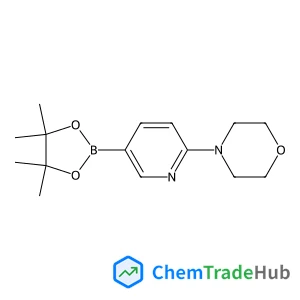
4-(5-(4,4,5,5-tetramethyl-1,3,2-dioxaborolan-2-yl)pyridin-2-yl)morpholine
CAS Number:
485799-04-0
Molecular Formula:
C15H23BN2O3

Recommended Suppliers



Disclaimer
This page provides academic journal information for reference and research purposes only. We are not affiliated with any journal publishers and do not handle publication submissions. For publication-related inquiries, please contact the respective journal publishers directly.
If you notice any inaccuracies in the information displayed, please contact us at support@chemtradehub.com. We will promptly review and address your concerns.