


Influence of support texture and reaction conditions on the accumulation and activity in the gas-phase aldol condensation of n-pentanal on porous silica
Literature Information
Publication Date
2022-08-23
DOI
10.1039/D2RE00143H
Impact Factor
4.239
Authors
Markus Schörner, Stefanie Kämmerle, Dorothea Wisser, Benjamin Baier, Martin Hartmann, Matthias Thommes, Marco Haumann
View Original
Abstract
In this work, the continuous gas-phase aldol condensation reaction of n-pentanal was investigated on silica supports. Since high aldol formation can lead to deactivation by pore blocking, the reaction is important to improve continuous gas-phase hydroformylation processes. Aldehyde conversion was monitored depending on the surface acidity. The spent catalysts were analyzed by thermogravimetric analysis (TGA) to evaluate the accumulation of substrate and product inside the pores. The pore size was altered using hydrothermal treatment. The obtained supports were analyzed using N2-sorption, mercury pore intrusion/extrusion, point-of-zero-charge measurements, temperature programmed desorption measurements (CO2 and NH3), and 29Si MAS NMR. A variation of reaction duration, pressure, and temperature was carried out. The influence of the silica texture on activity and accumulation was investigated using different particle size fractions and median pore diameters. In larger pores, the total volume-based accumulation was lower compared to the one in smaller pores. At the same time, the aldol was enriched compared to n-pentanal in the condensed liquid inside the pore network.
Recommended Journals

Polycyclic Aromatic Compounds

Journal of the Indian Institute of Science

Journal of Asian Natural Products Research

Colloid Journal

Journal of Chemical Sciences

Medicinal Chemistry Research

Bioorganic & Medicinal Chemistry Letters

Chinese Journal of Chemistry

Electroanalysis

Herald of the Russian Academy of Sciences
Related Literature
The unfolding transition state of ubiquitin with charged residues has higher energy than that with hydrophobic residues
Tathagata Nandi, Amogh Desai, Sri Rama Koti Ainavarapu
2020-09-09
Paper
DOI: 10.1039/D0CP03876H
Correction: The influence of diameter of multiwalled carbon nanotubes on mechanical, optical and electrical properties of Langmuir–Schaefer films
Karol Rytel, Kamil Kędzierski, Bolesław Barszcz, Małgorzata Widelicka, Alicja Stachowiak, Andrzej Biadasz, Łukasz Majchrzycki, Emerson Coy, Danuta Wróbel
2020-10-15
Correction
DOI: 10.1039/D0CP90227F
The simultaneous recognition mechanism of cations and anions using macrocyclic–iodine structures: insights from dispersion-corrected DFT calculations
Renato Pereira Orenha, Glaucio Régis Nagurniak, Matheus Cachoeira Colaço, Giovanni Finoto Caramori, Maurício Jeomar Piotrowski, Krys Elly de Araújo Batista, Alvaro Muñoz-Castro, Breno de Almeida Silva, Benjamim José Esteves, Renato Luis Tame Parreira
2020-10-06
Paper
DOI: 10.1039/D0CP04291A
Analysis of thyme essential oils using gas-phase broadband rotational spectroscopy
2019-11-18
Paper
DOI: 10.1039/C9CP05583E
Micro-solvation of CO in water: infrared spectra and structural calculations for (D2O)2–CO and (D2O)3–CO
A. J. Barclay, A. Pietropolli Charmet, K. H. Michaelian, A. R. W. McKellar, N. Moazzen-Ahmadi
2019-11-21
Paper
DOI: 10.1039/C9CP05480D
DNA-binding mechanisms of human and mouse cGAS: a comparative MD and MM/GBSA study
Honghui Zhang, Wenjin Li
2020-10-24
Paper
DOI: 10.1039/D0CP04162A
Towards accurate prediction for laser-coolable molecules: relativistic coupled-cluster calculations for yttrium monoxide and prospects for improving its laser cooling efficiencies
Chaoqun Zhang, Hannah Korslund, Lan Cheng
2020-11-05
Paper
DOI: 10.1039/D0CP04608F
Hydrophilic dangling chain interfacial segregation in polyurethane networks at aqueous interfaces and its underlying mechanisms: molecular dynamics simulations
Hassan Ghermezcheshme, Hesam Makki, Mohsen Mohseni, Morteza Ebrahimi
2020-10-28
Paper
DOI: 10.1039/D0CP04244G
You might also like
Compound Q&A
How should waste containing 2-Ethyl-4-Methyl-1H-Imidazole-5-Carbaldehyde (CAS: 88634-80-4) be handled?
Waste containing 2-Ethyl-4-Methyl-1H-Imidazole-5-Carbaldehyde (CAS: 88634-80-4) ...
88634-80-42-Ethyl-4-Methyl-1H-...
Compound Q&A
What industries use Triethoxy(octyl)silane (CAS: 1385031-14-0)?
Triethoxy(octyl)silane (CAS: 1385031-14-0) is widely used in the pharmaceuticals...
1385031-14-0Triethoxy(octyl)sila...
Compound Q&A
Are there alternatives to 3-iodo-7-nitro-1H-indazole (CAS: 864724-64-1) in synthesis?
Several alternatives to 3-iodo-7-nitro-1H-indazole (CAS: 864724-64-1) exist in t...
864724-64-13-iodo-7-nitro-1H-in...
Compound Q&A
Are there alternatives to Benzene, bis[(trimethoxysilyl)ethyl] (CAS: 266317-71-9) in synthesis?
Yes, there are alternatives to Benzene, bis[(trimethoxysilyl)ethyl] (CAS: 266317...
266317-71-9Benzene, bis[(trimet...
Compound Q&A
Is Isothiazole-3-carbonitrile (CAS: 1452-17-1) safe?
Isothiazole-3-carbonitrile (CAS: 1452-17-1) is generally considered safe when us...
1452-17-1Isothiazole-3-carbon...
Compound Q&A
Is (3-Chlorophenyl)methanol (CAS: 873-63-2) safe?
(3-Chlorophenyl)methanol (CAS: 873-63-2) is considered low to moderately toxic. ...
873-63-2(3-Chlorophenyl)meth...
Compound Q&A
How is (2S,3S)-2-Hydroxy-3-({[(2-methyl-2-propanyl)oxy]carbonyl}amino)-3-(2-naphthyl)propanoic acid (CAS: 959583-98-3) typically synthesized?
(2S,3S)-2-Hydroxy-3-({[(2-methyl-2-propanyl)oxy]carbonyl}amino)-3-(2-naphthyl)pr...
959583-98-3(2S,3S)-2-Hydroxy-3-...
Compound Q&A
What precautions should be taken when handling Methyl 2-(bromomethyl)-5-methoxybenzoate (CAS: 788081-99-2)?
Proper handling of methyl 2-(bromomethyl)-5-methoxybenzoate requires the use of ...
788081-99-2Methyl 2-(bromomethy...
Compound Q&A
What is 6,8-Dibromoimidazo[1,2-a]pyridine-2-carboxylic acid (CAS: 904805-36-3)?
6,8-Dibromoimidazo[1,2-a]pyridine-2-carboxylic acid (CAS: 904805-36-3) is an aro...
904805-36-36,8-Dibromoimidazo[1...
Compound Q&A
Is 3-Amino-5-bromo-2-pyridinecarbonitrile (CAS: 573675-27-1) safe?
3-Amino-5-bromo-2-pyridinecarbonitrile is considered safe when handled under pro...
573675-27-13-Amino-5-bromo-2-py...
Source Journal
Reaction Chemistry & Engineering

CiteScore:
0
Self-citation Rate:
8.8%
Articles per Year:
284
Reaction Chemistry & Engineering is an interdisciplinary journal reporting cutting-edge research focused on enhancing the understanding and efficiency of reactions. Reaction engineering leverages the interface where fundamental molecular chemistry meets chemical engineering and technology. Challenges in chemistry can be overcome by the application of new technologies, while engineers may find improved solutions for process development from the latest developments in reaction chemistry. Reaction Chemistry & Engineering is a unique forum for researchers whose interests span the broad areas of chemical engineering and chemical sciences to come together in solving problems of importance to wider society. All papers should be written to be approachable by readers across the engineering and chemical sciences. Papers that consider multiple scales, from the laboratory up to and including plant scale, are particularly encouraged.
Recommended Compounds
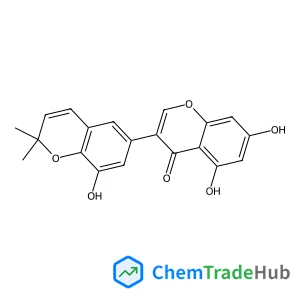
5,7,8'-Trihydroxy-2',2'-dimethyl-2'H,4H-3,6'-bichromen-4-one
CAS Number:
129280-33-7
Molecular Formula:
C20H16O6
![N,N'-1,2-Ethanediylbis[2-(vinylsulfonyl)acetamide] structure](https://static.chemtradehub.com/structs/667/66710-66-5-b556.webp "N,N'-1,2-Ethanediylbis[2-(vinylsulfonyl)acetamide] structure")
N,N'-1,2-Ethanediylbis[2-(vinylsulfonyl)acetamide]
CAS Number:
66710-66-5
Molecular Formula:
C10H16N2O6S2
Recommended Suppliers




Disclaimer
This page provides academic journal information for reference and research purposes only. We are not affiliated with any journal publishers and do not handle publication submissions. For publication-related inquiries, please contact the respective journal publishers directly.
If you notice any inaccuracies in the information displayed, please contact us at support@chemtradehub.com. We will promptly review and address your concerns.