












Preparation and evaluation of activated carbon from low-rank coal via alkali activation and its fundamental CO2 adsorption capacity at ambient temperature under pure pressurized CO2
Literature Information
Publication Date
2022-04-07
DOI
10.1039/D2RE00003B
Impact Factor
4.239
Authors
Yuuki Mochizuki, Javzandolgor Bud, Enkhsaruul Byambajav, Naoto Tsubouchi
View Original
Abstract
Mongolian lignite, which has a high ash content, was used as a precursor to prepare activated carbon. A mixture of lignite, melamine, and K2CO3 was carbonized to produce activated carbon in a fixed-bed reactor at different mixture ratios (lignite/melamine/K2CO3 = 1/0.3/0.3 weight ratio), temperatures (500–900 °C), and holding times (0–3 h) in a He atmosphere. The activated carbon obtained at the lignite/melamine/K2CO3 mixing ratio of 1/1/2, 800–900 °C, and holding time of 1 h exhibited the highest specific surface area (1800–2300 m2 g−1) and total pore (0.85–1.40 cm3 g−1), micropore (0.75–1.15 cm3 g−1), and mesopore volumes (0.10–0.25 cm3 g−1). The fundamental CO2 adsorption performance of the prepared activated carbon was examined at 25 °C under pure 0.5–2.0 MPa-CO2. It was observed that 250–510 mg-CO2 g−1 was adsorbed by the prepared activated carbon. Pore size distribution analysis revealed that the optimal micropore size for CO2 adsorption was 0.5–1.2 nm. Thus, this method can be employed to produce activated carbon with an excellent CO2 adsorption performance.
Related Literature
Superconductivity in an organometallic compound
Liu-Cheng Chen, Hui Yang, Ming-An Fu, Jia Cheng, Xiao-Lin Wu, Yun Gao, Zhong-Bing Huang, Xiao-Jia Chen
2019-10-14
Paper
DOI: 10.1039/C9CP04227J
Single photon ionization of methyl isocyanide and the subsequent unimolecular decomposition of its cation: experiment and theory
A. Bellili, M. C. Gazeau, Y. Bénilan, N. Fray, J. C. Guillemin, M. Hochlaf, M. Schwell
2019-09-26
Paper
DOI: 10.1039/C9CP04310A
Towards understanding the catalytic properties of lead-based ballistic modifiers in double base propellants
Lisette R. Warren, Colin R. Pulham, Carole A. Morrison
2020-10-29
Paper
DOI: 10.1039/D0CP05172A
Binding of divalent cations to acetate: molecular simulations guided by Raman spectroscopy
Denilson Mendes de Oliveira, Samual R. Zukowski, Vladimir Palivec, Hector Martinez-Seara, Dor Ben-Amotz, Pavel Jungwirth
2020-10-10
Paper
DOI: 10.1039/D0CP02987D
Achieving high hydrogen evolution reaction activity of a Mo2C monolayer
Tong Yu, Jiani Ma, Shoutao Zhang
2020-11-03
Paper
DOI: 10.1039/D0CP05053A
A density functional theoretical study on the stability of Pt clusters in MOF-808
Xiaohui Song, Donghai Mei
2020-09-28
Paper
DOI: 10.1039/D0CP04444J
Structure–property relationships in multi-stimuli responsive BODIPY-biphenyl-benzodithiophene TICT rigidochromic rotors exhibiting (pseudo-)Stokes shifts up to 221 nm
Sushil Sharma, Zimu Wei, Ferdinand C. Grozema, Sanchita Sengupta
2020-10-15
Paper
DOI: 10.1039/D0CP04579A
Solvent-dependent termination, size and stability in polyynes synthesized via laser ablation in liquids
Sonia Peggiani, Pietro Marabotti, Riccardo Alberto Lotti, Anna Facibeni, Patrick Serafini, Alberto Milani, Valeria Russo, Andrea Li Bassi, Carlo Spartaco Casari
2020-10-16
Paper
DOI: 10.1039/D0CP04132G
Brushes and lamellar mesophases of comb-shaped (co)polymers: a self-consistent field theory
Ivan V. Mikhailov, Ekaterina B. Zhulina
2020-10-13
Paper
DOI: 10.1039/D0CP02954H
You might also like
Compound Q&A
How should waste containing 2-Ethyl-4-Methyl-1H-Imidazole-5-Carbaldehyde (CAS: 88634-80-4) be handled?
Waste containing 2-Ethyl-4-Methyl-1H-Imidazole-5-Carbaldehyde (CAS: 88634-80-4) ...
88634-80-42-Ethyl-4-Methyl-1H-...
Compound Q&A
What industries use Triethoxy(octyl)silane (CAS: 1385031-14-0)?
Triethoxy(octyl)silane (CAS: 1385031-14-0) is widely used in the pharmaceuticals...
1385031-14-0Triethoxy(octyl)sila...
Compound Q&A
Are there alternatives to 3-iodo-7-nitro-1H-indazole (CAS: 864724-64-1) in synthesis?
Several alternatives to 3-iodo-7-nitro-1H-indazole (CAS: 864724-64-1) exist in t...
864724-64-13-iodo-7-nitro-1H-in...
Compound Q&A
Are there alternatives to Benzene, bis[(trimethoxysilyl)ethyl] (CAS: 266317-71-9) in synthesis?
Yes, there are alternatives to Benzene, bis[(trimethoxysilyl)ethyl] (CAS: 266317...
266317-71-9Benzene, bis[(trimet...
Compound Q&A
Is Isothiazole-3-carbonitrile (CAS: 1452-17-1) safe?
Isothiazole-3-carbonitrile (CAS: 1452-17-1) is generally considered safe when us...
1452-17-1Isothiazole-3-carbon...
Compound Q&A
Is (3-Chlorophenyl)methanol (CAS: 873-63-2) safe?
(3-Chlorophenyl)methanol (CAS: 873-63-2) is considered low to moderately toxic. ...
873-63-2(3-Chlorophenyl)meth...
Compound Q&A
How is (2S,3S)-2-Hydroxy-3-({[(2-methyl-2-propanyl)oxy]carbonyl}amino)-3-(2-naphthyl)propanoic acid (CAS: 959583-98-3) typically synthesized?
(2S,3S)-2-Hydroxy-3-({[(2-methyl-2-propanyl)oxy]carbonyl}amino)-3-(2-naphthyl)pr...
959583-98-3(2S,3S)-2-Hydroxy-3-...
Compound Q&A
What precautions should be taken when handling Methyl 2-(bromomethyl)-5-methoxybenzoate (CAS: 788081-99-2)?
Proper handling of methyl 2-(bromomethyl)-5-methoxybenzoate requires the use of ...
788081-99-2Methyl 2-(bromomethy...
Compound Q&A
What is 6,8-Dibromoimidazo[1,2-a]pyridine-2-carboxylic acid (CAS: 904805-36-3)?
6,8-Dibromoimidazo[1,2-a]pyridine-2-carboxylic acid (CAS: 904805-36-3) is an aro...
904805-36-36,8-Dibromoimidazo[1...
Compound Q&A
Is 3-Amino-5-bromo-2-pyridinecarbonitrile (CAS: 573675-27-1) safe?
3-Amino-5-bromo-2-pyridinecarbonitrile is considered safe when handled under pro...
573675-27-13-Amino-5-bromo-2-py...
Source Journal
Reaction Chemistry & Engineering

CiteScore:
0
Self-citation Rate:
8.8%
Articles per Year:
284
Reaction Chemistry & Engineering is an interdisciplinary journal reporting cutting-edge research focused on enhancing the understanding and efficiency of reactions. Reaction engineering leverages the interface where fundamental molecular chemistry meets chemical engineering and technology. Challenges in chemistry can be overcome by the application of new technologies, while engineers may find improved solutions for process development from the latest developments in reaction chemistry. Reaction Chemistry & Engineering is a unique forum for researchers whose interests span the broad areas of chemical engineering and chemical sciences to come together in solving problems of importance to wider society. All papers should be written to be approachable by readers across the engineering and chemical sciences. Papers that consider multiple scales, from the laboratory up to and including plant scale, are particularly encouraged.
Recommended Compounds
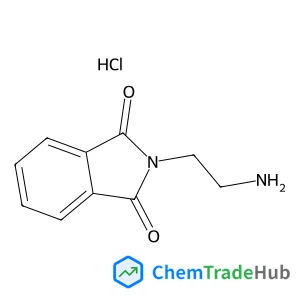
2-(2-Aminoethyl)-1H-isoindole-1,3(2H)-dione hydrochloride (1:1)
CAS Number:
30250-67-0
Molecular Formula:
C10H11ClN2O2
Recommended Suppliers





Disclaimer
This page provides academic journal information for reference and research purposes only. We are not affiliated with any journal publishers and do not handle publication submissions. For publication-related inquiries, please contact the respective journal publishers directly.
If you notice any inaccuracies in the information displayed, please contact us at support@chemtradehub.com. We will promptly review and address your concerns.