


A dual initiator approach for oxygen tolerant RAFT polymerization
Literature Information
Publication Date
2022-08-08
DOI
10.1039/D2PY00603K
Impact Factor
5.582
Authors
Nicholas G. Taylor, Marcus H. Reis, Travis P. Varner, Johann L. Rapp, Alexis Sarabia, Frank A. Leibfarth
View Original
Abstract
Reversible-deactivation radical polymerizations are privileged approaches for the synthesis of functional and hybrid materials. A bottleneck for conducting these processes is the need to maintain oxygen free conditions. Herein we report a broadly applicable approach to “polymerize through” oxygen using the synergistic combination of two radical initiators having different rates of homolysis. The in situ monitoring of the concentrations of oxygen and monomer simultaneously provided insight into the function of the two initiators and enabled the identification of conditions to effectively remove dissolved oxygen and control polymerization under open-to-air conditions. By understanding how the surface area to volume ratio of reaction vessels influence open-to-air polymerizations, well-defined polymers were produced using acrylate, styrenic, and methacrylate monomers, which each represent an expansion of scope for the “polymerizing through” oxygen approach. Demonstration of this method in tubular reactors using continuous flow chemistry provided a more complete structure–reactivity understanding of how reaction headspace influences PTO RAFT polymerizations.
Recommended Journals

Current Opinion in Colloid & Interface Science

Russian Journal of Bioorganic Chemistry

Russian Journal of Organic Chemistry

Saudi Pharmaceutical Journal

New Journal of Chemistry

Russian Journal of Coordination Chemistry

Russian Journal of General Chemistry

Journal of Saudi Chemical Society

Chemistry Education Research and Practice

Crystallography Reports
Related Literature
Intrinsic structure of pentapeptide Leu-enkephalin: geometry optimization and validation by comparison of VSCF-PT2 calculations with cold ion spectroscopy
Tapta Kanchan Roy, Vladimir Kopysov, Aleksandr Pereverzev, Jiří Šebek, R. Benny Gerber, Oleg V. Boyarkin
2018-09-07
Paper
DOI: 10.1039/C8CP03989E
Mineralization of phosphorylated cellulose: crucial role of surface structure and monovalent ions for optimizing calcium content
Natalia V. Lukasheva, Dmitry A. Tolmachev
2018-11-27
Paper
DOI: 10.1039/C8CP05767B
Non-linear and non-local behaviour in spontaneously electrical solids
M. Roman, S. Taj, M. Gutowski, M. R. S. McCoustra, A. C. Dunn, Z. G. Keolopile, A. Rosu-Finsen, A. M. Cassidy, D. Field
2018-01-26
Paper
DOI: 10.1039/C7CP08489G
First-principles database driven computational neural network approach to the discovery of active ternary nanocatalysts for oxygen reduction reaction
Joonhee Kang, Seung Hyo Noh, Jeemin Hwang, Hoje Chun, Hansung Kim, Byungchan Han
2018-07-30
Paper
DOI: 10.1039/C8CP03801E
Anion-encapsulating fullerenes behave as large anions: a DFT study
2018-09-04
Paper
DOI: 10.1039/C8CP03615B
Competitor analysis of functional group H-bond donor and acceptor properties using the Cambridge Structural Database
James McKenzie, Christopher A. Hunter
2018-09-26
Paper
DOI: 10.1039/C8CP05470C
Cl-Loss dynamics in the dissociative photoionization of CF3Cl with threshold photoelectron–photoion coincidence imaging
Xiangkun Wu, Guoqiang Tang, Hanhui Zhang, Xiaoguo Zhou, Shilin Liu, Fuyi Liu, Liusi Sheng, Bing Yan
2018-01-31
Paper
DOI: 10.1039/C7CP07502B
Solvation dynamics in polar solvents and imidazolium ionic liquids: failure of linear response approximations
Esther Heid, Christian Schröder
2018-01-29
Paper
DOI: 10.1039/C7CP07052G
Kinetics of the reaction of the simplest Criegee intermediate with ammonia: a combination of experiment and theory
Cangtao Yin, Mica C. Smith, Maodu Chen, Chunlei Xiao, Dongxu Dai, Kaito Takahashi, Wenrui Dong
2018-11-16
Paper
DOI: 10.1039/C8CP05920A
Activated barrier crossing dynamics of a Janus particle carrying cargo
Tanwi Debnath, Pulak Kumar Ghosh
2018-09-07
Paper
DOI: 10.1039/C8CP04419H
You might also like
Compound Q&A
What are the main uses of 1-(3-Aminophenyl)-3-[(3R)-1-(3,3-dimethyl-2-oxobutyl)-2-oxo-5-(2-pyridinyl)-2,3-dihydro-1H-1,4-benzodiazepin-3-yl]urea (CAS: 155412-88-7)?
This compound is mainly used as an intermediate in the synthesis of antipsychoti...
155412-88-71-(3-Aminophenyl)-3-...
Compound Q&A
How should waste containing 1-(D-Ribofuranosyl)-1,4-dihydro-3-pyridinecarboxamide (CAS: 19132-12-8) be handled?
Waste containing 1-(D-Ribofuranosyl)-1,4-dihydro-3-pyridinecarboxamide (CAS: 191...
19132-12-81-(D-Ribofuranosyl)-...
Compound Q&A
What regulatory guidelines apply to 2-Methyl-2-propanyl 3-bromo-3-(hydroxymethyl)-1-azetidinecarboxylate (CAS: 2007919-81-3)?
2-Methyl-2-propanyl 3-bromo-3-(hydroxymethyl)-1-azetidinecarboxylate (CAS: 20079...
2007919-81-32-Methyl-2-propanyl ...
Compound Q&A
What is N-(4-Chloro-2-pyridinyl)acetamide (CAS: 245056-66-0)?
N-(4-Chloro-2-pyridinyl)acetamide (CAS: 245056-66-0) is a chemical compound with...
245056-66-0N-(4-Chloro-2-pyridi...
Compound Q&A
What is 5-Chloro-2-hydroxybenzoic acid (CAS: 321-14-2)?
5-Chloro-2-hydroxybenzoic acid, also known as 5-chlorosalicylic acid, is an arom...
321-14-25-Chloro-2-hydroxybe...
Compound Q&A
What precautions should be taken when handling 1,1-Dichloro-1-fluoroethane (CAS: 1717-00-6)?
When handling 1,1-Dichloro-1-fluoroethane (CAS: 1717-00-6), it is important to u...
1717-00-61,1-Dichloro-1-fluor...
Compound Q&A
What are the physical and chemical properties of Fmoc-(2S,3R)-3-phenylpyrrolidine-2-carboxylic acid (CAS: 281655-32-1)?
Fmoc-(2S,3R)-3-phenylpyrrolidine-2-carboxylic acid is a white crystalline solid ...
281655-32-1Fmoc-(2S,3R)-3-pheny...
Compound Q&A
What are the main uses of 4-Amino-5-bromo-2-pyridinecarboxylic acid (CAS: 1363381-01-4)?
4-Amino-5-bromo-2-pyridinecarboxylic acid is primarily used as a precursor in th...
1363381-01-44-Amino-5-bromo-2-py...
Compound Q&A
What precautions should be taken when handling (S)-tert-butyl 2-((2-(4-bromophenyl)-2-oxoethyl)carbamoyl)pyrrolidine-1-carboxylate (CAS: 1007881-98-2)?
Handling this compound should be done with personal protective equipment (PPE) i...
1007881-98-2(S)-tert-butyl 2-((2...
Compound Q&A
What precautions should be taken when handling 8-bromo-2,2-dimethyl-3,4-dihydro-2H-1,4-benzoxazin-3-one (CAS: 688363-73-7)?
When handling 8-bromo-2,2-dimethyl-3,4-dihydro-2H-1,4-benzoxazin-3-one, use prop...
688363-73-78-bromo-2,2-dimethyl...
Source Journal
Polymer Chemistry

CiteScore:
8.6
Self-citation Rate:
7.3%
Articles per Year:
457
Polymer Chemistry welcomes submissions in all areas of polymer science that have a strong focus on macromolecular chemistry. Manuscripts may cover a broad range of fields, yet no direct application focus is required.
Recommended Compounds
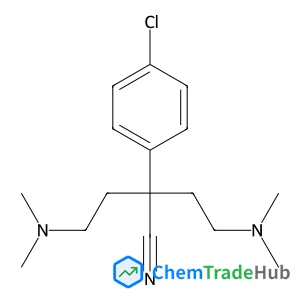
2-(4-Chlorophenyl)-4-(dimethylamino)-2-(2-(dimethylamino)ethyl)butanenitrile
CAS Number:
1246816-57-8
Molecular Formula:
C16H24ClN3

Recommended Suppliers






Disclaimer
This page provides academic journal information for reference and research purposes only. We are not affiliated with any journal publishers and do not handle publication submissions. For publication-related inquiries, please contact the respective journal publishers directly.
If you notice any inaccuracies in the information displayed, please contact us at support@chemtradehub.com. We will promptly review and address your concerns.