












Cl-Loss dynamics in the dissociative photoionization of CF3Cl with threshold photoelectron–photoion coincidence imaging
Literature Information
Publication Date
2018-01-31
DOI
10.1039/C7CP07502B
Impact Factor
3.676
Authors
Xiangkun Wu, Guoqiang Tang, Hanhui Zhang, Xiaoguo Zhou, Shilin Liu, Fuyi Liu, Liusi Sheng, Bing Yan
View Original
Abstract
The dissociative photoionization of CF3Cl was investigated in the photon energy range of 12.30–18.50 eV. The low-lying electronic states of CF3Cl+ cations were prepared by the method of threshold photoelectron–photoion coincidence (TPEPICO). The threshold photoelectron spectrum and the coincident time-of-flight mass spectra at the specific photon energies were recorded. Only a CF3+ fragment was observed at lower energy, while a CF2Cl+ fragment appeared for C2E and D2E states. As Cl-loss from the ground ionic state is statistical, the total kinetic energy release distribution (KERD) is represented as a Boltzmann profile, and a 0 K appearance energy of AP0 =12.79 ± 0.02 eV is derived from the statistical modelling of the breakdown diagram from 12.60 to 12.85 eV without taking into account the kinetic shift. For the A2A1 and B2A2 states of CF3Cl+ cations, the total KERDs are bimodal, where a parallel faster dissociation appears together with the statistical distribution. At higher energies like the C2E and D2E ionic states, a bimodal distribution similar to that of the A2A1 and B2A2 states is also observed for the KERD. With the aid of the calculated Cl-loss potential energy curves, the dissociative mechanisms of internal energy-selected CF3Cl+ cations are proposed.
Recommended Journals
Related Literature
Intramolecular charge transfer and dual fluorescence of 4-(dimethylamino)benzonitrile: ultrafast branching followed by a two-fold decay mechanism‡
Pedro B. Coto, Luis Serrano-Andrés, Thomas Gustavsson, Takashige Fujiwara, Edward C. Lim
2011-07-18
Paper
DOI: 10.1039/C1CP21089K
Extraction of the surface trap level from photoluminescence: a case study of ZnO nanostructures
Haiping He, Yanjie Wang, Jingrui Wang, Zhizhen Ye
2011-07-11
Communication
DOI: 10.1039/C1CP21527B
Molecular dynamics studies of native and substituted cyclodextrins in different media: 1. Charge derivation and force field performances
Christine Cézard, Frédéric Aubry, Florence Djedaïni-Pilard, François-Yves Dupradeau
2011-07-26
Paper
DOI: 10.1039/C1CP20854C
Fabrication of Co3O4-reduced graphene oxide scrolls for high-performance supercapacitor electrodes
Weiwei Zhou, Tao Chen, Kim Seng Tan, Xingtao Jia, Zhiqiang Luo, Chunxiao Cong, Huanping Yang, Chang Ming Li
2011-07-07
Communication
DOI: 10.1039/C1CP21917K
Ionic liquids and oligomer electrolytes based on the B(CN)4− anion; ion association, physical and electrochemical properties
Johan Scheers, Jagath Pitawala, Frederic Thebault, Jae-Kwang Kim, Jou-Hyeon Ahn, Aleksandar Matic, Per Jacobsson
2011-07-21
Paper
DOI: 10.1039/C1CP21062A
Self-doping of molecular quantum-dot cellular automata: mixed valence zwitterions
Yuhui Lu, Craig Lent
2011-07-14
Paper
DOI: 10.1039/C1CP21332F
A statistical approach to inelastic electron tunneling spectroscopy on fullerene-terminated molecules
Jakob Kryger Sørensen, Emanuel Lörtscher, Tom Vosch, Heike Riel, Kristine Kilså, Thomas Bjørnholm, Herre van der Zant
2011-06-23
Paper
DOI: 10.1039/C1CP20861F
Multiscale quantum mechanics/electromagnetics simulation for electronic devices
ChiYung Yam, Lingyi Meng, GuanHua Chen, Quan Chen, Ngai Wong
2011-06-10
Paper
DOI: 10.1039/C1CP20766K
You might also like
Compound Q&A
What are the main uses of 1-(3-Aminophenyl)-3-[(3R)-1-(3,3-dimethyl-2-oxobutyl)-2-oxo-5-(2-pyridinyl)-2,3-dihydro-1H-1,4-benzodiazepin-3-yl]urea (CAS: 155412-88-7)?
This compound is mainly used as an intermediate in the synthesis of antipsychoti...
155412-88-71-(3-Aminophenyl)-3-...
Compound Q&A
How should waste containing 1-(D-Ribofuranosyl)-1,4-dihydro-3-pyridinecarboxamide (CAS: 19132-12-8) be handled?
Waste containing 1-(D-Ribofuranosyl)-1,4-dihydro-3-pyridinecarboxamide (CAS: 191...
19132-12-81-(D-Ribofuranosyl)-...
Compound Q&A
What regulatory guidelines apply to 2-Methyl-2-propanyl 3-bromo-3-(hydroxymethyl)-1-azetidinecarboxylate (CAS: 2007919-81-3)?
2-Methyl-2-propanyl 3-bromo-3-(hydroxymethyl)-1-azetidinecarboxylate (CAS: 20079...
2007919-81-32-Methyl-2-propanyl ...
Compound Q&A
What is N-(4-Chloro-2-pyridinyl)acetamide (CAS: 245056-66-0)?
N-(4-Chloro-2-pyridinyl)acetamide (CAS: 245056-66-0) is a chemical compound with...
245056-66-0N-(4-Chloro-2-pyridi...
Compound Q&A
What is 5-Chloro-2-hydroxybenzoic acid (CAS: 321-14-2)?
5-Chloro-2-hydroxybenzoic acid, also known as 5-chlorosalicylic acid, is an arom...
321-14-25-Chloro-2-hydroxybe...
Compound Q&A
What precautions should be taken when handling 1,1-Dichloro-1-fluoroethane (CAS: 1717-00-6)?
When handling 1,1-Dichloro-1-fluoroethane (CAS: 1717-00-6), it is important to u...
1717-00-61,1-Dichloro-1-fluor...
Compound Q&A
What are the physical and chemical properties of Fmoc-(2S,3R)-3-phenylpyrrolidine-2-carboxylic acid (CAS: 281655-32-1)?
Fmoc-(2S,3R)-3-phenylpyrrolidine-2-carboxylic acid is a white crystalline solid ...
281655-32-1Fmoc-(2S,3R)-3-pheny...
Compound Q&A
What are the main uses of 4-Amino-5-bromo-2-pyridinecarboxylic acid (CAS: 1363381-01-4)?
4-Amino-5-bromo-2-pyridinecarboxylic acid is primarily used as a precursor in th...
1363381-01-44-Amino-5-bromo-2-py...
Compound Q&A
What precautions should be taken when handling (S)-tert-butyl 2-((2-(4-bromophenyl)-2-oxoethyl)carbamoyl)pyrrolidine-1-carboxylate (CAS: 1007881-98-2)?
Handling this compound should be done with personal protective equipment (PPE) i...
1007881-98-2(S)-tert-butyl 2-((2...
Compound Q&A
What precautions should be taken when handling 8-bromo-2,2-dimethyl-3,4-dihydro-2H-1,4-benzoxazin-3-one (CAS: 688363-73-7)?
When handling 8-bromo-2,2-dimethyl-3,4-dihydro-2H-1,4-benzoxazin-3-one, use prop...
688363-73-78-bromo-2,2-dimethyl...
Source Journal
Physical Chemistry Chemical Physics

CiteScore:
5.5
Self-citation Rate:
10.3%
Articles per Year:
3036
Physical Chemistry Chemical Physics (PCCP) is an international journal co-owned by 19 physical chemistry and physics societies from around the world. This journal publishes original, cutting-edge research in physical chemistry, chemical physics and biophysical chemistry. To be suitable for publication in PCCP, articles must include significant innovation and/or insight into physical chemistry; this is the most important criterion that reviewers and Editors will judge against when evaluating submissions. The journal has a broad scope and welcomes contributions spanning experiment, theory, computation and data science. Topical coverage includes spectroscopy, dynamics, kinetics, statistical mechanics, thermodynamics, electrochemistry, catalysis, surface science, quantum mechanics, quantum computing and machine learning. Interdisciplinary research areas such as polymers and soft matter, materials, nanoscience, energy, surfaces/interfaces, and biophysical chemistry are welcomed if they demonstrate significant innovation and/or insight into physical chemistry. Joined experimental/theoretical studies are particularly appreciated when complementary and based on up-to-date approaches.
Recommended Compounds

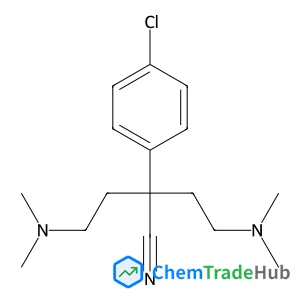
2-(4-Chlorophenyl)-4-(dimethylamino)-2-(2-(dimethylamino)ethyl)butanenitrile
CAS Number:
1246816-57-8
Molecular Formula:
C16H24ClN3


Recommended Suppliers



Disclaimer
This page provides academic journal information for reference and research purposes only. We are not affiliated with any journal publishers and do not handle publication submissions. For publication-related inquiries, please contact the respective journal publishers directly.
If you notice any inaccuracies in the information displayed, please contact us at support@chemtradehub.com. We will promptly review and address your concerns.