


Intrinsic structure of pentapeptide Leu-enkephalin: geometry optimization and validation by comparison of VSCF-PT2 calculations with cold ion spectroscopy
Literature Information
Publication Date
2018-09-07
DOI
10.1039/C8CP03989E
Impact Factor
3.676
Authors
Tapta Kanchan Roy, Vladimir Kopysov, Aleksandr Pereverzev, Jiří Šebek, R. Benny Gerber, Oleg V. Boyarkin
View Original
Abstract
The intrinsic structure of an opioid peptide [Ala2, Leu5]-leucine enkephalin (ALE) has been investigated using first-principles based vibrational self-consistent field (VSCF) theory and cold ion spectroscopy. IR-UV double resonance spectroscopy revealed the presence of only one highly abundant conformer of the singly protonated ALE, isolated and cryogenically cooled in the gas phase. High-level quantum mechanical calculations of electronic structures in conjunction with a systematic conformational search allowed for finding a few low-energy candidate structures. In order to identify the observed structure, we computed vibrational spectra of the candidate structures and employed the theory at the semi-empirically scaled harmonic level and at the first-principles based anharmonic VSCF levels. The best match between the calculated “anharmonic” and the measured spectra appeared, indeed, for the most stable candidate. An average of two spectra calculated with different quantum mechanical potentials is proposed for the best match with experiment. The match thus validates the calculated intrinsic structure of ALE and demonstrates the predictive power of first-principles theory for solving structures of such large molecules.
Recommended Journals

Israel Journal of Chemistry

Organic Preparations and Procedures International

Fibre Chemistry

Proceedings of the National Academy of Sciences of the United States of America

Russian Chemical Reviews

Journal of Physics and Chemistry of Solids

Molecular Pharmacology

Pure and Applied Chemistry

Planta Medica

Helvetica Chimica Acta
Related Literature
X-ray photoelectron spectroscopy of pyrrolidinium-based ionic liquids: cation–anion interactions and a comparison to imidazolium-based analogues
Shuang Men, Kevin R. J. Lovelock, Peter Licence
2011-07-22
Paper
DOI: 10.1039/C1CP21053J
Oxygen-containing gas-phase diatomic trications and tetracations: ReOz+, NbOz+ and HfOz+ (z = 3, 4)
V. Brites, K. Franzreb, J. N. Harvey, S. G. Sayres, M. W. Ross, D. E. Blumling, A. W. Castleman, Jr., M. Hochlaf
2011-07-15
Paper
DOI: 10.1039/C1CP21566C
Hydroxideoxidation and peroxide formation at embedded binuclear transition metal sites; TM = Cr, Mn, Fe, Co
M. Busch, E. Ahlberg, I. Panas
2011-07-20
Paper
DOI: 10.1039/C1CP20487D
μ-XAFS of a single particle of a practical NiOx/Ce2Zr2Oy catalyst
Tomoya Uruga, Hajime Tanida, Yasuko Terada, Yasuhiro Iwasawa, Shin-ichi Ohkoshi
2011-06-08
Communication
DOI: 10.1039/C1CP20895K
Platinum-nanogaps for single-molecule electronics: room-temperature stability
Ferry Prins, Ahson J. Shaikh, Jan H. van Esch, Rienk Eelkema, Herre S. J. van der Zant
2011-05-09
Paper
DOI: 10.1039/C1CP20555B
Synthesis of Ge-imogolite: influence of the hydrolysis ratio on the structure of the nanotubes
L. Olivi, C. Dominici, F. Ziarelli
2011-07-12
Paper
DOI: 10.1039/C1CP20346K
Existence of time-dependent density-functional theory for open electronic systems: Time-dependent holographic electron density theorem
Xiao Zheng, ChiYung Yam, Fan Wang, GuanHua Chen
2011-06-06
Paper
DOI: 10.1039/C1CP20777F
Structural characterization and DFT study of VIVO(acac)2 in imidazolium ionic liquids
Andreia Mota, Jason P. Hallett, Maxim L. Kuznetsov, Isabel Correia
2011-07-25
Paper
DOI: 10.1039/C1CP20800D
Double layer capacitance of anode/solid-electrolyte interfaces
2011-07-25
Paper
DOI: 10.1039/C1CP20508K
You might also like
Compound Q&A
What are the main uses of 1-(3-Aminophenyl)-3-[(3R)-1-(3,3-dimethyl-2-oxobutyl)-2-oxo-5-(2-pyridinyl)-2,3-dihydro-1H-1,4-benzodiazepin-3-yl]urea (CAS: 155412-88-7)?
This compound is mainly used as an intermediate in the synthesis of antipsychoti...
155412-88-71-(3-Aminophenyl)-3-...
Compound Q&A
How should waste containing 1-(D-Ribofuranosyl)-1,4-dihydro-3-pyridinecarboxamide (CAS: 19132-12-8) be handled?
Waste containing 1-(D-Ribofuranosyl)-1,4-dihydro-3-pyridinecarboxamide (CAS: 191...
19132-12-81-(D-Ribofuranosyl)-...
Compound Q&A
What regulatory guidelines apply to 2-Methyl-2-propanyl 3-bromo-3-(hydroxymethyl)-1-azetidinecarboxylate (CAS: 2007919-81-3)?
2-Methyl-2-propanyl 3-bromo-3-(hydroxymethyl)-1-azetidinecarboxylate (CAS: 20079...
2007919-81-32-Methyl-2-propanyl ...
Compound Q&A
What is N-(4-Chloro-2-pyridinyl)acetamide (CAS: 245056-66-0)?
N-(4-Chloro-2-pyridinyl)acetamide (CAS: 245056-66-0) is a chemical compound with...
245056-66-0N-(4-Chloro-2-pyridi...
Compound Q&A
What is 5-Chloro-2-hydroxybenzoic acid (CAS: 321-14-2)?
5-Chloro-2-hydroxybenzoic acid, also known as 5-chlorosalicylic acid, is an arom...
321-14-25-Chloro-2-hydroxybe...
Compound Q&A
What precautions should be taken when handling 1,1-Dichloro-1-fluoroethane (CAS: 1717-00-6)?
When handling 1,1-Dichloro-1-fluoroethane (CAS: 1717-00-6), it is important to u...
1717-00-61,1-Dichloro-1-fluor...
Compound Q&A
What are the physical and chemical properties of Fmoc-(2S,3R)-3-phenylpyrrolidine-2-carboxylic acid (CAS: 281655-32-1)?
Fmoc-(2S,3R)-3-phenylpyrrolidine-2-carboxylic acid is a white crystalline solid ...
281655-32-1Fmoc-(2S,3R)-3-pheny...
Compound Q&A
What are the main uses of 4-Amino-5-bromo-2-pyridinecarboxylic acid (CAS: 1363381-01-4)?
4-Amino-5-bromo-2-pyridinecarboxylic acid is primarily used as a precursor in th...
1363381-01-44-Amino-5-bromo-2-py...
Compound Q&A
What precautions should be taken when handling (S)-tert-butyl 2-((2-(4-bromophenyl)-2-oxoethyl)carbamoyl)pyrrolidine-1-carboxylate (CAS: 1007881-98-2)?
Handling this compound should be done with personal protective equipment (PPE) i...
1007881-98-2(S)-tert-butyl 2-((2...
Compound Q&A
What precautions should be taken when handling 8-bromo-2,2-dimethyl-3,4-dihydro-2H-1,4-benzoxazin-3-one (CAS: 688363-73-7)?
When handling 8-bromo-2,2-dimethyl-3,4-dihydro-2H-1,4-benzoxazin-3-one, use prop...
688363-73-78-bromo-2,2-dimethyl...
Source Journal
Physical Chemistry Chemical Physics

CiteScore:
5.5
Self-citation Rate:
10.3%
Articles per Year:
3036
Physical Chemistry Chemical Physics (PCCP) is an international journal co-owned by 19 physical chemistry and physics societies from around the world. This journal publishes original, cutting-edge research in physical chemistry, chemical physics and biophysical chemistry. To be suitable for publication in PCCP, articles must include significant innovation and/or insight into physical chemistry; this is the most important criterion that reviewers and Editors will judge against when evaluating submissions. The journal has a broad scope and welcomes contributions spanning experiment, theory, computation and data science. Topical coverage includes spectroscopy, dynamics, kinetics, statistical mechanics, thermodynamics, electrochemistry, catalysis, surface science, quantum mechanics, quantum computing and machine learning. Interdisciplinary research areas such as polymers and soft matter, materials, nanoscience, energy, surfaces/interfaces, and biophysical chemistry are welcomed if they demonstrate significant innovation and/or insight into physical chemistry. Joined experimental/theoretical studies are particularly appreciated when complementary and based on up-to-date approaches.
Recommended Compounds

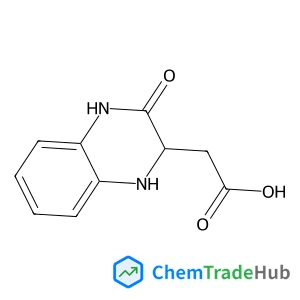
(3-Oxo-1,2,3,4-tetrahydro-2-quinoxalinyl)acetic acid
CAS Number:
136584-14-0
Molecular Formula:
C10H10N2O3
![1-[3-(4-Morpholinylsulfonyl)phenyl]methanamine structure](https://static.chemtradehub.com/structs/933/933989-32-3-51af.webp "1-[3-(4-Morpholinylsulfonyl)phenyl]methanamine structure")
![2,6-Di(thiophen-2-yl)dithieno[3,2-b:2',3'-d]thiophene structure](https://static.chemtradehub.com/structs/910/910788-24-8-5b70.webp "2,6-Di(thiophen-2-yl)dithieno[3,2-b:2',3'-d]thiophene structure")
2,6-Di(thiophen-2-yl)dithieno[3,2-b:2',3'-d]thiophene
CAS Number:
910788-24-8
Molecular Formula:
C16H8S5
Recommended Suppliers





Disclaimer
This page provides academic journal information for reference and research purposes only. We are not affiliated with any journal publishers and do not handle publication submissions. For publication-related inquiries, please contact the respective journal publishers directly.
If you notice any inaccuracies in the information displayed, please contact us at support@chemtradehub.com. We will promptly review and address your concerns.