













Synthesis and derivatization of epoxy-functional sterically-stabilized diblock copolymer spheres in non-polar media: does the spatial location of the epoxy groups matter?
Literature Information
Publication Date
2022-06-10
DOI
10.1039/D2PY00559J
Impact Factor
5.582
Authors
Csilla György, Timothy Smith, David J. Growney, Steven P. Armes
View Original
Abstract
Epoxy-functional sterically-stabilized diblock copolymer spherical nanoparticles were synthesized via polymerization-induced self-assembly (PISA) in mineral oil. Epoxy groups were located either (i) in the nanoparticle cores or (ii) within the steric stabilizer chains. For the first system, reversible addition–fragmentation chain transfer (RAFT) dispersion polymerization of glycidyl methacrylate (GlyMA) was conducted using a poly(lauryl methacrylate) (PLMA63) precursor. The second system involved statistical copolymerization of GlyMA with lauryl methacrylate to produce a P(LMA50-stat-GlyMA9) precursor followed by chain extension using methyl methacrylate (MMA). 1H NMR studies and THF GPC analysis indicated that high monomer conversions (≥ 95%) and narrow molecular weight distributions (Mw/Mn ≤ 1.17) were obtained for both formulations. Dynamic light scattering indicated hydrodynamic diameters of 26 nm and 28 nm for P(LMA50-stat-GlyMA9)-PMMA67 and PLMA63-PGlyMA89 spheres, respectively. Transmission electron microscopy studies confirmed a well-defined spherical morphology in each case. Post-polymerization modification of these spherical nanoparticles was examined by reacting the epoxy groups with benzylamine. For the PLMA63-PGlyMA89 spheres, an [amine]/[epoxy] molar ratio of unity was sufficient to react all the epoxy groups. In contrast, the P(LMA50-stat-GlyMA9)-PMMA67 spheres required a fifty-fold excess of benzylamine for complete reaction. Furthermore, epoxy ring-opening reactions were conducted using either a trace amount of water or 50% v/v aqueous acetic acid at 110 °C. The extent of reaction was assessed using 1H NMR spectroscopy and THF GPC for the P(LMA50-stat-GlyMA9)-PMMA67 spheres and by FT-IR spectroscopy for the core-crosslinked PLMA63-PGlyMA89 spheres.
Recommended Journals
Related Literature
Platinum-nanogaps for single-molecule electronics: room-temperature stability
Ferry Prins, Ahson J. Shaikh, Jan H. van Esch, Rienk Eelkema, Herre S. J. van der Zant
2011-05-09
Paper
DOI: 10.1039/C1CP20555B
QM/MM calculation of protein magnetic shielding tensors with generalized hybrid-orbital method: A GIAO approach
Yoshinobu Akinaga, Jaewoon Jung, Seiichiro Ten-no
2011-07-15
Paper
DOI: 10.1039/C1CP21001G
Interaction between NO and Na, O, S, Cl on Au and Pd(111) surfaces
Ren-Yu Tian, Xiao-Bao Yang, Song-Lin Peng
2011-07-07
Paper
DOI: 10.1039/C1CP20974D
Structures, spectroscopic properties and redox potentials of quaterpyridyl Ru(ii) photosensitizer and its derivatives for solar energy cell: a density functional study
Qing-Jiang Pan, Yuan-Ru Guo, Li Li, Samuel O. Odoh, Hong-Gang Fu, Hong-Xing Zhang
2011-07-07
Paper
DOI: 10.1039/C1CP00030F
Quantum design rules for single molecule logic gates
N. Renaud, M. Hliwa, C. Joachim
2011-07-27
Paper
DOI: 10.1039/C1CP21221D
Probing the electronic and optical properties of silica-coated quantum dots with first-principles calculations
Cunku Dong, Jingyao Qi
2011-07-08
Paper
DOI: 10.1039/C1CP21030K
Ion-specific and charge effects in counterion binding to poly(styrenesulfonate) anions
Josip Požar, Klemen Bohinc, Vojko Vlachy, Davor Kovačević
2011-07-26
Paper
DOI: 10.1039/C1CP21291E
Double layer capacitance of anode/solid-electrolyte interfaces
2011-07-25
Paper
DOI: 10.1039/C1CP20508K
Structural characterization and DFT study of VIVO(acac)2 in imidazolium ionic liquids
Andreia Mota, Jason P. Hallett, Maxim L. Kuznetsov, Isabel Correia
2011-07-25
Paper
DOI: 10.1039/C1CP20800D
Modus operandi of controlled release from mesoporous matrices: a theoretical perspective
Tina Ukmar, Miran Gaberšček, Franci Merzel, Aljaž Godec
2011-07-26
Paper
DOI: 10.1039/C1CP20636B
You might also like
Compound Q&A
What are the main uses of 1-(3-Aminophenyl)-3-[(3R)-1-(3,3-dimethyl-2-oxobutyl)-2-oxo-5-(2-pyridinyl)-2,3-dihydro-1H-1,4-benzodiazepin-3-yl]urea (CAS: 155412-88-7)?
This compound is mainly used as an intermediate in the synthesis of antipsychoti...
155412-88-71-(3-Aminophenyl)-3-...
Compound Q&A
How should waste containing 1-(D-Ribofuranosyl)-1,4-dihydro-3-pyridinecarboxamide (CAS: 19132-12-8) be handled?
Waste containing 1-(D-Ribofuranosyl)-1,4-dihydro-3-pyridinecarboxamide (CAS: 191...
19132-12-81-(D-Ribofuranosyl)-...
Compound Q&A
What regulatory guidelines apply to 2-Methyl-2-propanyl 3-bromo-3-(hydroxymethyl)-1-azetidinecarboxylate (CAS: 2007919-81-3)?
2-Methyl-2-propanyl 3-bromo-3-(hydroxymethyl)-1-azetidinecarboxylate (CAS: 20079...
2007919-81-32-Methyl-2-propanyl ...
Compound Q&A
What is N-(4-Chloro-2-pyridinyl)acetamide (CAS: 245056-66-0)?
N-(4-Chloro-2-pyridinyl)acetamide (CAS: 245056-66-0) is a chemical compound with...
245056-66-0N-(4-Chloro-2-pyridi...
Compound Q&A
What is 5-Chloro-2-hydroxybenzoic acid (CAS: 321-14-2)?
5-Chloro-2-hydroxybenzoic acid, also known as 5-chlorosalicylic acid, is an arom...
321-14-25-Chloro-2-hydroxybe...
Compound Q&A
What precautions should be taken when handling 1,1-Dichloro-1-fluoroethane (CAS: 1717-00-6)?
When handling 1,1-Dichloro-1-fluoroethane (CAS: 1717-00-6), it is important to u...
1717-00-61,1-Dichloro-1-fluor...
Compound Q&A
What are the physical and chemical properties of Fmoc-(2S,3R)-3-phenylpyrrolidine-2-carboxylic acid (CAS: 281655-32-1)?
Fmoc-(2S,3R)-3-phenylpyrrolidine-2-carboxylic acid is a white crystalline solid ...
281655-32-1Fmoc-(2S,3R)-3-pheny...
Compound Q&A
What are the main uses of 4-Amino-5-bromo-2-pyridinecarboxylic acid (CAS: 1363381-01-4)?
4-Amino-5-bromo-2-pyridinecarboxylic acid is primarily used as a precursor in th...
1363381-01-44-Amino-5-bromo-2-py...
Compound Q&A
What precautions should be taken when handling (S)-tert-butyl 2-((2-(4-bromophenyl)-2-oxoethyl)carbamoyl)pyrrolidine-1-carboxylate (CAS: 1007881-98-2)?
Handling this compound should be done with personal protective equipment (PPE) i...
1007881-98-2(S)-tert-butyl 2-((2...
Compound Q&A
What precautions should be taken when handling 8-bromo-2,2-dimethyl-3,4-dihydro-2H-1,4-benzoxazin-3-one (CAS: 688363-73-7)?
When handling 8-bromo-2,2-dimethyl-3,4-dihydro-2H-1,4-benzoxazin-3-one, use prop...
688363-73-78-bromo-2,2-dimethyl...
Source Journal
Polymer Chemistry

CiteScore:
8.6
Self-citation Rate:
7.3%
Articles per Year:
457
Polymer Chemistry welcomes submissions in all areas of polymer science that have a strong focus on macromolecular chemistry. Manuscripts may cover a broad range of fields, yet no direct application focus is required.
Recommended Compounds
![tert-Butyl N-[(2-chloropyridin-4-yl)methyl]carbamate structure](https://static.chemtradehub.com/structs/916/916210-27-0-9f95.webp "tert-Butyl N-[(2-chloropyridin-4-yl)methyl]carbamate structure")
tert-Butyl N-[(2-chloropyridin-4-yl)methyl]carbamate
CAS Number:
916210-27-0
Molecular Formula:
C11H15ClN2O2
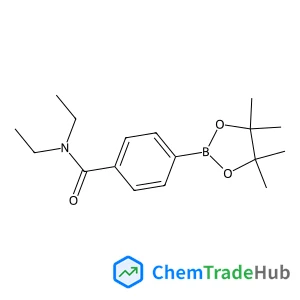
N,N-Diethyl-4-(4,4,5,5-tetramethyl-1,3,2-dioxaborolan-2-yl)benzamide
CAS Number:
325142-99-2
Molecular Formula:
C17H26BNO3
Recommended Suppliers







Disclaimer
This page provides academic journal information for reference and research purposes only. We are not affiliated with any journal publishers and do not handle publication submissions. For publication-related inquiries, please contact the respective journal publishers directly.
If you notice any inaccuracies in the information displayed, please contact us at support@chemtradehub.com. We will promptly review and address your concerns.