












![Pyrazolo[1,5-a]pyridine-3-carbothioamide structure](https://static.chemtradehub.com/structs/885/885275-44-5-aae0.webp "Pyrazolo[1,5-a]pyridine-3-carbothioamide structure")
Probing the electronic and optical properties of silica-coated quantum dots with first-principles calculations
Literature Information
Publication Date
2011-07-08
DOI
10.1039/C1CP21030K
Impact Factor
3.676
Authors
Cunku Dong, Jingyao Qi
View Original
Abstract
The electronic and optical natures of silica-coated semiconductor nanocrystals (Cd2Te2@(SiO2)24) have been investigated by density functional theory (DFT) and time-dependent DFT calculations. The calculated results of Cd2Te2@(SiO2)24 have revealed that the structural synergy effect between the Cd2Te2 quantum dots (QDs) and the silica coating shell plays a dominant role in the photoelectric properties. The binding of embedded Cd2Te2 to the outer silica coating shell leads to the distortion of the silica nanocage, indicating strong coupling between the QDs and silica shell. The optical features of Cd2Te2 clusters and Cd2Te2@(SiO2)24 complexes were evaluated using the time-dependent DFT method. It is determined that the maximal absorption peak of isolated Cd2Te2 in a UV-Vis absorption spectrum appears at 584 nm, which shifts to 534 nm when the Cd2Te2 QDs were encapsulated by silica, in close agreement with the experimental evidence. The excited process has a direct electronic transition character from the occupied Cd2Te2 states to the outer silica nanocage excited states (core → shell electronic transitions). A deep insight into silica-coated QD systems is beneficial for understanding their optical nature and the development of core/shell QDs.
Related Literature
Estimating the cooperativity of PROTAC-induced ternary complexes using 19F NMR displacement assay
Guilherme Vieira de Castro, Alessio Ciulli
2021-08-24
Research Article
DOI: 10.1039/D1MD00215E
A structure–kinetic relationship study using matched molecular pair analysis
Doris A. Schuetz, Lars Richter, Riccardo Martini, Gerhard F. Ecker
2020-09-21
Research Article
DOI: 10.1039/D0MD00178C
In vitro anti-diabetic assessment of guavanoic acid functionalized gold nanoparticles in regulating glucose transport using L6 rat skeletal muscle cells
K. Govindaraju
2020-06-05
Research Article
DOI: 10.1039/D0MD00125B
Antiproliferative activities of tricyclic amides derived from β-caryophyllene via the Ritter reaction against MDA-MB-231 breast cancer cells
XiXi Xu, Ariane Roseblade, Tristan Rawling, Alison T. Ung
2019-12-18
Research Article
DOI: 10.1039/C9MD00237E
Functionalized gold nanoparticles: promising and efficient diagnostic and therapeutic tools for HIV/AIDS
Shikha Gulati, Parinita Singh, Anchita Diwan, Ayush Mongia, Sanjay Kumar
2020-10-01
Review Article
DOI: 10.1039/D0MD00298D
Polarity-based fluorescence probes: properties and applications
Xingye Yang, Lupei Du
2021-08-09
Review Article
DOI: 10.1039/D1MD00170A
Formulation and clinical translation of [177Lu]Lu-trastuzumab for radioimmunotheranostics of metastatic breast cancer
Mohini Guleria, Rohit Sharma, Jeyachitra Amirdhanayagam, Haladhar D. Sarma, Venkatesh Rangarajan
2020-11-14
Research Article
DOI: 10.1039/D0MD00319K
A novel compound active against SARS-CoV-2 targeting uridylate-specific endoribonuclease (NendoU/NSP15): in silico and in vitro investigations
Sumit Kumar, Yash Gupta, Charu Upadhyay, Neha Sharma, Andrew S. Herbert, Ravi Durvasula, Vladimir Potemkin, Poonam, Prakasha Kempaiah
2021-08-18
Research Article
DOI: 10.1039/D1MD00202C
You might also like
Compound Q&A
What are the main uses of 1-(3-Aminophenyl)-3-[(3R)-1-(3,3-dimethyl-2-oxobutyl)-2-oxo-5-(2-pyridinyl)-2,3-dihydro-1H-1,4-benzodiazepin-3-yl]urea (CAS: 155412-88-7)?
This compound is mainly used as an intermediate in the synthesis of antipsychoti...
155412-88-71-(3-Aminophenyl)-3-...
Compound Q&A
How should waste containing 1-(D-Ribofuranosyl)-1,4-dihydro-3-pyridinecarboxamide (CAS: 19132-12-8) be handled?
Waste containing 1-(D-Ribofuranosyl)-1,4-dihydro-3-pyridinecarboxamide (CAS: 191...
19132-12-81-(D-Ribofuranosyl)-...
Compound Q&A
What regulatory guidelines apply to 2-Methyl-2-propanyl 3-bromo-3-(hydroxymethyl)-1-azetidinecarboxylate (CAS: 2007919-81-3)?
2-Methyl-2-propanyl 3-bromo-3-(hydroxymethyl)-1-azetidinecarboxylate (CAS: 20079...
2007919-81-32-Methyl-2-propanyl ...
Compound Q&A
What is N-(4-Chloro-2-pyridinyl)acetamide (CAS: 245056-66-0)?
N-(4-Chloro-2-pyridinyl)acetamide (CAS: 245056-66-0) is a chemical compound with...
245056-66-0N-(4-Chloro-2-pyridi...
Compound Q&A
What is 5-Chloro-2-hydroxybenzoic acid (CAS: 321-14-2)?
5-Chloro-2-hydroxybenzoic acid, also known as 5-chlorosalicylic acid, is an arom...
321-14-25-Chloro-2-hydroxybe...
Compound Q&A
What precautions should be taken when handling 1,1-Dichloro-1-fluoroethane (CAS: 1717-00-6)?
When handling 1,1-Dichloro-1-fluoroethane (CAS: 1717-00-6), it is important to u...
1717-00-61,1-Dichloro-1-fluor...
Compound Q&A
What are the physical and chemical properties of Fmoc-(2S,3R)-3-phenylpyrrolidine-2-carboxylic acid (CAS: 281655-32-1)?
Fmoc-(2S,3R)-3-phenylpyrrolidine-2-carboxylic acid is a white crystalline solid ...
281655-32-1Fmoc-(2S,3R)-3-pheny...
Compound Q&A
What are the main uses of 4-Amino-5-bromo-2-pyridinecarboxylic acid (CAS: 1363381-01-4)?
4-Amino-5-bromo-2-pyridinecarboxylic acid is primarily used as a precursor in th...
1363381-01-44-Amino-5-bromo-2-py...
Compound Q&A
What precautions should be taken when handling (S)-tert-butyl 2-((2-(4-bromophenyl)-2-oxoethyl)carbamoyl)pyrrolidine-1-carboxylate (CAS: 1007881-98-2)?
Handling this compound should be done with personal protective equipment (PPE) i...
1007881-98-2(S)-tert-butyl 2-((2...
Compound Q&A
What precautions should be taken when handling 8-bromo-2,2-dimethyl-3,4-dihydro-2H-1,4-benzoxazin-3-one (CAS: 688363-73-7)?
When handling 8-bromo-2,2-dimethyl-3,4-dihydro-2H-1,4-benzoxazin-3-one, use prop...
688363-73-78-bromo-2,2-dimethyl...
Source Journal
Physical Chemistry Chemical Physics

CiteScore:
5.5
Self-citation Rate:
10.3%
Articles per Year:
3036
Physical Chemistry Chemical Physics (PCCP) is an international journal co-owned by 19 physical chemistry and physics societies from around the world. This journal publishes original, cutting-edge research in physical chemistry, chemical physics and biophysical chemistry. To be suitable for publication in PCCP, articles must include significant innovation and/or insight into physical chemistry; this is the most important criterion that reviewers and Editors will judge against when evaluating submissions. The journal has a broad scope and welcomes contributions spanning experiment, theory, computation and data science. Topical coverage includes spectroscopy, dynamics, kinetics, statistical mechanics, thermodynamics, electrochemistry, catalysis, surface science, quantum mechanics, quantum computing and machine learning. Interdisciplinary research areas such as polymers and soft matter, materials, nanoscience, energy, surfaces/interfaces, and biophysical chemistry are welcomed if they demonstrate significant innovation and/or insight into physical chemistry. Joined experimental/theoretical studies are particularly appreciated when complementary and based on up-to-date approaches.
Recommended Compounds
![1-[3-(4-Morpholinylsulfonyl)phenyl]methanamine structure](https://static.chemtradehub.com/structs/933/933989-32-3-51af.webp "1-[3-(4-Morpholinylsulfonyl)phenyl]methanamine structure")
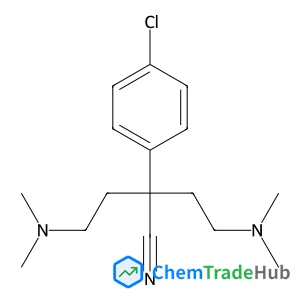
2-(4-Chlorophenyl)-4-(dimethylamino)-2-(2-(dimethylamino)ethyl)butanenitrile
CAS Number:
1246816-57-8
Molecular Formula:
C16H24ClN3
Recommended Suppliers



Disclaimer
This page provides academic journal information for reference and research purposes only. We are not affiliated with any journal publishers and do not handle publication submissions. For publication-related inquiries, please contact the respective journal publishers directly.
If you notice any inaccuracies in the information displayed, please contact us at support@chemtradehub.com. We will promptly review and address your concerns.