


Self-healable triboelectric nanogenerators based on ionic poly(hindered urea) network materials cross-linked with fluorinated block copolymers
Literature Information
Publication Date
2022-07-05
DOI
10.1039/D2PY00252C
Impact Factor
5.582
Authors
Pothanagandhi Nellepalli, Twinkal Patel, Minsoo P. Kim, Junyoung Park, Zhibin Ye, Hyun Wook Jung, Hyunhyub Ko, Jung Kwon Oh
View Original
Abstract
The triboelectric nanogenerator (TENG) has been anticipated as a cost-effective energy harvesting device that can convert mechanical energies to electricity. Further to the modification of structural and functional properties of triboelectric materials, an integration of self-healability has been explored as an advanced platform for the development of multifunctional TENGs due to their improved lifetime and function. In this study, we demonstrate the versatility of a reactive block copolymer approach that allows for the fabrication of ionic poly(hindered urea)-based covalent adaptive networks having pendant fluorinated species formulated with ionic liquid as effective self-healable triboelectric materials. The reactive block copolymer is well-defined, designed with a dynamic t-butylamino block for self-healability and a dielectric fluorinated block for improved triboelectric output, and used as a multifunctional crosslinker. Fabricated by two-step polyaddition in combination with physical blending with ionic liquid, the formed ionic fluorinated poly(hindered urea) networks crosslinked with reactive block copolymer have enhanced TENG outputs while retaining good self-healing and mechanical strength. Promisingly, their recovery of triboelectric performance is greater than 90% upon the repair of damaged surfaces. This work demonstrates the versatility of the new reactive block copolymer approach to fabricate dynamic PHU networks exhibiting desired properties useful for advanced self-healable-TENG-based energy harvesting devices and electronics.
Recommended Journals

Journal of Saudi Chemical Society

Chemistry Education Research and Practice

Russian Journal of General Chemistry

Crystallography Reports

Russian Journal of Coordination Chemistry

Nature Medicine

Russian Journal of Organic Chemistry

New Journal of Chemistry

Russian Journal of Applied Chemistry

Drug Discovery Today
Related Literature
Band alignment and charge transfer predictions of ZnO/ZnX (X = S, Se or Te) interfaces applied to solar cells: a PBE+U theoretical study
Efracio Mamani Flores, Rogério Almeida Gouvea, Maurício Jeomar Piotrowski, Mário Lucio Moreira
2018-01-19
Paper
DOI: 10.1039/C7CP08177D
Mixed-dimensional 2D/3D heterojunctions between MoS2 and Si(100)
Hyunsoo Choi, Kyung-Ah Min, Janghwan Cha, Suklyun Hong
2018-10-01
Paper
DOI: 10.1039/C8CP05201H
Multi-scale theoretical approach to X-ray absorption spectra in disordered systems: an application to the study of Zn(ii) in water
Francesco Stellato, Matteo Calandra, Francesco D'Acapito, Emiliano De Santis
2018-09-12
Paper
DOI: 10.1039/C8CP04355H
Intrinsic structure of pentapeptide Leu-enkephalin: geometry optimization and validation by comparison of VSCF-PT2 calculations with cold ion spectroscopy
Tapta Kanchan Roy, Vladimir Kopysov, Aleksandr Pereverzev, Jiří Šebek, R. Benny Gerber, Oleg V. Boyarkin
2018-09-07
Paper
DOI: 10.1039/C8CP03989E
Topological behaviour of ternary non-symmorphic crystals KZnX (X = P, As, Sb) under pressure and strain: a first principles study
Atahar Parveen, E. Narsimha Rao, B. Adivaiah, P. Anees, G. Vaitheeswaran
2018-01-16
Paper
DOI: 10.1039/C7CP08121A
Global quasi-linearization (GQL) versus QSSA for a hydrogen–air auto-ignition problem
Chunkan Yu, Viatcheslav Bykov, Ulrich Maas
2018-01-15
Paper
DOI: 10.1039/C7CP07213A
A theoretical study of the effect of a non-aqueous proton donor on electrochemical ammonia synthesis
Aayush R. Singh, Brian A. Rohr, Yanjing Su, Lijie Qiao
2018-01-17
Paper
DOI: 10.1039/C7CP05484J
Polarization propagator theory and the entanglement between MO excitations
2018-09-15
Paper
DOI: 10.1039/C8CP03480J
Atomistic insights into the nanofluid transport through an ultra-confined capillary
Xiao Wang, Zhiliang Zhang, Jianying He
2018-01-12
Paper
DOI: 10.1039/C7CP08140E
Molecular dynamics investigations of cello-oligosaccharide recognition by Cel9G–CBM3c from Clostridium cellulovorans
Penghui Li, Chunchun Zhang
2018-01-23
Paper
DOI: 10.1039/C7CP07175B
You might also like
Compound Q&A
What are the main uses of 1-(3-Aminophenyl)-3-[(3R)-1-(3,3-dimethyl-2-oxobutyl)-2-oxo-5-(2-pyridinyl)-2,3-dihydro-1H-1,4-benzodiazepin-3-yl]urea (CAS: 155412-88-7)?
This compound is mainly used as an intermediate in the synthesis of antipsychoti...
155412-88-71-(3-Aminophenyl)-3-...
Compound Q&A
How should waste containing 1-(D-Ribofuranosyl)-1,4-dihydro-3-pyridinecarboxamide (CAS: 19132-12-8) be handled?
Waste containing 1-(D-Ribofuranosyl)-1,4-dihydro-3-pyridinecarboxamide (CAS: 191...
19132-12-81-(D-Ribofuranosyl)-...
Compound Q&A
What regulatory guidelines apply to 2-Methyl-2-propanyl 3-bromo-3-(hydroxymethyl)-1-azetidinecarboxylate (CAS: 2007919-81-3)?
2-Methyl-2-propanyl 3-bromo-3-(hydroxymethyl)-1-azetidinecarboxylate (CAS: 20079...
2007919-81-32-Methyl-2-propanyl ...
Compound Q&A
What is N-(4-Chloro-2-pyridinyl)acetamide (CAS: 245056-66-0)?
N-(4-Chloro-2-pyridinyl)acetamide (CAS: 245056-66-0) is a chemical compound with...
245056-66-0N-(4-Chloro-2-pyridi...
Compound Q&A
What is 5-Chloro-2-hydroxybenzoic acid (CAS: 321-14-2)?
5-Chloro-2-hydroxybenzoic acid, also known as 5-chlorosalicylic acid, is an arom...
321-14-25-Chloro-2-hydroxybe...
Compound Q&A
What precautions should be taken when handling 1,1-Dichloro-1-fluoroethane (CAS: 1717-00-6)?
When handling 1,1-Dichloro-1-fluoroethane (CAS: 1717-00-6), it is important to u...
1717-00-61,1-Dichloro-1-fluor...
Compound Q&A
What are the physical and chemical properties of Fmoc-(2S,3R)-3-phenylpyrrolidine-2-carboxylic acid (CAS: 281655-32-1)?
Fmoc-(2S,3R)-3-phenylpyrrolidine-2-carboxylic acid is a white crystalline solid ...
281655-32-1Fmoc-(2S,3R)-3-pheny...
Compound Q&A
What are the main uses of 4-Amino-5-bromo-2-pyridinecarboxylic acid (CAS: 1363381-01-4)?
4-Amino-5-bromo-2-pyridinecarboxylic acid is primarily used as a precursor in th...
1363381-01-44-Amino-5-bromo-2-py...
Compound Q&A
What precautions should be taken when handling (S)-tert-butyl 2-((2-(4-bromophenyl)-2-oxoethyl)carbamoyl)pyrrolidine-1-carboxylate (CAS: 1007881-98-2)?
Handling this compound should be done with personal protective equipment (PPE) i...
1007881-98-2(S)-tert-butyl 2-((2...
Compound Q&A
What precautions should be taken when handling 8-bromo-2,2-dimethyl-3,4-dihydro-2H-1,4-benzoxazin-3-one (CAS: 688363-73-7)?
When handling 8-bromo-2,2-dimethyl-3,4-dihydro-2H-1,4-benzoxazin-3-one, use prop...
688363-73-78-bromo-2,2-dimethyl...
Source Journal
Polymer Chemistry

CiteScore:
8.6
Self-citation Rate:
7.3%
Articles per Year:
457
Polymer Chemistry welcomes submissions in all areas of polymer science that have a strong focus on macromolecular chemistry. Manuscripts may cover a broad range of fields, yet no direct application focus is required.
Recommended Compounds
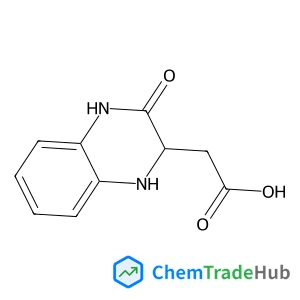
(3-Oxo-1,2,3,4-tetrahydro-2-quinoxalinyl)acetic acid
CAS Number:
136584-14-0
Molecular Formula:
C10H10N2O3
![tert-Butyl N-[(2-chloropyridin-4-yl)methyl]carbamate structure](https://static.chemtradehub.com/structs/916/916210-27-0-9f95.webp "tert-Butyl N-[(2-chloropyridin-4-yl)methyl]carbamate structure")
tert-Butyl N-[(2-chloropyridin-4-yl)methyl]carbamate
CAS Number:
916210-27-0
Molecular Formula:
C11H15ClN2O2
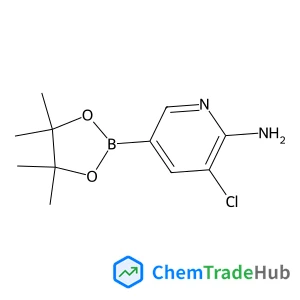
3-Chloro-5-(4,4,5,5-tetramethyl-1,3,2-dioxaborolan-2-yl)-2-pyridinamine
CAS Number:
1032758-99-8
Molecular Formula:
C11H16BClN2O2

Recommended Suppliers






Disclaimer
This page provides academic journal information for reference and research purposes only. We are not affiliated with any journal publishers and do not handle publication submissions. For publication-related inquiries, please contact the respective journal publishers directly.
If you notice any inaccuracies in the information displayed, please contact us at support@chemtradehub.com. We will promptly review and address your concerns.