












A theoretical study of the effect of a non-aqueous proton donor on electrochemical ammonia synthesis
Literature Information
Publication Date
2018-01-17
DOI
10.1039/C7CP05484J
Impact Factor
3.676
Authors
Aayush R. Singh, Brian A. Rohr, Yanjing Su, Lijie Qiao
View Original
Abstract
Ammonia synthesis is one of the most studied reactions in heterogeneous catalysis. To date, however, electrochemical N2 reduction in aqueous systems has proven to be extremely difficult, mainly due to the competing hydrogen evolution reaction (HER). Recently, it has been shown that transition metal complexes based on molybdenum can reduce N2 to ammonia at room temperature and ambient pressure in a non-aqueous system, with a relatively small amount of hydrogen output. We demonstrate that the non-aqueous proton donor they have chosen, 2,6-lutidinium (LutH+), is a viable substitute for hydronium in the electrochemical process at a solid surface, since this donor can suppress the HER rate. We also show that the presence of LutH+ can selectively stabilize the *NNH intermediate relative to *NH or *NH2via the formation of hydrogen bonds, indicating that the use of non-aqueous solvents can break the scaling relationship between limiting potential and binding energies.
Related Literature
Kinetics of the C–C bond beta scission reactions in alkyl radicals
Artur Ratkiewicz
2011-07-22
Paper
DOI: 10.1039/C1CP21229J
π-Stacking between Casiopeinas® and DNA bases
Rodrigo Galindo-Murillo, Joseelyne Hernandez-Lima, Mayra González-Rendón, Lena Ruíz-Azuara, Rafael Moreno-Esparza
2011-07-12
Paper
DOI: 10.1039/C1CP20183B
Polarization induced water molecule dissociation below the first-order electronic-phase transition temperature
Andrew Das Arulsamy, Zlatko Kregar, Kristina Eleršič, Martina Modic, Uma Shankar Subramani
2011-07-21
Paper
DOI: 10.1039/C1CP20138G
Questioning the photophysical model for the indolechromophore in the light of evidence obtained by controlling the non-specific effect of the medium with 1-chlorobutane as solvent
Juan Pablo Catalán
2011-07-14
Paper
DOI: 10.1039/C1CP21380F
Light-induced isomerization dynamics of a cyanine dye in the modulus-controlled regime
Ah-Young Jee, Seohyun Park, Minyung Lee
2011-07-18
Paper
DOI: 10.1039/C1CP20835G
Spin seebeck coefficient of a molecular spin pump
Jonas Fransson, Michael Galperin
2011-06-07
Paper
DOI: 10.1039/C1CP20720B
Stabilization of organic field-effect transistors by tert-butyl groups in dibenzotetrathiafulvalene derivatives
Junki Nagakubo, Minoru Ashizawa, Tadashi Kawamoto, Akihiko Tanioka
2011-06-15
Paper
DOI: 10.1039/C1CP21507H
Molecular electrostatic potential for exploring π-conjugation: a density-functional investigation‡
Subhash S. Pingale
2011-07-21
Paper
DOI: 10.1039/C1CP20071B
[MLn]2+ doubly charged systems: modeling, bonding, life times and unimolecular reactivity
2011-07-18
Perspective
DOI: 10.1039/C1CP20622B
You might also like
Compound Q&A
What are the main uses of 1-(3-Aminophenyl)-3-[(3R)-1-(3,3-dimethyl-2-oxobutyl)-2-oxo-5-(2-pyridinyl)-2,3-dihydro-1H-1,4-benzodiazepin-3-yl]urea (CAS: 155412-88-7)?
This compound is mainly used as an intermediate in the synthesis of antipsychoti...
155412-88-71-(3-Aminophenyl)-3-...
Compound Q&A
How should waste containing 1-(D-Ribofuranosyl)-1,4-dihydro-3-pyridinecarboxamide (CAS: 19132-12-8) be handled?
Waste containing 1-(D-Ribofuranosyl)-1,4-dihydro-3-pyridinecarboxamide (CAS: 191...
19132-12-81-(D-Ribofuranosyl)-...
Compound Q&A
What regulatory guidelines apply to 2-Methyl-2-propanyl 3-bromo-3-(hydroxymethyl)-1-azetidinecarboxylate (CAS: 2007919-81-3)?
2-Methyl-2-propanyl 3-bromo-3-(hydroxymethyl)-1-azetidinecarboxylate (CAS: 20079...
2007919-81-32-Methyl-2-propanyl ...
Compound Q&A
What is N-(4-Chloro-2-pyridinyl)acetamide (CAS: 245056-66-0)?
N-(4-Chloro-2-pyridinyl)acetamide (CAS: 245056-66-0) is a chemical compound with...
245056-66-0N-(4-Chloro-2-pyridi...
Compound Q&A
What is 5-Chloro-2-hydroxybenzoic acid (CAS: 321-14-2)?
5-Chloro-2-hydroxybenzoic acid, also known as 5-chlorosalicylic acid, is an arom...
321-14-25-Chloro-2-hydroxybe...
Compound Q&A
What precautions should be taken when handling 1,1-Dichloro-1-fluoroethane (CAS: 1717-00-6)?
When handling 1,1-Dichloro-1-fluoroethane (CAS: 1717-00-6), it is important to u...
1717-00-61,1-Dichloro-1-fluor...
Compound Q&A
What are the physical and chemical properties of Fmoc-(2S,3R)-3-phenylpyrrolidine-2-carboxylic acid (CAS: 281655-32-1)?
Fmoc-(2S,3R)-3-phenylpyrrolidine-2-carboxylic acid is a white crystalline solid ...
281655-32-1Fmoc-(2S,3R)-3-pheny...
Compound Q&A
What are the main uses of 4-Amino-5-bromo-2-pyridinecarboxylic acid (CAS: 1363381-01-4)?
4-Amino-5-bromo-2-pyridinecarboxylic acid is primarily used as a precursor in th...
1363381-01-44-Amino-5-bromo-2-py...
Compound Q&A
What precautions should be taken when handling (S)-tert-butyl 2-((2-(4-bromophenyl)-2-oxoethyl)carbamoyl)pyrrolidine-1-carboxylate (CAS: 1007881-98-2)?
Handling this compound should be done with personal protective equipment (PPE) i...
1007881-98-2(S)-tert-butyl 2-((2...
Compound Q&A
What precautions should be taken when handling 8-bromo-2,2-dimethyl-3,4-dihydro-2H-1,4-benzoxazin-3-one (CAS: 688363-73-7)?
When handling 8-bromo-2,2-dimethyl-3,4-dihydro-2H-1,4-benzoxazin-3-one, use prop...
688363-73-78-bromo-2,2-dimethyl...
Source Journal
Physical Chemistry Chemical Physics

CiteScore:
5.5
Self-citation Rate:
10.3%
Articles per Year:
3036
Physical Chemistry Chemical Physics (PCCP) is an international journal co-owned by 19 physical chemistry and physics societies from around the world. This journal publishes original, cutting-edge research in physical chemistry, chemical physics and biophysical chemistry. To be suitable for publication in PCCP, articles must include significant innovation and/or insight into physical chemistry; this is the most important criterion that reviewers and Editors will judge against when evaluating submissions. The journal has a broad scope and welcomes contributions spanning experiment, theory, computation and data science. Topical coverage includes spectroscopy, dynamics, kinetics, statistical mechanics, thermodynamics, electrochemistry, catalysis, surface science, quantum mechanics, quantum computing and machine learning. Interdisciplinary research areas such as polymers and soft matter, materials, nanoscience, energy, surfaces/interfaces, and biophysical chemistry are welcomed if they demonstrate significant innovation and/or insight into physical chemistry. Joined experimental/theoretical studies are particularly appreciated when complementary and based on up-to-date approaches.
Recommended Compounds

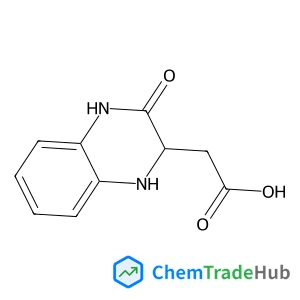
(3-Oxo-1,2,3,4-tetrahydro-2-quinoxalinyl)acetic acid
CAS Number:
136584-14-0
Molecular Formula:
C10H10N2O3
![2,6-Bis({(2R)-2-[hydroxy(diphenyl)methyl]-1-pyrrolidinyl}methyl)-4-methylphenol structure](https://static.chemtradehub.com/structs/877/877395-58-9-70bf.webp "2,6-Bis({(2R)-2-[hydroxy(diphenyl)methyl]-1-pyrrolidinyl}methyl)-4-methylphenol structure")
2,6-Bis({(2R)-2-[hydroxy(diphenyl)methyl]-1-pyrrolidinyl}methyl)-4-methylphenol
CAS Number:
877395-58-9
Molecular Formula:
C43H46N2O3
Recommended Suppliers




Disclaimer
This page provides academic journal information for reference and research purposes only. We are not affiliated with any journal publishers and do not handle publication submissions. For publication-related inquiries, please contact the respective journal publishers directly.
If you notice any inaccuracies in the information displayed, please contact us at support@chemtradehub.com. We will promptly review and address your concerns.