



Atomistic insights into the nanofluid transport through an ultra-confined capillary
Literature Information
Publication Date
2018-01-12
DOI
10.1039/C7CP08140E
Impact Factor
3.676
Authors
Xiao Wang, Zhiliang Zhang, Jianying He
View Original
Abstract
Nanofluid or nanoparticle (NP) transport in confined channels is of great importance for many biological and industrial processes. In this study, molecular dynamics simulation has been employed to investigate the spontaneous two-phase displacement process in an ultra-confined capillary controlled by the surface wettability of NPs. The results clearly show that the presence of NPs modulates the fluid–fluid meniscus and hinders the displacement process compared with the NP-free case. From the perspective of motion behavior, hydrophilic NPs disperse in the water phase or adsorb on the capillary, while hydrophobic and mixed-wet NPs are mainly distributed in the fluid phase. The NPs dispersed into fluids tend to increase the viscosity of the fluids, while the adsorbed NPs contribute to the wettability alteration of the solid capillary. Via capillary number calculations, it is uncovered that the viscosity increase of fluids is responsible for the hindered spontaneous displacement process by hydrophobic and mixed NPs. The wettability alteration of the capillary induced by adsorbed NPs dominates the enhanced displacement in the case of hydrophilic NPs. Our findings provide guidance for modifying the rate of capillary filling and reveal the microscopic mechanism transporting NPs into porous media, which is significant to the design of NPs for target applications.
Recommended Journals

Proceedings of the National Academy of Sciences of the United States of America

Journal of Medicinal Chemistry

Pharmacological Reviews

Journal of Organometallic Chemistry

Pure and Applied Chemistry

Israel Journal of Chemistry

Science

Journal of Heterocyclic Chemistry

European Journal of Wood and Wood Products

Journal of Physics and Chemistry of Solids
Related Literature
A theoretical study on structural, spectroscopic and energetic properties of acetamide clusters [CH3CONH2] (n = 1–15)
A. Subha Mahadevi, Y. Indra Neela, G. Narahari Sastry
2011-07-14
Paper
DOI: 10.1039/C1CP21346F
Probing the electronic and optical properties of silica-coated quantum dots with first-principles calculations
Cunku Dong, Jingyao Qi
2011-07-08
Paper
DOI: 10.1039/C1CP21030K
The protein folding transition-state ensemble from a Gō-like model
Athi N. Naganathan
2011-07-21
Paper
DOI: 10.1039/C1CP20964G
Enhancement of hematoporphyrin IX potential for photodynamic therapy by entrapment in silica nanospheres
Paulo R. Silva, Lucas L. R. Vono, Breno P. Espósito, Maurício S. Baptista, Liane M. Rossi
2011-07-19
Paper
DOI: 10.1039/C1CP21525F
Size and shape of Au nanoparticles formed in ionic liquids by electron beam irradiation
Shinobu Gonsui, Tetsuya Tsuda, Ken-ichi Fukui
2011-07-21
Paper
DOI: 10.1039/C1CP20643E
Double layer capacitance of anode/solid-electrolyte interfaces
2011-07-25
Paper
DOI: 10.1039/C1CP20508K
Confined crystallization of binary n-alkane mixtures: stabilization of a new rotator phase by enhanced surface freezing and weakened intermolecular interactions
Dongsheng Fu, Yufeng Liu, Guoming Liu, Yunlan Su, Dujin Wang
2011-07-26
Paper
DOI: 10.1039/C1CP21281H
Structural characterization and DFT study of VIVO(acac)2 in imidazolium ionic liquids
Andreia Mota, Jason P. Hallett, Maxim L. Kuznetsov, Isabel Correia
2011-07-25
Paper
DOI: 10.1039/C1CP20800D
Ion-specific and charge effects in counterion binding to poly(styrenesulfonate) anions
Josip Požar, Klemen Bohinc, Vojko Vlachy, Davor Kovačević
2011-07-26
Paper
DOI: 10.1039/C1CP21291E
π-Stacking between Casiopeinas® and DNA bases
Rodrigo Galindo-Murillo, Joseelyne Hernandez-Lima, Mayra González-Rendón, Lena Ruíz-Azuara, Rafael Moreno-Esparza
2011-07-12
Paper
DOI: 10.1039/C1CP20183B
You might also like
Compound Q&A
What are the main uses of 1-(3-Aminophenyl)-3-[(3R)-1-(3,3-dimethyl-2-oxobutyl)-2-oxo-5-(2-pyridinyl)-2,3-dihydro-1H-1,4-benzodiazepin-3-yl]urea (CAS: 155412-88-7)?
This compound is mainly used as an intermediate in the synthesis of antipsychoti...
155412-88-71-(3-Aminophenyl)-3-...
Compound Q&A
How should waste containing 1-(D-Ribofuranosyl)-1,4-dihydro-3-pyridinecarboxamide (CAS: 19132-12-8) be handled?
Waste containing 1-(D-Ribofuranosyl)-1,4-dihydro-3-pyridinecarboxamide (CAS: 191...
19132-12-81-(D-Ribofuranosyl)-...
Compound Q&A
What regulatory guidelines apply to 2-Methyl-2-propanyl 3-bromo-3-(hydroxymethyl)-1-azetidinecarboxylate (CAS: 2007919-81-3)?
2-Methyl-2-propanyl 3-bromo-3-(hydroxymethyl)-1-azetidinecarboxylate (CAS: 20079...
2007919-81-32-Methyl-2-propanyl ...
Compound Q&A
What is N-(4-Chloro-2-pyridinyl)acetamide (CAS: 245056-66-0)?
N-(4-Chloro-2-pyridinyl)acetamide (CAS: 245056-66-0) is a chemical compound with...
245056-66-0N-(4-Chloro-2-pyridi...
Compound Q&A
What is 5-Chloro-2-hydroxybenzoic acid (CAS: 321-14-2)?
5-Chloro-2-hydroxybenzoic acid, also known as 5-chlorosalicylic acid, is an arom...
321-14-25-Chloro-2-hydroxybe...
Compound Q&A
What precautions should be taken when handling 1,1-Dichloro-1-fluoroethane (CAS: 1717-00-6)?
When handling 1,1-Dichloro-1-fluoroethane (CAS: 1717-00-6), it is important to u...
1717-00-61,1-Dichloro-1-fluor...
Compound Q&A
What are the physical and chemical properties of Fmoc-(2S,3R)-3-phenylpyrrolidine-2-carboxylic acid (CAS: 281655-32-1)?
Fmoc-(2S,3R)-3-phenylpyrrolidine-2-carboxylic acid is a white crystalline solid ...
281655-32-1Fmoc-(2S,3R)-3-pheny...
Compound Q&A
What are the main uses of 4-Amino-5-bromo-2-pyridinecarboxylic acid (CAS: 1363381-01-4)?
4-Amino-5-bromo-2-pyridinecarboxylic acid is primarily used as a precursor in th...
1363381-01-44-Amino-5-bromo-2-py...
Compound Q&A
What precautions should be taken when handling (S)-tert-butyl 2-((2-(4-bromophenyl)-2-oxoethyl)carbamoyl)pyrrolidine-1-carboxylate (CAS: 1007881-98-2)?
Handling this compound should be done with personal protective equipment (PPE) i...
1007881-98-2(S)-tert-butyl 2-((2...
Compound Q&A
What precautions should be taken when handling 8-bromo-2,2-dimethyl-3,4-dihydro-2H-1,4-benzoxazin-3-one (CAS: 688363-73-7)?
When handling 8-bromo-2,2-dimethyl-3,4-dihydro-2H-1,4-benzoxazin-3-one, use prop...
688363-73-78-bromo-2,2-dimethyl...
Source Journal
Physical Chemistry Chemical Physics

CiteScore:
5.5
Self-citation Rate:
10.3%
Articles per Year:
3036
Physical Chemistry Chemical Physics (PCCP) is an international journal co-owned by 19 physical chemistry and physics societies from around the world. This journal publishes original, cutting-edge research in physical chemistry, chemical physics and biophysical chemistry. To be suitable for publication in PCCP, articles must include significant innovation and/or insight into physical chemistry; this is the most important criterion that reviewers and Editors will judge against when evaluating submissions. The journal has a broad scope and welcomes contributions spanning experiment, theory, computation and data science. Topical coverage includes spectroscopy, dynamics, kinetics, statistical mechanics, thermodynamics, electrochemistry, catalysis, surface science, quantum mechanics, quantum computing and machine learning. Interdisciplinary research areas such as polymers and soft matter, materials, nanoscience, energy, surfaces/interfaces, and biophysical chemistry are welcomed if they demonstrate significant innovation and/or insight into physical chemistry. Joined experimental/theoretical studies are particularly appreciated when complementary and based on up-to-date approaches.
Recommended Compounds

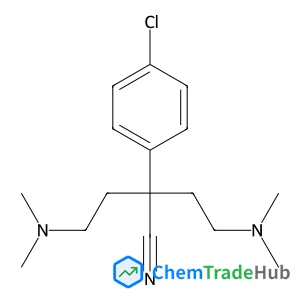
2-(4-Chlorophenyl)-4-(dimethylamino)-2-(2-(dimethylamino)ethyl)butanenitrile
CAS Number:
1246816-57-8
Molecular Formula:
C16H24ClN3

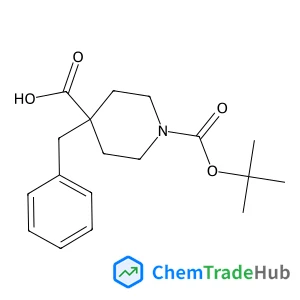
4-Benzyl-1-(tert-butoxycarbonyl)piperidine-4-carboxylic acid
CAS Number:
170838-87-6
Molecular Formula:
C18H25NO4
Recommended Suppliers






Disclaimer
This page provides academic journal information for reference and research purposes only. We are not affiliated with any journal publishers and do not handle publication submissions. For publication-related inquiries, please contact the respective journal publishers directly.
If you notice any inaccuracies in the information displayed, please contact us at support@chemtradehub.com. We will promptly review and address your concerns.