













Optical frequency comb-based measurements and the revisited assignment of high-resolution spectra of CH2Br2 in the 2960 to 3120 cm−1 region
Literature Information
Publication Date
2023-02-14
DOI
10.1039/D2CP05881B
Impact Factor
3.676
Authors
Adrian Hjältén, Frances C. Roberts, Julia H. Lehman, Aleksandra Foltynowicz
View Original
Abstract
Brominated organic compounds are toxic ocean-derived trace gases that affect the oxidation capacity of the atmosphere and contribute to its bromine burden. Quantitative spectroscopic detection of these gases is limited by the lack of accurate absorption cross-section data as well as rigorous spectroscopic models. This work presents measurements of high-resolution spectra of dibromomethane, CH2Br2, from 2960 cm−1 to 3120 cm−1 by two optical frequency comb-based methods, Fourier transform spectroscopy and a spatially dispersive method based on a virtually imaged phased array. The integrated absorption cross-sections measured using the two spectrometers are in excellent agreement with each other within 4%. A revisited rovibrational assignment of the measured spectra is introduced, in which the progressions of features are attributed to hot bands rather than different isotopologues as was previously done. Overall, twelve vibrational transitions, four for each of the three isotopologues CH281Br2, CH279Br81Br, and CH279Br2, are assigned. These four vibrational transitions are attributed to the fundamental ν6 band and the nearby nν4 + ν6 − nν4 hot bands (with n = 1–3) due to the population of the low-lying ν4 mode of the Br–C–Br bending vibration at room temperature. The new simulations show very good agreement in intensities with the experiment as predicted by the Boltzmann distribution factor. The spectra of the fundamental and the hot bands show progressions of strong QKa(J) rovibrational sub-clusters. The band heads of these sub-clusters are assigned and fitted to the measured spectra, providing accurate band origins and the rotational constants for the twelve states with an average error of 0.0084 cm−1. A detailed fit of the ν6 band of the CH279Br81Br isotopologue is commenced after assigning 1808 partially resolved rovibrational lines, with the band origin, rotational, and centrifugal constants as fit parameters, resulting in an average error of 0.0011 cm−1.
Recommended Journals
Related Literature
Time-dependent density functional theory beyond Kohn–Sham Slater determinants
Johanna I. Fuks, Neepa T. Maitra
2016-03-07
Paper
DOI: 10.1039/C6CP00722H
Infrared and Raman spectroscopic features of the self-interstitial defect in diamond from exact-exchange hybrid DFT calculations
Simone Salustro, Alessandro Erba, Claudio M. Zicovich-Wilson, Yves Nöel, Lorenzo Maschio, Roberto Dovesi
2016-06-03
Paper
DOI: 10.1039/C6CP02403C
Theoretical insights into the promotion effect of subsurface boron for the selective hydrogenation of CO to methanol over Pd catalysts
Panpan Wu, Bo Yang
2016-07-12
Paper
DOI: 10.1039/C6CP02735K
Estimation of the lag time in a subsequent monomer addition model for fibril elongation
Suzanne K. Shoffner
2016-05-25
Paper
DOI: 10.1039/C5CP07845H
A multi-nuclear magnetic resonance and density functional theory investigation of epitaxially grown InGaP2
P. J. Knijn, P. J. M. van Bentum, C. M. Fang, G. J. Bauhuis, G. A. de Wijs, A. P. M. Kentgens
2016-06-29
Paper
DOI: 10.1039/C5CP04593B
Proton reduction by a nickel complex with an internal quinoline moiety for proton relay
Karunamay Majee, Jully Patel, Surabhi Rai, Babulal Das, Binata Panda, Sumanta Kumar Padhi
2016-07-05
Paper
DOI: 10.1039/C6CP03034C
A broken-symmetry density functional study of structures, energies, and protonation states along the catalytic O–O bond cleavage pathway in ba3 cytochrome c oxidase from Thermus thermophilus
Wen-Ge Han Du, Andreas W. Götz, Louis Noodleman
2016-04-06
Paper
DOI: 10.1039/C6CP00349D
Charge carrier transport and lifetimes in n-type and p-type phosphorene as 2D device active materials: an ab initio study
E. Tea
2016-07-25
Paper
DOI: 10.1039/C6CP03361J
A computationally efficient double hybrid density functional based on the random phase approximation
Stefan Grimme, Marc Steinmetz
2015-12-03
Paper
DOI: 10.1039/C5CP06600J
Exploring the influence of the poly(4-vinyl pyridine) segment on the solution properties and thermal phase behaviours of oligo(ethylene glycol) methacrylate-based block copolymers: the different aggregation processes with various morphologies
Yalan Dai, Peiyi Wu
2016-07-07
Paper
DOI: 10.1039/C6CP04286D
You might also like
Compound Q&A
How should waste containing (6-Bromo-2-naphthyl)oxy](dimethyl)(2-methyl-2-propanyl)silane be handled?
Waste containing (6-Bromo-2-naphthyl)oxy](dimethyl)(2-methyl-2-propanyl)silane (...
100751-65-3[(6-Bromo-2-naphthyl...
Compound Q&A
How is 7-Fluoro-4-isoquinolinecarboxylic acid (CAS: 1841081-40-0) typically synthesized?
7-Fluoro-4-isoquinolinecarboxylic acid can be synthesized via a multi-step proce...
1841081-40-07-Fluoro-4-isoquinol...
Compound Q&A
What are the physical and chemical properties of 2,3,5,6-Tetrabromothieno[3,2-b]thiophene (CAS: 124638-53-5)?
2,3,5,6-Tetrabromothieno[3,2-b]thiophene is a crystalline compound with a high m...
124638-53-52,3,5,6-Tetrabromoth...
Compound Q&A
Is 1-[4-(Benzylamino)-7,8-dihydro-5H-pyrano[4,3-d]pyrimidin-2-yl]-2-methyl-1H-indole-4-carboxamide (CAS: 1542705-92-9) safe?
1-[4-(Benzylamino)-7,8-dihydro-5H-pyrano[4,3-d]pyrimidin-2-yl]-2-methyl-1H-indol...
1542705-92-91-[4-(Benzylamino)-7...
Compound Q&A
What is the market or research trend for imidazo[5,1-d]-1,2,3,5-tetrazine-8-carboxylic acid, 3,4-dihydro-3-methyl-4-oxo- (CAS: 113942-30-6)?
The market for imidazo[5,1-d]-1,2,3,5-tetrazine-8-carboxylic acid, 3,4-dihydro-3...
113942-30-6Imidazo[5,1-d]-1,2,3...
Compound Q&A
What is 3-(Triisopropylsilyl)propiolaldehyde (CAS: 163271-80-5)?
3-(Triisopropylsilyl)propiolaldehyde is a synthetic organic compound with the CA...
163271-80-53-(Triisopropylsilyl...
Compound Q&A
What regulatory guidelines apply to 6-Nitro-2H-1,4-benzoxazin-3(4H)-one (CAS: 81721-87-1)?
6-Nitro-2H-1,4-benzoxazin-3(4H)-one (CAS: 81721-87-1) is subject to various regu...
81721-87-16-Nitro-2H-1,4-benzo...
Compound Q&A
How should waste containing (3-Fluorophenyl)(4-{[(2-methyl-2-propanyl)oxy]carbonyl}-1-piperazinyl)acetic acid (CAS: 885272-91-3) be handled?
Waste containing (3-Fluorophenyl)(4-{[(2-methyl-2-propanyl)oxy]carbonyl}-1-piper...
885272-91-3(3-Fluorophenyl)(4-{...
Compound Q&A
What are the physical and chemical properties of N,N'-4,4'-Biphenyldiyldiisonicotinamide (CAS: 55119-40-9)?
N,N'-4,4'-Biphenyldiyldiisonicotinamide is a white crystalline solid with a mole...
55119-40-9N,N'-4,4'-Biphenyldi...
Compound Q&A
What industries use 6-Bromo-8-fluoro-2-quinazolinol (CAS: 1036756-15-6)?
6-Bromo-8-fluoro-2-quinazolinol is primarily used in the pharmaceutical industry...
1036756-15-66-Bromo-8-fluoro-2-q...
Source Journal
Physical Chemistry Chemical Physics

CiteScore:
5.5
Self-citation Rate:
10.3%
Articles per Year:
3036
Physical Chemistry Chemical Physics (PCCP) is an international journal co-owned by 19 physical chemistry and physics societies from around the world. This journal publishes original, cutting-edge research in physical chemistry, chemical physics and biophysical chemistry. To be suitable for publication in PCCP, articles must include significant innovation and/or insight into physical chemistry; this is the most important criterion that reviewers and Editors will judge against when evaluating submissions. The journal has a broad scope and welcomes contributions spanning experiment, theory, computation and data science. Topical coverage includes spectroscopy, dynamics, kinetics, statistical mechanics, thermodynamics, electrochemistry, catalysis, surface science, quantum mechanics, quantum computing and machine learning. Interdisciplinary research areas such as polymers and soft matter, materials, nanoscience, energy, surfaces/interfaces, and biophysical chemistry are welcomed if they demonstrate significant innovation and/or insight into physical chemistry. Joined experimental/theoretical studies are particularly appreciated when complementary and based on up-to-date approaches.
Recommended Compounds

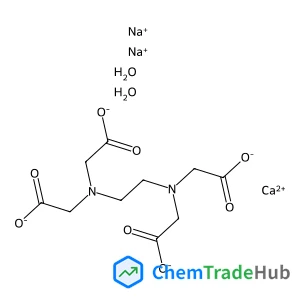
EthylenediaminetetraaceticacidcalciumDisodiumsalthydrate
CAS Number:
23411-34-9
Molecular Formula:
C10H16CaN2Na2O10

Recommended Suppliers






Disclaimer
This page provides academic journal information for reference and research purposes only. We are not affiliated with any journal publishers and do not handle publication submissions. For publication-related inquiries, please contact the respective journal publishers directly.
If you notice any inaccuracies in the information displayed, please contact us at support@chemtradehub.com. We will promptly review and address your concerns.