


Large-fused-ring-based D–A type electrochromic polymer with magenta/yellowish green/cyan three-color transitions
Literature Information
Publication Date
2022-11-30
DOI
10.1039/D2CP04987B
Impact Factor
3.676
Authors
Shouli Ming, Yuling Zhang, Kaiwen Lin, Jinsheng Zhao, Yan Zhang
View Original
Abstract
Large-fused-ring-based conjugated polymers possess wide application prospects in optoelectronic devices due to their high charge transport and wide optical absorption. In this paper, three low-bandgap donor–acceptor (D–A) type polymers PBIT-X (X = 1, 2, 3) based on alkylated benzodithiophene and tris(thienothiophene) as donors and thiadiazol–quinoxaline as an acceptor were synthesized via Stille coupling polymerization at different (donor/acceptor) D/A molar feed ratios. The band gaps of PBIT-1, PBIT-2, PBIT-3 were 1.10 eV, 1.04 eV and 1.02 eV, respectively. Spectroelectrochemistry studies showed that the three D–A type polymers have dual bands located in visible and near-infrared regions in the neutral state. The three D–A type polymers possess good electrochromic properties, such as an optical contrast of 56% and response time of 0.3 s. In particular, PBIT-3 could achieve three color changes from magenta to yellowish green to cyan during the oxidation process. The results indicate that these D–A type conjugated polymers based on large fused-ring units exhibit multiple color changes, endowing them with huge potential applications in visible and near-infrared electrochromic devices.
Recommended Journals

Bioorganic & Medicinal Chemistry Letters

Journal of Asian Natural Products Research

Herald of the Russian Academy of Sciences

Colloid Journal

Polycyclic Aromatic Compounds

Topics in Catalysis

Chinese Journal of Chemistry

Acta Metallurgica Sinica-English Letters

Bioorganic & Medicinal Chemistry

Journal of the Indian Institute of Science
Related Literature
Fluorescent RAFT polymers bearing a nitrilotriacetic acid (NTA) ligand at the α-chain-end for the site-specific labeling of histidine-tagged proteins
Zofia Haftek-Terreau, Catherine Ladavière
2017-02-03
Communication
DOI: 10.1039/C6PY02222G
PGMA-based supramolecular hyperbranched polycations for gene delivery
Miao Qi, Bingran Yu, Hao Yao, Wei Tian
2016-05-18
Paper
DOI: 10.1039/C6PY00759G
Body temperature-responsive two-way and moisture-responsive one-way shape memory behaviors of poly(ethylene glycol)-based networks
Xueyang Liu, Alfred Iing Yoong Tok, Vitali Lipik
2017-06-07
Paper
DOI: 10.1039/C7PY00786H
Ternary organic–inorganic nanostructured hybrid materials by simultaneous twin polymerization
J. Weißhuhn, T. Mark, M. Martin, P. Müller, A. Seifert, S. Spange
2016-07-25
Paper
DOI: 10.1039/C6PY00903D
Multilateral characterization of recombinant spider silk in thermal degradation
Anh T. N. Dao, K. Nakayama, T. Taniike
2017-01-02
Paper
DOI: 10.1039/C6PY01954D
Glycan-decorated HPMA copolymers as high-affinity lectin ligands
P. Bojarová, P. Chytil, B. Mikulová, L. Bumba, R. Konefał, H. Pelantová, J. Krejzová, K. Slámová, L. Petrásková, L. Kotrchová, J. Cvačka, T. Etrych, V. Křen
2017-03-21
Paper
DOI: 10.1039/C7PY00271H
Investigating the propagation kinetics of a novel class of nitrogen-containing methacrylates via PLP-SEC
Friederike Fleischhaker
2016-06-02
Paper
DOI: 10.1039/C6PY00867D
Multiple stimuli-responsive supramolecular gels constructed from metal–organic cycles
Lijie Li, Yong Cong, Lipeng He, Yongyue Wang, Jun Wang, Fu-Ming Zhang, Weifeng Bu
2016-09-30
Communication
DOI: 10.1039/C6PY01580H
You might also like
Compound Q&A
What precautions should be taken when handling 2-Methyl-2-propanyl 5-amino-2-thiophenecarboxylate (CAS: 1498311-57-1)?
When handling 2-Methyl-2-propanyl 5-amino-2-thiophenecarboxylate (CAS: 1498311-5...
1498311-57-12-Methyl-2-propanyl ...
Compound Q&A
What are the physical and chemical properties of 5-Bromo-1,2-dichloro-3-fluorobenzene (CAS: 1000572-93-9)?
5-Bromo-1,2-dichloro-3-fluorobenzene (CAS: 1000572-93-9) is a crystalline solid ...
1000572-93-95-Bromo-1,2-dichloro...
Compound Q&A
How should (2R)-2-Amino-2-(4-bromophenyl)ethanol (CAS: 354153-64-3) be stored?
(2R)-2-Amino-2-(4-bromophenyl)ethanol (CAS: 354153-64-3) should be stored in a c...
354153-64-3(2R)-2-Amino-2-(4-br...
Compound Q&A
What regulatory guidelines apply to Methyl 4-(aminomethyl)tetrahydro-2H-pyran-4-carboxylate hydrochloride (CAS: 362707-24-2)?
Methyl 4-(aminomethyl)tetrahydro-2H-pyran-4-carboxylate hydrochloride (CAS: 3627...
362707-24-2Methyl 4-(aminomethy...
Compound Q&A
What are the main uses of 1,4-dimethyl-1H-pyrazole-5-sulfonyl chloride (CAS: 1174834-52-6)?
1,4-Dimethyl-1H-pyrazole-5-sulfonyl chloride is primarily used as an intermediat...
1174834-52-61,4-dimethyl-1H-pyra...
Compound Q&A
Is Dinaphtho[1,2-b:2',1'-d]furan (CAS: 239-69-0) safe?
Dinaphtho[1,2-b:2',1'-d]furan is generally safe when handled with appropriate pe...
239-69-0Dinaphtho[1,2-b:2',1...
Compound Q&A
What is the market or research trend for 7-Methyl-7,9-dihydro-1H-purine-2,6,8(3H)-trione (CAS: 612-37-3)?
The market for 7-Methyl-7,9-dihydro-1H-purine-2,6,8(3H)-trione (CAS: 612-37-3) i...
612-37-37-Methyl-7,9-dihydro...
Compound Q&A
What are the physical and chemical properties of 2-(4-Chlorophenyl)malonaldehyde (CAS: 205676-17-1)?
2-(4-Chlorophenyl)malonaldehyde (CAS: 205676-17-1) is a colorless or light yello...
205676-17-12-(4-Chlorophenyl)ma...
Compound Q&A
How is 2-Methylchrysene (CAS: 3351-32-4) typically synthesized?
2-Methylchrysene (CAS: 3351-32-4) is typically synthesized via the reaction of c...
3351-32-42-Methylchrysene
Compound Q&A
Is N-(6-aminopyrimidin-4-yl)acetamide (CAS: 89533-23-3) safe?
N-(6-aminopyrimidin-4-yl)acetamide (CAS: 89533-23-3) is generally considered saf...
89533-23-3N-(6-aminopyrimidin-...
Source Journal
Physical Chemistry Chemical Physics

CiteScore:
5.5
Self-citation Rate:
10.3%
Articles per Year:
3036
Physical Chemistry Chemical Physics (PCCP) is an international journal co-owned by 19 physical chemistry and physics societies from around the world. This journal publishes original, cutting-edge research in physical chemistry, chemical physics and biophysical chemistry. To be suitable for publication in PCCP, articles must include significant innovation and/or insight into physical chemistry; this is the most important criterion that reviewers and Editors will judge against when evaluating submissions. The journal has a broad scope and welcomes contributions spanning experiment, theory, computation and data science. Topical coverage includes spectroscopy, dynamics, kinetics, statistical mechanics, thermodynamics, electrochemistry, catalysis, surface science, quantum mechanics, quantum computing and machine learning. Interdisciplinary research areas such as polymers and soft matter, materials, nanoscience, energy, surfaces/interfaces, and biophysical chemistry are welcomed if they demonstrate significant innovation and/or insight into physical chemistry. Joined experimental/theoretical studies are particularly appreciated when complementary and based on up-to-date approaches.
Recommended Compounds
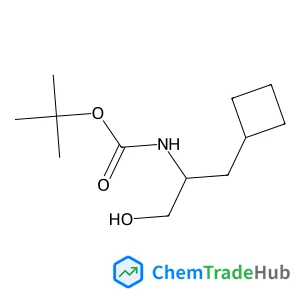
2-Methyl-2-propanyl (1-cyclobutyl-3-hydroxy-2-propanyl)carbamate
CAS Number:
816429-99-9
Molecular Formula:
C12H23NO3
![4-Chloro-N-{[4-(dimethylamino)phenyl]carbamoyl}benzenesulfonamide structure](https://static.chemtradehub.com/structs/558/5581-42-0-7dcb.webp "4-Chloro-N-{[4-(dimethylamino)phenyl]carbamoyl}benzenesulfonamide structure")
4-Chloro-N-{[4-(dimethylamino)phenyl]carbamoyl}benzenesulfonamide
CAS Number:
5581-42-0
Molecular Formula:
C15H16ClN3O3S
Recommended Suppliers




Disclaimer
This page provides academic journal information for reference and research purposes only. We are not affiliated with any journal publishers and do not handle publication submissions. For publication-related inquiries, please contact the respective journal publishers directly.
If you notice any inaccuracies in the information displayed, please contact us at support@chemtradehub.com. We will promptly review and address your concerns.