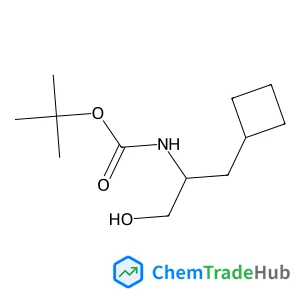
2-Methyl-2-propanyl (1-cyclobutyl-3-hydroxy-2-propanyl)carbamate
CAS Number:
816429-99-9
Molecular Formula:
C12H23NO3
Xueyang Liu, Alfred Iing Yoong Tok, Vitali Lipik
In this work, crosslinked shape-memory polymer networks were prepared by thermally induced free-radical polymerizations of methacrylate-terminated poly(ethylene glycol) (PEG) and n-butyl acrylate (BA), which integrate thermal-responsive two-way and moisture-responsive one-way shape memory effects (SME). Broad molecular weight distributions of PEG were employed with the aim of tuning the transition temperatures close to that of the human body and achieving a broad transition temperature range. The resultant PEG-2,4,10 kDa and PEG-2,6,10 kDa networks showed good thermal-responsive two-way reversible shape memory effects between the human body temperature and 0 °C, with the two-way recovery ratios of 8.2% and 6.2%, respectively. Furthermore, the crosslinked networks were found to be moisture-responsive and the deformed specimen was nearly recovered to the original shape (98% in the recovery ratio) when exposed to the moist atmosphere. These features, along with the inherent biocompatible properties, have great potential in biomedical applications.
Hongxia Zhu, Xiaolei Zhao, Huanhuan Li
DOI: 10.1039/C9CP06425G
Thomas Niemann
DOI: 10.1039/C9CP04337C
Arifin Luthfi Maulana, Refaldi Intri Dwi Putra
DOI: 10.1039/C9CP02970B
Isaac Benkyi, Enrico Tapavicza, Heike Fliegl, Dage Sundholm
DOI: 10.1039/C9CP04178H
Xiaohan Song, Yang Liu, Yanmei Yang, Weifeng Li, Mingwen Zhao
DOI: 10.1039/C9CP03676H
Najoua Derbel, Thibaud Cours, Alexander Alijah
DOI: 10.1039/C9CP06875A
Yuji Otsuki, Kazuya Watanabe, Yoshiyasu Matsumoto
DOI: 10.1039/C8CP07269H
Andrea Amadei, Massimiliano Aschi
DOI: 10.1039/C9CP03379C
Aniruddh Shrivastava, Sizhe Liu
DOI: 10.1039/C9CP04115J
Hind Benzidi, Marwan Lakhal, Mourad Garara, Mustapha Abdellaoui, Abdelilah Benyoussef, Abdallah El kenz, Omar Mounkachi
DOI: 10.1039/C9CP03230D
When handling 2-Methyl-2-propanyl 5-amino-2-thiophenecarboxylate (CAS: 1498311-5...
5-Bromo-1,2-dichloro-3-fluorobenzene (CAS: 1000572-93-9) is a crystalline solid ...
(2R)-2-Amino-2-(4-bromophenyl)ethanol (CAS: 354153-64-3) should be stored in a c...
Methyl 4-(aminomethyl)tetrahydro-2H-pyran-4-carboxylate hydrochloride (CAS: 3627...
1,4-Dimethyl-1H-pyrazole-5-sulfonyl chloride is primarily used as an intermediat...
Dinaphtho[1,2-b:2',1'-d]furan is generally safe when handled with appropriate pe...
The market for 7-Methyl-7,9-dihydro-1H-purine-2,6,8(3H)-trione (CAS: 612-37-3) i...
2-(4-Chlorophenyl)malonaldehyde (CAS: 205676-17-1) is a colorless or light yello...
2-Methylchrysene (CAS: 3351-32-4) is typically synthesized via the reaction of c...
N-(6-aminopyrimidin-4-yl)acetamide (CAS: 89533-23-3) is generally considered saf...

Polymer Chemistry welcomes submissions in all areas of polymer science that have a strong focus on macromolecular chemistry. Manuscripts may cover a broad range of fields, yet no direct application focus is required.