


Phosphorus doped and defect modified graphitic carbon nitride for boosting photocatalytic hydrogen production
Literature Information
Publication Date
2022-11-28
DOI
10.1039/D2CP04791H
Impact Factor
3.676
Authors
Lu Chen, Guiyang Yan, Xiyao Liu, Shaoming Ying, Yuzhou Xia, Shangbo Ning, Xuxu Wang
View Original
Abstract
The enhancement of photogenerated carrier separation efficiency is a significant factor in the improvement of photocatalyst performance in photocatalytic hydrogen evolution. Heteroatom doping and defect construction have been considered valid methods to boost the photocatalytic activity of graphitic carbon nitride. Herein, we report graphitic carbon nitride modified with P doping and N defects (PCNx), and the effects of doping and defects were investigated in photocatalytic H2 evolution. Its hydrogen evolution rate can reach up to about 59.1 μmol h−1, which is more than 123.1 times higher than pristine graphitic carbon nitride under visible light irradiation. Importantly, the apparent quantum efficiency reaches 8.73% at 420 nm. The excellent performance of the PCNx photocatalyst was attributed to the following aspects: (I) the large BET surface area of PCNx affords more active sites for H2 production and (II) the introduction of P and N defects can accelerate the charge carrier separation and transfer efficiency, leading to more efficient photocatalytic hydrogen production. The photocatalyst showed obviously enhanced activities.
Recommended Journals

Coloration Technology

Angewandte Chemie International Edition

Molecules

Journal of Enzyme inhibition and Medicinal Chemistry

Contact Lens & Anterior Eye

Photochemical & Photobiological Sciences

Journal of Medical Biochemistry

European Journal of Organic Chemistry

Green Chemistry

Current Pharmaceutical Biotechnology
Related Literature
Enhanced structural disorder at a nanocrystalline ice surface
Yuji Otsuki, Kazuya Watanabe, Yoshiyasu Matsumoto
2019-09-10
Paper
DOI: 10.1039/C8CP07269H
Atmospheric oxidation mechanism and kinetics of 2-bromo-4,6-dinitroaniline by OH radicals – a theoretical study
M. Gnanaprakasam, G. Saranya, S. Bandaru, N. J. English, K. Senthilkumar
2019-09-06
Paper
DOI: 10.1039/C9CP04271G
Fluorescence upconversion by triplet–triplet annihilation in all-organic poly(methacrylate)-terpolymers
Helmar Görls
2020-01-29
Paper
DOI: 10.1039/D0CP00232A
Influence of halogen bonding on gold(i)–ligand bond components and DFT characterization of a gold–iodine halogen bond
Edoardo Buttarazzi, Francesco Rosi, Gianluca Ciancaleoni
2019-08-20
Paper
DOI: 10.1039/C9CP03811F
Chemically-driven convective dissolution
M. Jotkar, L. Rongy, A. De Wit
2019-08-14
Paper
DOI: 10.1039/C9CP03044A
Electric-field-tunable molecular adsorption on germanane
J. P. Ye, G. Liu, Y. Han, W. W. Luo, B. Z. Sun, X. L. Lei, B. Xu, C. Y. Ouyang, H. L. Zhang
2019-08-28
Paper
DOI: 10.1039/C9CP04122B
An Au22(L8)6 nanocluster with in situ uncoordinated Au as a highly active catalyst for O2 activation and CO oxidation
Fuhua Li, Qing Tang
2019-08-23
Paper
DOI: 10.1039/C9CP03469B
Controlled intramolecular H-transfer in malonaldehyde in the electronic ground state mediated through the conical intersection of 1nπ* and 1ππ* excited electronic states
K. R. Nandipati, Arun Kumar Kanakati, H. Singh, S. Mahapatra
2019-08-20
Paper
DOI: 10.1039/C9CP03762D
Dynamics of AlOH inelastic scattering with p-H2(J = 0) on a full and accurate potential energy surface
Manel Naouai, Faouzi Najar, Kamel Hammami
2019-08-26
Paper
DOI: 10.1039/C9CP04214H
Revealing working mechanisms of PFN as a cathode interlayer in conventional and inverted polymer solar cells
Hongwei Zhang, Weilong Zhou, Chengzhuo Yu, Jianhua Guo, Fenghong Li
2019-08-21
Paper
DOI: 10.1039/C9CP03862K
You might also like
Compound Q&A
What precautions should be taken when handling 2-Methyl-2-propanyl 5-amino-2-thiophenecarboxylate (CAS: 1498311-57-1)?
When handling 2-Methyl-2-propanyl 5-amino-2-thiophenecarboxylate (CAS: 1498311-5...
1498311-57-12-Methyl-2-propanyl ...
Compound Q&A
What are the physical and chemical properties of 5-Bromo-1,2-dichloro-3-fluorobenzene (CAS: 1000572-93-9)?
5-Bromo-1,2-dichloro-3-fluorobenzene (CAS: 1000572-93-9) is a crystalline solid ...
1000572-93-95-Bromo-1,2-dichloro...
Compound Q&A
How should (2R)-2-Amino-2-(4-bromophenyl)ethanol (CAS: 354153-64-3) be stored?
(2R)-2-Amino-2-(4-bromophenyl)ethanol (CAS: 354153-64-3) should be stored in a c...
354153-64-3(2R)-2-Amino-2-(4-br...
Compound Q&A
What regulatory guidelines apply to Methyl 4-(aminomethyl)tetrahydro-2H-pyran-4-carboxylate hydrochloride (CAS: 362707-24-2)?
Methyl 4-(aminomethyl)tetrahydro-2H-pyran-4-carboxylate hydrochloride (CAS: 3627...
362707-24-2Methyl 4-(aminomethy...
Compound Q&A
What are the main uses of 1,4-dimethyl-1H-pyrazole-5-sulfonyl chloride (CAS: 1174834-52-6)?
1,4-Dimethyl-1H-pyrazole-5-sulfonyl chloride is primarily used as an intermediat...
1174834-52-61,4-dimethyl-1H-pyra...
Compound Q&A
Is Dinaphtho[1,2-b:2',1'-d]furan (CAS: 239-69-0) safe?
Dinaphtho[1,2-b:2',1'-d]furan is generally safe when handled with appropriate pe...
239-69-0Dinaphtho[1,2-b:2',1...
Compound Q&A
What is the market or research trend for 7-Methyl-7,9-dihydro-1H-purine-2,6,8(3H)-trione (CAS: 612-37-3)?
The market for 7-Methyl-7,9-dihydro-1H-purine-2,6,8(3H)-trione (CAS: 612-37-3) i...
612-37-37-Methyl-7,9-dihydro...
Compound Q&A
What are the physical and chemical properties of 2-(4-Chlorophenyl)malonaldehyde (CAS: 205676-17-1)?
2-(4-Chlorophenyl)malonaldehyde (CAS: 205676-17-1) is a colorless or light yello...
205676-17-12-(4-Chlorophenyl)ma...
Compound Q&A
How is 2-Methylchrysene (CAS: 3351-32-4) typically synthesized?
2-Methylchrysene (CAS: 3351-32-4) is typically synthesized via the reaction of c...
3351-32-42-Methylchrysene
Compound Q&A
Is N-(6-aminopyrimidin-4-yl)acetamide (CAS: 89533-23-3) safe?
N-(6-aminopyrimidin-4-yl)acetamide (CAS: 89533-23-3) is generally considered saf...
89533-23-3N-(6-aminopyrimidin-...
Source Journal
Physical Chemistry Chemical Physics

CiteScore:
5.5
Self-citation Rate:
10.3%
Articles per Year:
3036
Physical Chemistry Chemical Physics (PCCP) is an international journal co-owned by 19 physical chemistry and physics societies from around the world. This journal publishes original, cutting-edge research in physical chemistry, chemical physics and biophysical chemistry. To be suitable for publication in PCCP, articles must include significant innovation and/or insight into physical chemistry; this is the most important criterion that reviewers and Editors will judge against when evaluating submissions. The journal has a broad scope and welcomes contributions spanning experiment, theory, computation and data science. Topical coverage includes spectroscopy, dynamics, kinetics, statistical mechanics, thermodynamics, electrochemistry, catalysis, surface science, quantum mechanics, quantum computing and machine learning. Interdisciplinary research areas such as polymers and soft matter, materials, nanoscience, energy, surfaces/interfaces, and biophysical chemistry are welcomed if they demonstrate significant innovation and/or insight into physical chemistry. Joined experimental/theoretical studies are particularly appreciated when complementary and based on up-to-date approaches.
Recommended Compounds
![N-[(1-Ethyl-2-pyrrolidinyl)methyl]-2-hydroxy-5-sulfamoylbenzamide structure](https://static.chemtradehub.com/structs/673/67381-52-6-877f.webp "N-[(1-Ethyl-2-pyrrolidinyl)methyl]-2-hydroxy-5-sulfamoylbenzamide structure")
N-[(1-Ethyl-2-pyrrolidinyl)methyl]-2-hydroxy-5-sulfamoylbenzamide
CAS Number:
67381-52-6
Molecular Formula:
C14H21N3O4S
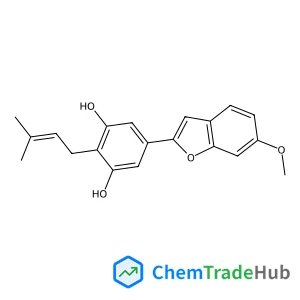
5-(6-Methoxy-1-benzofuran-2-yl)-2-(3-methyl-2-buten-1-yl)-1,3-benzenediol
CAS Number:
1017277-40-5
Molecular Formula:
C20H20O4
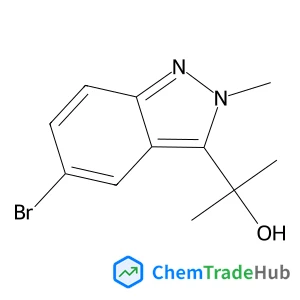
2-(5-Bromo-2-methyl-2H-indazol-3-yl)-2-propanol
CAS Number:
1823787-20-7
Molecular Formula:
C11H13BrN2O
Recommended Suppliers


Disclaimer
This page provides academic journal information for reference and research purposes only. We are not affiliated with any journal publishers and do not handle publication submissions. For publication-related inquiries, please contact the respective journal publishers directly.
If you notice any inaccuracies in the information displayed, please contact us at support@chemtradehub.com. We will promptly review and address your concerns.