












![Ethyl 4-[8-chloro(5,5,6,6,7-~2~H_5_)-5,6-dihydro-11H-benzo[5,6]cyclohepta[1,2-b]pyridin-11-ylidene]-1-piperidinecarboxylate structure](https://static.chemtradehub.com/structs/102/1020719-57-6-37e2.webp "Ethyl 4-[8-chloro(5,5,6,6,7-~2~H_5_)-5,6-dihydro-11H-benzo[5,6]cyclohepta[1,2-b]pyridin-11-ylidene]-1-piperidinecarboxylate structure")
Ethyl 4-[8-chloro(5,5,6,6,7-~2~H_5_)-5,6-dihydro-11H-benzo[5,6]cyclohepta[1,2-b]pyridin-11-ylidene]-1-piperidinecarboxylate
CAS Number:
1020719-57-6
Molecular Formula:
C22H18D5ClN2O2
Qiang Guo, Zongwei Chen, Lei Gao, Chen Duan, Qing Guo, Erjun Zhou
Owing to the advantages of adjustable bandgap, low-cost fabrication and superior photovoltaic performance, wide-bandgap (WBG) perovskite solar cells (PSCs) are considered as the promising top-cell for multi-junction solar cells. At the same time, WBG PSCs have also shown great potential for indoor photovoltaic applications. To further improve the performance of WBG PSCs, in this work, we fabricated efficient WBG PSCs via introducing cesium formate (CsFa) as the Cs precursor. Due to the HCOO·Pb+ and HCOOH·Cs+ complex formation and HCOOH volatilization accompanying the crystallization process, the crystallization of the perovskite using the CsFa precursor (CsFa-perovskite) is promoted. Compared to the perovskite prepared using the CsBr precursor (CsBr-perovskite), the WBG CsFa-perovskite shows better perovskite crystallization, reduced trap-state density, and better phase stability under light illumination. Finally, the 1.63 eV WBG PSCs based on the CsFa-perovskite achieve a significant PCE of 20.01% under one sun illumination (AM 1.5G, 100 mW cm−2), which is higher than that of PSCs based on the CsBr-perovskite (18.27%). Moreover, the PCE of CsFa-perovskite PSCs also under indoor warm-white 2700 K LED light illumination (1000 lux) is as high as 38.52%. Our results demonstrate that CsFa as the Cs precursor is a promising candidate to promote the device performance of WBG PSCs.
Dongsook Chang, Christopher N. Lam, Shengchang Tang, Bradley D. Olsen
DOI: 10.1039/C4PY00448E
Joana R. Góis, Dominik Konkolewic, Anatoliy V. Popov, Tamaz Guliashvili, Krzysztof Matyjaszewski, Arménio C. Serra, Jorge F. J. Coelho
DOI: 10.1039/C4PY00561A
Atsushi Tamura, Hajime Tanaka, Nobuhiko Yui
DOI: 10.1039/C4PY00379A
Ke Wang, Yan Yan, Guilan Zhao, Wei Xu, Kai Dong, Cuiyu You, Lu Zhang, Jianfeng Xing
DOI: 10.1039/C4PY00286E
Dandan Tang, Xiao Jiang, Huanhuan Liu, Cangxia Li, Youliang Zhao
DOI: 10.1039/C4PY00332B
Zhenguo Wang, Ying Li, Qiang Peng
DOI: 10.1039/C4PY00273C
Timothy C. Mauldin, Jeffrey W. Gilman, John R. Shields, Dylan J. Boday
DOI: 10.1039/C4PY00591K
Virander Singh Chauhan
DOI: 10.1039/C4PY00173G
Mahdi Abbasi, Kamran Riazi, Nico Dingenouts, Manfred Wilhelm
DOI: 10.1039/C4PY00484A
Xiaobei Wang, Lin Wang, Shixia Yang, Hanying Zhao
DOI: 10.1039/C4PY00117F
When handling lithium chloride hydrate (1:1:1) (CAS: 16712-20-2), it is importan...
4-(4H-1,2,4-Triazol-4-yl)piperidine is generally considered safe for use in phar...
Waste containing 1,3-Thiazole-2-carboxamide (CAS: 16733-85-0) should be collecte...
5-(Difluoromethyl)-2-fluorobenzonitrile (CAS: 934175-58-3) is subject to regulat...
Methyl 3-acetamido-2-thiophenecarboxylate can be synthesized by the reaction of ...
4-Isoquinolinecarbonitrile is a chemical compound with the CAS number 34846-65-6...
Store Methyl 1H-1,2,3-triazole-4-carboxylate (CAS: 877309-59-6) in a cool, dry p...
6-Bromo[1,3]thiazolo[5,4-b]pyridin-2-amine (CAS: 1160791-13-8) is subject to the...
(2S,3S)-2-Ammonio-3-(3,4-dihydroxyphenyl)-3-hydroxypropanoate (CAS: 23651-95-8) ...
7-Bromo-3-methyl-3,4-dihydroquinazolin-4-one is a solid with a crystalline form....

Physical Chemistry Chemical Physics (PCCP) is an international journal co-owned by 19 physical chemistry and physics societies from around the world. This journal publishes original, cutting-edge research in physical chemistry, chemical physics and biophysical chemistry. To be suitable for publication in PCCP, articles must include significant innovation and/or insight into physical chemistry; this is the most important criterion that reviewers and Editors will judge against when evaluating submissions. The journal has a broad scope and welcomes contributions spanning experiment, theory, computation and data science. Topical coverage includes spectroscopy, dynamics, kinetics, statistical mechanics, thermodynamics, electrochemistry, catalysis, surface science, quantum mechanics, quantum computing and machine learning. Interdisciplinary research areas such as polymers and soft matter, materials, nanoscience, energy, surfaces/interfaces, and biophysical chemistry are welcomed if they demonstrate significant innovation and/or insight into physical chemistry. Joined experimental/theoretical studies are particularly appreciated when complementary and based on up-to-date approaches.
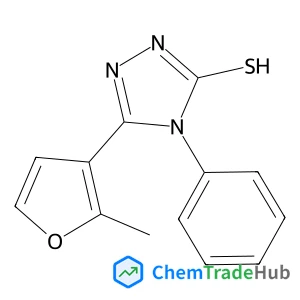
![(1R,5R)-3-{[(2-Methyl-2-propanyl)oxy]carbonyl}-3-azabicyclo[3.1.0]hexane-1-carboxylic acid structure](https://static.chemtradehub.com/structs/116/1165450-63-4-bfe1.webp "(1R,5R)-3-{[(2-Methyl-2-propanyl)oxy]carbonyl}-3-azabicyclo[3.1.0]hexane-1-carboxylic acid structure")
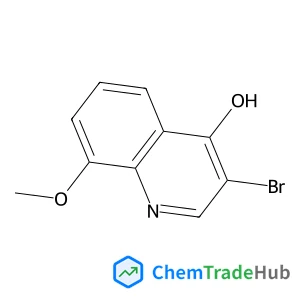
![[(2R)-6,6-Dimethyl-2-morpholinyl]methanol hydrochloride (1:1) structure](https://static.chemtradehub.com/structs/141/1416444-88-6-e06a.webp "[(2R)-6,6-Dimethyl-2-morpholinyl]methanol hydrochloride (1:1) structure")




