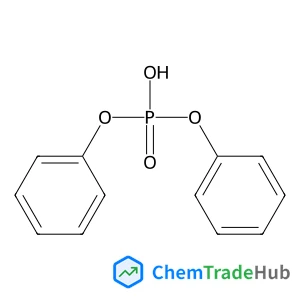
![Bis[(1,2,3,4,5-eta)-1-(diphenylphosphino)cyclopentadienyl]iron structure](https://static.chemtradehub.com/structs/121/12150-46-8-ecd2.webp "Bis[(1,2,3,4,5-eta)-1-(diphenylphosphino)cyclopentadienyl]iron structure")
Bis[(1,2,3,4,5-eta)-1-(diphenylphosphino)cyclopentadienyl]iron
CAS Number:
12150-46-8
Molecular Formula:
C34H28FeP2
Dandan Tang, Xiao Jiang, Huanhuan Liu, Cangxia Li, Youliang Zhao
The synthesis and properties of novel (A-g-D)(B-alt-C)mD-type heterografted toothbrush-like copolymers are described. The target copolymers comprised three types of building blocks, involving a terminal comb-like block with a quaternization bridging poly(N,N-dimethylaminoethyl methacrylate) (PDMA, A) substrate and D grafts, a middle comb-like block with a poly(styrene-alt-maleimide) backbone and alternating PEG (B) and PCL (C) grafts, and a terminal D segment involving poly(N-isopropylacrylamide) (PNIPAM), poly(methyl methacrylate) (PMMA), polystyrene (PSt) and poly(methyl acrylate) (PMA). The combination of quaternization and RAFT processes allowed for the controlled synthesis of the target copolymers with a precise microstructure and tunable composition and grafting density. With the changes in macromolecular architecture, chemical composition and grafting density, toothbrush-like copolymers were liable to exhibit different physicochemical properties such as chain relaxation, melting, crystallization and self-assembly behavior. The introduction of chemical heterogeneity into non-responsive toothbrush-like copolymers could endow polymer films with notable thermo-dependent wettability due to accelerated surface penetration and reconstruction. Meanwhile, the drug release properties of PNIPAM-based aggregates were significantly affected by temperature, additives and end groups, revealing their potential as promising controlled delivery vehicles. In addition to developing a general approach towards the construction of sequence-defined toothbrush-like copolymers with multicomponent grafts and variable grafting densities, our study further extended their potential applications in stimuli-sensitive surfaces and biomedical materials via changing the compatibility and supramolecular interactions.
Chengwei Zeng, Yiren Jian, Chen Zhuo, Anbang Li, Chen Zeng, Yunjie Zhao
DOI: 10.1039/D3CP04980A
Vanchiappan Aravindan, Konstantin Schutjajew, Marta Sevilla
DOI: 10.1039/D3SE90082G
Yi Sheng, Hongmei Zheng, Jingting Hou, Wanying Zhang, Hong Chen, Luanjie Nie, Jing Zheng, Qingxue Lai
DOI: 10.1039/D3SE01183F
Zhiyu Li, Bo Liu, Xiaochao Zhang, Changming Zhang, Yadong Bai, Jianxin Liu, Yawen Wang, Song Yang, Rui Li, Caimei Fan
DOI: 10.1039/D3SE01001E
Kosei Ito, Kei Noda
DOI: 10.1039/D3CP04431A
Li Tang, Qikai Han, Bin Wang, Zhonghua Yang, Chunyuan Song, Guanyu Feng, Shuxin Wang
DOI: 10.1039/D3CP04224C
Wenfang Peng, Rongrong Hu, Bobo Yang, Qiaoyun Wu, Pan Liang, Lin Cheng, Xixi Cheng, Yuefeng Li, Jun Zou
DOI: 10.1039/D3CP04371A
Bruno L. da Silva, Saulo A. Carminati, Matheus B. C. Souza, Leonardo C. Soares, Claudia Longo, Pablo S. Fernández, Ana F. Nogueira
DOI: 10.1039/D3SE01045G
Ethyl 3-cyclohexylpropanoate is a clear, colorless to light yellow liquid with a...
Waste containing 2-(Hydroxymethyl)-5-(methoxycarbonyl)-6-methyl-4-(2-nitrophenyl...
Waste containing 2,4,6-Tris(pentafluoroethyl)-1,3,5-triazine (CAS: 858-46-8) sho...
When handling Chloroac-nle-oh (CAS: 56787-36-1), it is essential to wear appropr...
Ethyl 6-phenylimidazo[2,1-b][1,3]thiazole-3-carboxylate is primarily used in the...
Alternatives to alpha-(2-Bromophenyl)benzylamine (CAS: 55095-15-3) in synthesis ...
Waste containing 2-Chloro-5-methoxypyridine (CAS: 139585-48-1) should be managed...
1-(4-Methoxyphenyl)-2,5-dimethyl-1H-pyrrole (CAS: 5044-27-9) is used in various ...
There are alternative reagents and compounds that can be used in the synthesis o...
Tungsten(IV) oxide, also known as tungsten dioxide, is a chemical compound with ...

Polymer Chemistry welcomes submissions in all areas of polymer science that have a strong focus on macromolecular chemistry. Manuscripts may cover a broad range of fields, yet no direct application focus is required.