


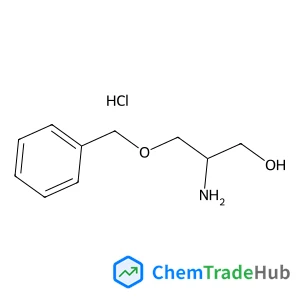
(R)-2-amino-3-(benzyloxy)propan-1-ol hydrochloride
CAS Number:
58577-95-0
Molecular Formula:
C10H16ClNO2
Yu Zou, Bote Qi, Jingwang Tan, Yehong Gong, Qingwen Zhang
The accumulation of Tau protein aggregates is a pathological hallmark of tauopathy, including chronic traumatic encephalopathy (CTE). Inhibiting Tau aggregation or disrupting preformed Tau fibrils is considered one of the rational therapeutic strategies to combat tauopathy. Previous studies reported that curcumin (Cur, a molecule of a labile natural product) and epinephrine (EP, an important neurotransmitter) could effectively inhibit the formation of Tau fibrillar aggregates and disassociate preformed fibrils. However, the underlying molecular mechanisms remain elusive. In this study, we performed multiple molecular dynamics simulations for 17.5 μs in total to investigate the influence of Cur and EP on the C-shaped Tau protofibril associated with CTE. Our simulations show that the protofibrillar pentamer is the smallest stable Tau R3–R4 protofibril. Taking the pentamer as a protofibril model, we found that both Cur and EP molecules could affect the shape of the Tau pentamer by changing the β2–β3 and β7–β8 angles, leading to a more extended structure. Cur and EP display a disruptive effect on the local β-sheets and the formation of hydrogen bonds, and thus destabilize the global protofibril structure. The contact number analysis shows that Cur has a higher binding affinity with the Tau pentamer than EP, especially in the nucleating segment PHF6. Hydrophobic, π–π and cation–π interactions together facilitate the binding of Cur and EP with the Tau pentamer. Cur exhibits stronger hydrophobic and π–π interactions with Tau than EP, and EP displays a stronger cation–π interaction. Our findings provide molecular insights into the disruptive mechanisms of the Tau R3–R4 protofibrils by curcumin and epinephrine, which may be useful for the design of effective drug candidates for the treatment of CTE.

Planta Medica

Nature

Proceedings of the National Academy of Sciences of the United States of America

Science Progress

Israel Journal of Chemistry

Journal of Physics and Chemistry of Solids

Kinetics and Catalysis

Pharmacological Reviews

Journal of Heterocyclic Chemistry

Organic Preparations and Procedures International
Xing Zou, Li-Li Liu, Anrong Wang, Shi-Fa Wang, Yong Wei, Chun-Ming Yang, Lei Hu
DOI: 10.1039/D2CP03069A
DOI: 10.1039/D2CP01148D
Louis Minion, Jason W. L. Lee, Michael Burt
DOI: 10.1039/D2CP01114J
Xiaoteng Li, Xi Zuo, Bin Cui, Wenkai Zhao, Yuqing Xu, Dongqing Zou, Chuanlu Yang
DOI: 10.1039/D1CP05693J
Atiyeh (Najla) Hosseini, Mohammad Reza Ejtehadi
DOI: 10.1039/D2CP00056C
Huiwen Wang, Haoquan Liu, Shangbo Ning, Chengwei Zeng, Yunjie Zhao
DOI: 10.1039/D1CP05558E
DOI: 10.1039/D2CP00356B
Ikuo Kurisaki, Shigenori Tanaka
DOI: 10.1039/D2CP00267A
Aleksandra Leszczyk, Paweł Tecmer, Dariusz Kedziera, Katharina Boguslawski
DOI: 10.1039/D2CP03377A
Jin Zhang, Huafeng Dong, Xinfeng Li, Zhenhai Wang, Dong Xiao
DOI: 10.1039/D2CP01466A
Ethyl 4-chlorothieno[2,3-b]pyridine-5-carboxylate (CAS: 59713-58-5) can be synth...
5-Methyl-1H-indole-3-carbaldehyde (CAS: 52562-50-2) is subject to various regula...
(1,3-Dimethyl-2,4-dioxo-1,2,3,4-tetrahydro-5-pyrimidinyl)boronic acid is a white...
Waste containing Sulfocostunolide A (CAS: 1016983-51-9) should be handled with c...
When handling Murraxocin (CAS: 88478-44-8), ensure proper personal protective eq...
Formvar (CAS: 63148-64-1) is an alkyd resin characterized by a high molecular we...
(S)-4-benzyl-2-((benzyloxy)methyl)morpholine is generally safe when handled with...
Methyl 1-(5-bromo-2-pyrimidinyl)cyclopropanecarboxylate (CAS: 1447607-69-3) is p...
2-Methyl-1-phenyl-1-propanamine hydrochloride (CAS: 24290-47-9) is generally con...
3-(4-Bromophenyl)-2-methylpropanoic acid is synthesized through a multi-step pro...

Physical Chemistry Chemical Physics (PCCP) is an international journal co-owned by 19 physical chemistry and physics societies from around the world. This journal publishes original, cutting-edge research in physical chemistry, chemical physics and biophysical chemistry. To be suitable for publication in PCCP, articles must include significant innovation and/or insight into physical chemistry; this is the most important criterion that reviewers and Editors will judge against when evaluating submissions. The journal has a broad scope and welcomes contributions spanning experiment, theory, computation and data science. Topical coverage includes spectroscopy, dynamics, kinetics, statistical mechanics, thermodynamics, electrochemistry, catalysis, surface science, quantum mechanics, quantum computing and machine learning. Interdisciplinary research areas such as polymers and soft matter, materials, nanoscience, energy, surfaces/interfaces, and biophysical chemistry are welcomed if they demonstrate significant innovation and/or insight into physical chemistry. Joined experimental/theoretical studies are particularly appreciated when complementary and based on up-to-date approaches.
![4-{1-[4-(4,4,5,5-Tetramethyl-1,3,2-dioxaborolan-2-yl)phenyl]cyclopropyl}morpholine structure](https://static.chemtradehub.com/structs/120/1206594-08-2-7afb.webp "4-{1-[4-(4,4,5,5-Tetramethyl-1,3,2-dioxaborolan-2-yl)phenyl]cyclopropyl}morpholine structure")
![4-[(1-Methyl-1H-pyrrol-2-yl)methylene]-1,3(2H,4H)-isoquinolinedione structure](https://static.chemtradehub.com/structs/110/1104546-89-5-a600.webp "4-[(1-Methyl-1H-pyrrol-2-yl)methylene]-1,3(2H,4H)-isoquinolinedione structure")





