












Computational prediction of heteromeric protein complex disassembly order using hybrid Monte Carlo/molecular dynamics simulation
Literature Information
Publication Date
2022-03-31
DOI
10.1039/D2CP00267A
Impact Factor
3.676
Authors
Ikuo Kurisaki, Shigenori Tanaka
View Original
Abstract
The physicochemical entities comprising the biological phenomena in the cell form a network of biochemical reactions and the activity of such a network is regulated by multimeric protein complexes. Mass spectroscopy (MS) experiments and multimeric protein docking simulations based on structural bioinformatics techniques have revealed the molecular-level stoichiometry and static configuration of subcomplexes in their bound forms, thus revealing the subcomplex population and formation orders. Meanwhile, these methodologies are not designed to straightforwardly examine the temporal dynamics of multimeric protein assembly and disassembly, essential physicochemical properties to understand the functional expression mechanisms of proteins in the biological environment. To address this problem, we have developed an atomistic simulation in the framework of the hybrid Monte Carlo/molecular dynamics (hMC/MD) method and succeeded in observing the disassembly of a homomeric pentamer of the serum amyloid P component protein in an experimentally consistent order. In this study, we improved the hMC/MD method to examine the disassembly processes of the tryptophan synthase tetramer, a paradigmatic heteromeric protein complex in MS studies. We employed the likelihood-based selection scheme to determine a dissociation-prone subunit pair at every hMC/MD simulation cycle and achieved highly reliable predictions of the disassembly orders without a priori knowledge of the MS experiments and structural bioinformatics simulations. The success rate for the experimentally-observed disassembly order is over 0.9. We similarly succeeded in reliable predictions for three other tetrameric protein complexes. These achievements indicate the potential applicability of our hMC/MD approach as a general-purpose methodology to obtain microscopic and physicochemical insights into multimeric protein complex formation.
Related Literature
Origins of covalent linkages within the lignin–carbohydrate network of biomass
Seth Beck, Phillip Choi, Samir H. Mushrif
2022-08-12
Paper
DOI: 10.1039/D2CP01683D
Highlighting the difference in nanostructure between domain-forming and domainless protic ionic liquids
Igor A. Sedov, Timur I. Magsumov
2022-08-31
Paper
DOI: 10.1039/D2CP02925A
Doping of the Mn vacancy of Mn2B2 with a single different transition metal atom as the dual-function electrocatalyst
Jing Xu, Shijun Luo, Bin Xu, Jing Zhang, Fei Wang
2022-08-10
Paper
DOI: 10.1039/D2CP02209E
Designing SnS/MoS2 van der Waals heterojunction for direct Z-scheme photocatalytic overall water-splitting by DFT investigation
Xiaofang Jia, Jinlong Wang, Yue Lu, Jiaming Sun, Yang Li, Yuyan Wang, Junying Zhang
2022-08-18
Paper
DOI: 10.1039/D2CP02692A
Computational investigation of van der Waals corrections in the adsorption properties of molecules on the Cu(111) surface
Eduardo O. Bartaquim, Raquel C. Bezerra, Albert F. B. Bittencourt, Juarez L. F. Da Silva
2022-08-07
Paper
DOI: 10.1039/D2CP02663E
Predicting Coulomb explosion fragment angular distributions using molecular ground-state vibrational motion
Louis Minion, Jason W. L. Lee, Michael Burt
2022-04-26
Paper
DOI: 10.1039/D2CP01114J
In silico activation of dinitrogen with a light atom molecule
Stefan Mebs, Jens Beckmann
2022-08-15
Paper
DOI: 10.1039/D2CP02516G
Towards understanding solvation effects on the conformational entropy of non-rigid molecules
Johannes Gorges, Stefan Grimme, Andreas Hansen, Philipp Pracht
2022-05-04
Paper
DOI: 10.1039/D1CP05805C
Electrochemically stimulated protein release from pH–switchable electrode–immobilized nitroavidin–biotin and avidin–iminobiotin systems
Ronaldo Badenhorst, Evgeny Katz, Oleh Smutok
2022-08-01
Communication
DOI: 10.1039/D2CP02112A
Understanding of the interactions between azole-anion-based ionic liquids and 2-methyl-3-butyn-2-ol from the experimental perspective: the cage effect
Xue Fu, Xiaochen Tang, Tingting Chen, Yueqing Lu, Xuming Wang, Dandan Qin, Lin Zhang
2022-04-29
Paper
DOI: 10.1039/D2CP00474G
You might also like
Compound Q&A
How is Ethyl 4-chlorothieno[2,3-b]pyridine-5-carboxylate (CAS: 59713-58-5) typically synthesized?
Ethyl 4-chlorothieno[2,3-b]pyridine-5-carboxylate (CAS: 59713-58-5) can be synth...
59713-58-5Ethyl 4-chlorothieno...
Compound Q&A
What regulatory guidelines apply to 5-Methyl-1H-indole-3-carbaldehyde (CAS: 52562-50-2)?
5-Methyl-1H-indole-3-carbaldehyde (CAS: 52562-50-2) is subject to various regula...
52562-50-25-Methyl-1H-indole-3...
Compound Q&A
What are the physical and chemical properties of (1,3-Dimethyl-2,4-dioxo-1,2,3,4-tetrahydro-5-pyrimidinyl)boronic acid (CAS: 223418-73-3)?
(1,3-Dimethyl-2,4-dioxo-1,2,3,4-tetrahydro-5-pyrimidinyl)boronic acid is a white...
223418-73-3(1,3-Dimethyl-2,4-di...
Compound Q&A
How should waste containing Sulfocostunolide A (CAS: 1016983-51-9) be handled?
Waste containing Sulfocostunolide A (CAS: 1016983-51-9) should be handled with c...
1016983-51-9Sulfocostunolide A
Compound Q&A
What precautions should be taken when handling Murraxocin (CAS: 88478-44-8)?
When handling Murraxocin (CAS: 88478-44-8), ensure proper personal protective eq...
88478-44-8Murraxocin
Compound Q&A
What are the physical and chemical properties of Formvar (CAS: 63148-64-1)?
Formvar (CAS: 63148-64-1) is an alkyd resin characterized by a high molecular we...
63148-64-1Formvar(R)
Compound Q&A
Is (S)-4-benzyl-2-((benzyloxy)methyl)morpholine (CAS: 205242-66-6) safe?
(S)-4-benzyl-2-((benzyloxy)methyl)morpholine is generally safe when handled with...
205242-66-6(S)-4-benzyl-2-((ben...
Compound Q&A
What industries use Methyl 1-(5-bromo-2-pyrimidinyl)cyclopropanecarboxylate (CAS: 1447607-69-3)?
Methyl 1-(5-bromo-2-pyrimidinyl)cyclopropanecarboxylate (CAS: 1447607-69-3) is p...
1447607-69-3Methyl 1-(5-bromo-2-...
Compound Q&A
Is 2-Methyl-1-phenyl-1-propanamine hydrochloride (CAS: 24290-47-9) safe?
2-Methyl-1-phenyl-1-propanamine hydrochloride (CAS: 24290-47-9) is generally con...
24290-47-92-Methyl-1-phenyl-1-...
Compound Q&A
How is 3-(4-Bromophenyl)-2-methylpropanoic acid (CAS: 66735-01-1) typically synthesized?
3-(4-Bromophenyl)-2-methylpropanoic acid is synthesized through a multi-step pro...
66735-01-13-(4-Bromophenyl)-2-...
Source Journal
Physical Chemistry Chemical Physics

CiteScore:
5.5
Self-citation Rate:
10.3%
Articles per Year:
3036
Physical Chemistry Chemical Physics (PCCP) is an international journal co-owned by 19 physical chemistry and physics societies from around the world. This journal publishes original, cutting-edge research in physical chemistry, chemical physics and biophysical chemistry. To be suitable for publication in PCCP, articles must include significant innovation and/or insight into physical chemistry; this is the most important criterion that reviewers and Editors will judge against when evaluating submissions. The journal has a broad scope and welcomes contributions spanning experiment, theory, computation and data science. Topical coverage includes spectroscopy, dynamics, kinetics, statistical mechanics, thermodynamics, electrochemistry, catalysis, surface science, quantum mechanics, quantum computing and machine learning. Interdisciplinary research areas such as polymers and soft matter, materials, nanoscience, energy, surfaces/interfaces, and biophysical chemistry are welcomed if they demonstrate significant innovation and/or insight into physical chemistry. Joined experimental/theoretical studies are particularly appreciated when complementary and based on up-to-date approaches.
Recommended Compounds
![2-(Methylsulfonyl)-2,4,5,6-tetrahydropyrrolo[3,4-c]pyrazole structure](https://static.chemtradehub.com/structs/122/1226781-80-1-09d5.webp "2-(Methylsulfonyl)-2,4,5,6-tetrahydropyrrolo[3,4-c]pyrazole structure")
2-(Methylsulfonyl)-2,4,5,6-tetrahydropyrrolo[3,4-c]pyrazole
CAS Number:
1226781-80-1
Molecular Formula:
C6H9N3O2S
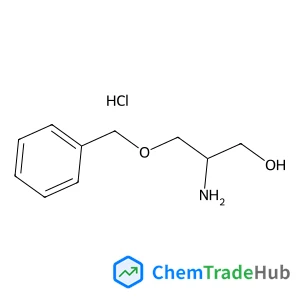
(R)-2-amino-3-(benzyloxy)propan-1-ol hydrochloride
CAS Number:
58577-95-0
Molecular Formula:
C10H16ClNO2
![9H-Fluoren-9-ylmethyl [(2S)-1-hydroxy-3-(1H-indol-3-yl)-2-propanyl]carbamate structure](https://static.chemtradehub.com/structs/153/153815-60-2-a67d.webp "9H-Fluoren-9-ylmethyl [(2S)-1-hydroxy-3-(1H-indol-3-yl)-2-propanyl]carbamate structure")
9H-Fluoren-9-ylmethyl [(2S)-1-hydroxy-3-(1H-indol-3-yl)-2-propanyl]carbamate
CAS Number:
153815-60-2
Molecular Formula:
C26H24N2O3
Recommended Suppliers





Disclaimer
This page provides academic journal information for reference and research purposes only. We are not affiliated with any journal publishers and do not handle publication submissions. For publication-related inquiries, please contact the respective journal publishers directly.
If you notice any inaccuracies in the information displayed, please contact us at support@chemtradehub.com. We will promptly review and address your concerns.