


![2-Methyl-2-propanyl 1,6-diazaspiro[3.4]octane-6-carboxylate structure](https://static.chemtradehub.com/structs/115/1158749-79-1-81ee.webp "2-Methyl-2-propanyl 1,6-diazaspiro[3.4]octane-6-carboxylate structure")
2-Methyl-2-propanyl 1,6-diazaspiro[3.4]octane-6-carboxylate
CAS Number:
1158749-79-1
Molecular Formula:
C11H20N2O2
Jin Zhang, Huafeng Dong, Xinfeng Li, Zhenhai Wang, Dong Xiao
First-principles evolutionary simulations are used to predict the stable compound of Ti2CN. Body-centered tetragonal I41/amd-Ti2CN is found to be more energetically favorable than the other Ti2CN compounds at 0 K. The phase stability as a function of temperature for all relevant competing Ti2CN phases is investigated by means of first-principles calculations and quasi-harmonic approximation. Our calculations predict that I41/amd-Ti2CN undergoes a phase transition to P42/mmc at 1698 K and then to Rm at 1872 K. The different effects from the harmonic, electronic and quasi-harmonic contributions to the Gibbs free energy for I41/amd, P42/mmc and Rm phases are compared and analyzed. It is found that both the electronic and quasi-harmonic contributions to the Gibbs free energies significantly affect the phase transition curve of Ti2CN. The calculated temperature-dependent lattice parameter is carefully compared with the previous experimental results. We also provide important thermodynamic quantities as the volumetric expansion coefficient and isothermal bulk modulus and discuss their temperature dependence.

Journal of Medicinal Chemistry

Israel Journal of Chemistry

European Journal of Wood and Wood Products

Molecular Pharmacology

Fibre Chemistry

Pure and Applied Chemistry

Journal of Organometallic Chemistry

Organic Preparations and Procedures International

Proceedings of the National Academy of Sciences of the United States of America

Helvetica Chimica Acta
Markus Joos, Ashkan Rad, Payam Kaghazchi, Rotraut Merkle, Robert E. Dinnebier, Thomas Schleid, Joachim Maier
DOI: 10.1039/D2CP01836E
Aude Lietard, Giovanni Piani, Rodolphe Pollet, Jean-Michel Mestdagh
DOI: 10.1039/D1CP05729D
Jiaxin Jiang, Kai Wang, Hongyan Guo, Guizhong Zuo, Zhiwen Zhuo, Ning Lu
DOI: 10.1039/D1CP05365E
Oihana Galparsoro, Pascal Larrégaray
DOI: 10.1039/D2CP01850K
Johannes Gorges, Stefan Grimme, Andreas Hansen, Philipp Pracht
DOI: 10.1039/D1CP05805C
Vikram Mahamiya, Alok Shukla
DOI: 10.1039/D2CP02705D
Huiwen Wang, Haoquan Liu, Shangbo Ning, Chengwei Zeng, Yunjie Zhao
DOI: 10.1039/D1CP05558E
Igor A. Sedov, Timur I. Magsumov
DOI: 10.1039/D2CP02925A
Blake Trusty, Samuel Berens, Ahmad Yahya, Junchuan Fang, Sarah Barber, Anastasios P. Angelopoulos, Jonathan D. Nickels, Sergey Vasenkov
DOI: 10.1039/D2CP01125E
Ethyl 4-chlorothieno[2,3-b]pyridine-5-carboxylate (CAS: 59713-58-5) can be synth...
5-Methyl-1H-indole-3-carbaldehyde (CAS: 52562-50-2) is subject to various regula...
(1,3-Dimethyl-2,4-dioxo-1,2,3,4-tetrahydro-5-pyrimidinyl)boronic acid is a white...
Waste containing Sulfocostunolide A (CAS: 1016983-51-9) should be handled with c...
When handling Murraxocin (CAS: 88478-44-8), ensure proper personal protective eq...
Formvar (CAS: 63148-64-1) is an alkyd resin characterized by a high molecular we...
(S)-4-benzyl-2-((benzyloxy)methyl)morpholine is generally safe when handled with...
Methyl 1-(5-bromo-2-pyrimidinyl)cyclopropanecarboxylate (CAS: 1447607-69-3) is p...
2-Methyl-1-phenyl-1-propanamine hydrochloride (CAS: 24290-47-9) is generally con...
3-(4-Bromophenyl)-2-methylpropanoic acid is synthesized through a multi-step pro...

Physical Chemistry Chemical Physics (PCCP) is an international journal co-owned by 19 physical chemistry and physics societies from around the world. This journal publishes original, cutting-edge research in physical chemistry, chemical physics and biophysical chemistry. To be suitable for publication in PCCP, articles must include significant innovation and/or insight into physical chemistry; this is the most important criterion that reviewers and Editors will judge against when evaluating submissions. The journal has a broad scope and welcomes contributions spanning experiment, theory, computation and data science. Topical coverage includes spectroscopy, dynamics, kinetics, statistical mechanics, thermodynamics, electrochemistry, catalysis, surface science, quantum mechanics, quantum computing and machine learning. Interdisciplinary research areas such as polymers and soft matter, materials, nanoscience, energy, surfaces/interfaces, and biophysical chemistry are welcomed if they demonstrate significant innovation and/or insight into physical chemistry. Joined experimental/theoretical studies are particularly appreciated when complementary and based on up-to-date approaches.
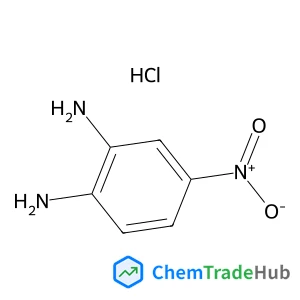
![2-(Methylsulfonyl)-2,4,5,6-tetrahydropyrrolo[3,4-c]pyrazole structure](https://static.chemtradehub.com/structs/122/1226781-80-1-09d5.webp "2-(Methylsulfonyl)-2,4,5,6-tetrahydropyrrolo[3,4-c]pyrazole structure")
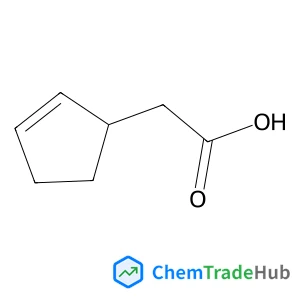
![4-{1-[4-(4,4,5,5-Tetramethyl-1,3,2-dioxaborolan-2-yl)phenyl]cyclopropyl}morpholine structure](https://static.chemtradehub.com/structs/120/1206594-08-2-7afb.webp "4-{1-[4-(4,4,5,5-Tetramethyl-1,3,2-dioxaborolan-2-yl)phenyl]cyclopropyl}morpholine structure")




