![6-(Benzyloxy)-8-(2-bromoacetyl)-2H-benzo[b][1,4]oxazin-3(4H)-one structure](https://static.chemtradehub.com/structs/926/926319-53-1-2287.webp "6-(Benzyloxy)-8-(2-bromoacetyl)-2H-benzo[b][1,4]oxazin-3(4H)-one structure")
6-(Benzyloxy)-8-(2-bromoacetyl)-2H-benzo[b][1,4]oxazin-3(4H)-one
CAS Number:
926319-53-1
Molecular Formula:
C17H14BrNO4
Pengjing Jing, Chengqi Zhao, Zheng-Zhi Yin, Baozhu Yang, Junyao Li, Wenrong Cai, Yong Kong
A novel electrochemical chiral sensor has been designed based on the principle of competitive host–guest interaction and utilized for the discrimination of electroinactive proline (Pro) isomers. Electroactive methylene blue (MB) was used as the signal probe, which was combined with multi-walled carbon nanotubes (MWCNTs)-decorated β-cyclodextrin (β-CD), via host–guest interaction, where the oxidation peak currents of MB decreased after isomers of Pro were combined with the MWCNTs-β-CD via a competitive host–guest interaction. Due to the steric configuration of L-Pro matching the cavity of β-CD, more L-Pro than D-Pro was combined with MWCNTs-β-CD, resulting in a more pronounced decrease of MB peak currents. Therefore, the isomers of Pro could be discriminated. Besides Pro, the isomers of electroinactive histidine (His) could also be discriminated with the chiral sensor. In addition, the contents of L-Pro in non-racemic mixtures could be detected with the developed chiral sensor.
Anna P. Constantinou, Georgios Patias, Birsen Somuncuoğlu, Toby Brock, Daniel W. Lester, David M. Haddleton, Theoni K. Georgiou
DOI: 10.1039/D1PY00444A
Marc A. Hillmyer
DOI: 10.1039/D1PY00185J
Fanfan Li, Yi Yu, Hanyu Lv, Guiting Cai, Yanwu Zhang
DOI: 10.1039/D0PY01643H
Georges M. Pavlov, Anna A. Gosteva, Olga V. Okatova, Olga A. Dommes, Irina I. Gavrilova
DOI: 10.1039/D0PY01725F
DOI: 10.1039/D1PY90044G
Mariya Edeleva, Yoshi W. Marien, Paul H. M. Van Steenberge
DOI: 10.1039/D1PY00151E
Eleftheria Dossi, Jacob Earnshaw, Laurence Ellison, Gabriella Rabello dos Santos, Hamish Cavaye, Douglas J. Cleaver
DOI: 10.1039/D1PY00233C
Xing Li, Lingling Ni, Chenxuan Sun, Wenqing Xu
DOI: 10.1039/D1PY00288K
Alexis Theodorou, Petros Mandriotis, Athina Anastasaki, Kelly Velonia
DOI: 10.1039/D0PY01608J
When handling lithium chloride hydrate (1:1:1) (CAS: 16712-20-2), it is importan...
4-(4H-1,2,4-Triazol-4-yl)piperidine is generally considered safe for use in phar...
Waste containing 1,3-Thiazole-2-carboxamide (CAS: 16733-85-0) should be collecte...
5-(Difluoromethyl)-2-fluorobenzonitrile (CAS: 934175-58-3) is subject to regulat...
Methyl 3-acetamido-2-thiophenecarboxylate can be synthesized by the reaction of ...
4-Isoquinolinecarbonitrile is a chemical compound with the CAS number 34846-65-6...
Store Methyl 1H-1,2,3-triazole-4-carboxylate (CAS: 877309-59-6) in a cool, dry p...
6-Bromo[1,3]thiazolo[5,4-b]pyridin-2-amine (CAS: 1160791-13-8) is subject to the...
(2S,3S)-2-Ammonio-3-(3,4-dihydroxyphenyl)-3-hydroxypropanoate (CAS: 23651-95-8) ...
7-Bromo-3-methyl-3,4-dihydroquinazolin-4-one is a solid with a crystalline form....

Analyst publishes analytical and bioanalytical research that reports premier fundamental discoveries and inventions, and the applications of those discoveries, unconfined by traditional discipline barriers.
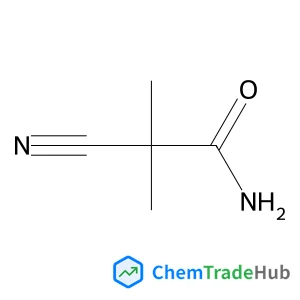
![8-Bromo-6-fluoro[1,2,4]triazolo[1,5-a]pyridin-2-amine structure](https://static.chemtradehub.com/structs/125/1257705-51-3-9f4a.webp "8-Bromo-6-fluoro[1,2,4]triazolo[1,5-a]pyridin-2-amine structure")