












Front cover
Literature Information
Publication Date
2021-06-01
DOI
10.1039/D1RE90023D
Impact Factor
4.239
Authors
View Original
Abstract
A graphical abstract is available for this content
Related Literature
The role of molecular modeling in confined systems: impact and prospects
Keith E. Gubbins, Joshua D. Moore, Jeremy C. Palmer
2010-11-29
Perspective
DOI: 10.1039/C0CP01475C
Solvent polarity effect on intramolecular electron transfer in a corrole–naphthalene bisimide dyad
Lucia Flamigni, Dagmara Wyrostek, Roman Voloshchuk, Daniel T. Gryko
2009-11-12
Paper
DOI: 10.1039/B916525H
On the role of mercury in the non-covalent stabilisation of consecutive U–HgII–U metal-mediated nucleic acid base pairs: metallophilic attraction enters the world of nucleic acids
Ladislav Benda, Michal Straka, Yoshiyuki Tanaka, Vladimír Sychrovský
2010-11-03
Communication
DOI: 10.1039/C0CP01534B
Multidimensional steric effect for the XeF* (B, C) formation in the oriented Xe* (3P2, MJ = 2) + oriented NF3 reaction
H. Ohoyama
2010-10-21
Paper
DOI: 10.1039/C0CP00648C
Thermodynamics of liquids: standard molar entropies and heat capacities of common solvents from 2PT molecular dynamics
Shiang-Tai Lin
2010-11-23
Paper
DOI: 10.1039/C0CP01549K
Photoinduced charge transfer in ZnO/Cu2O heterostructure films studied by surface photovoltage technique
Tengfei Jiang, Tengfeng Xie, Yu Zhang, Liping Chen, Linlin Peng, Haiyan Li, Dejun Wang
2010-10-25
Paper
DOI: 10.1039/C0CP01228A
Controlling the mechanism of fulvene S1/S0 decay: switching off the stepwise population transfer
David Mendive-Tapia, Benjamin Lasorne, Graham A. Worth, Michael J. Bearpark, Michael A. Robb
2010-11-16
Paper
DOI: 10.1039/C0CP01757D
Temperature-dependent ozonolysis kinetics of selected alkenes in the gas phase: an experimental and structure–activity relationship (SAR) study
Kimberley E. Leather, Max R. McGillen, Carl J. Percival
2010-02-02
Paper
DOI: 10.1039/B919731A
You might also like
Compound Q&A
What are the main uses of 4-Nitrophenyl phosphate disodium salt hexahydrate (CAS: 333338-18-4)?
4-Nitrophenyl phosphate disodium salt hexahydrate is primarily used as a substra...
333338-18-44-Nitrophenyl phosph...
Compound Q&A
What are the main uses of 2-(Trifluoromethyl)-1,3-oxazole-4-carboxylic Acid (CAS: 1060816-01-4)?
2-(Trifluoromethyl)-1,3-oxazole-4-carboxylic Acid (CAS: 1060816-01-4) is widely ...
1060816-01-42-(Trifluoromethyl)-...
Compound Q&A
How should 2-Fluoro-4-biphenylcarboxylic acid (CAS: 137045-30-8) be stored?
2-Fluoro-4-biphenylcarboxylic acid should be stored in a cool, dry place at room...
137045-30-82-Fluoro-4-biphenylc...
Compound Q&A
What industries use Prednisolone-21-Carboxylic Acid (CAS: 61549-70-0)?
Prednisolone-21-Carboxylic Acid is primarily used in the pharmaceutical industry...
61549-70-0Prednisolone-21-Carb...
Compound Q&A
How should 4-(Hydrazinomethyl)-1,2,3-benzenetriol (CAS: 3614-72-0) be stored?
4-(Hydrazinomethyl)-1,2,3-benzenetriol (CAS: 3614-72-0) should be stored in a co...
3614-72-04-(Hydrazinomethyl)-...
Compound Q&A
What industries use 4-Amino-1-methyl-1H-pyrazole-5-carboxylic acid hydrochloride (CAS: 92534-70-8)?
4-Amino-1-methyl-1H-pyrazole-5-carboxylic acid hydrochloride (CAS: 92534-70-8) i...
92534-70-84-Amino-1-methyl-1H-...
Compound Q&A
What regulatory guidelines apply to dehydropachymic acid (CAS: 77012-31-8)?
Dehydropachymic acid (CAS: 77012-31-8) is regulated by various agencies. It fall...
77012-31-8Dehydropachymic acid
Compound Q&A
What is the market or research trend for 6-[(2,2-Dimethylpropanoyl)amino]nicotinic acid (CAS: 898561-66-5)?
The market and research trends for 6-[(2,2-Dimethylpropanoyl)amino]nicotinic aci...
898561-66-56-[(2,2-Dimethylprop...
Compound Q&A
How should 1,10-Phenanthroline-2,9-dicarbaldehyde (CAS: 57709-62-3) be stored?
1,10-Phenanthroline-2,9-dicarbaldehyde should be stored in a cool, dry place awa...
57709-62-31,10-Phenanthroline-...
Compound Q&A
How is 5-Carbamoyl-11-oxo-10,11-dihydro-5H-dibenzo[b,f]azepin-10-yl acetate (CAS: 113952-21-9) typically synthesized?
5-Carbamoyl-11-oxo-10,11-dihydro-5H-dibenzo[b,f]azepin-10-yl acetate can be synt...
113952-21-95-Carbamoyl-11-oxo-1...
Source Journal
Reaction Chemistry & Engineering

CiteScore:
0
Self-citation Rate:
8.8%
Articles per Year:
284
Reaction Chemistry & Engineering is an interdisciplinary journal reporting cutting-edge research focused on enhancing the understanding and efficiency of reactions. Reaction engineering leverages the interface where fundamental molecular chemistry meets chemical engineering and technology. Challenges in chemistry can be overcome by the application of new technologies, while engineers may find improved solutions for process development from the latest developments in reaction chemistry. Reaction Chemistry & Engineering is a unique forum for researchers whose interests span the broad areas of chemical engineering and chemical sciences to come together in solving problems of importance to wider society. All papers should be written to be approachable by readers across the engineering and chemical sciences. Papers that consider multiple scales, from the laboratory up to and including plant scale, are particularly encouraged.
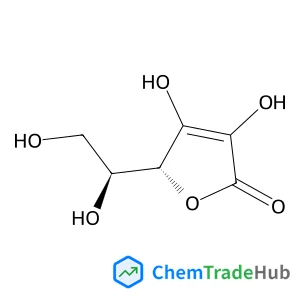
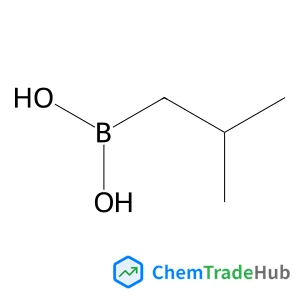
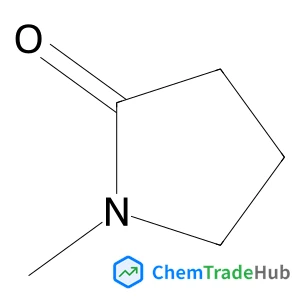
Recommended Compounds
Recommended Suppliers




Disclaimer
This page provides academic journal information for reference and research purposes only. We are not affiliated with any journal publishers and do not handle publication submissions. For publication-related inquiries, please contact the respective journal publishers directly.
If you notice any inaccuracies in the information displayed, please contact us at support@chemtradehub.com. We will promptly review and address your concerns.