












Deep eutectic solvents – a new additive in the encapsulation of lipase B from Candida antarctica: biocatalytic applications
Literature Information
Publication Date
2021-11-23
DOI
10.1039/D1RE00469G
Impact Factor
4.239
Authors
Adrian Ioan Dudu, Laszlo Csaba Bencze, Csaba Paizs, Monica Ioana Toşa
View Original
Abstract
Enzyme encapsulation in a sol–gel matrix can be improved using some additives acting on enzyme activity and/or stability. Ionic liquids, polyhydroxy compounds, sugars, etc. have been previously reported as additives. This study focuses on the possibility to use deep eutectic solvents as additives in the immobilization of lipase B from Candida antarctica (CaL-B) through sol–gel encapsulation. The transesterification of 1-phenylethanol was chosen as a model reaction. Process optimization was successfully performed regarding the most important reaction parameters (an alcohol/lipase weight ratio of 20 : 1, an alcohol/acyl donor molar ratio of 1 : 2, n-hexane as a solvent, 30 °C reaction temperature, vinyl acetate as an acyl donor and a substrate concentration of 100 mM). Under the optimal conditions, the reaction mediated by the most active biocatalyst (SG-3, containing a deep eutectic solvent formed from choline chloride and fructose, as a 30% aqueous solution) reached ∼48% after only four hours, maintaining almost 85% of its initial activity even after eight reaction cycles.
Related Literature
Formal reductive addition of acetonitrile to aldehydes and ketones‡
Karim Muratov, Ekaterina Kuchuk, Sreekumar Vellalath, Oleg I. Afanasyev, Alexei P. Moskovets, Gleb Denisov, Denis Chusov
2018-09-28
Paper
DOI: 10.1039/C8OB01992D
Synthesis of CID-cleavable protein crosslinking agents containing quaternary amines for structural mass spectrometry
Susan E. Hagen, Kun Liu, Yafei Jin, Lolita Piersimoni, Hollis D. Showalter
2018-03-07
Communication
DOI: 10.1039/C8OB00329G
Through-space interactions between face-to-face, center-to-edge oriented arenes: importance of polar–π effects
Franco Cozzi, Rita Annunziata, Maurizio Benaglia, Mauro Cinquini, Laura Raimondi, Kim K. Baldridge, Jay S. Siegel
2002-12-06
Paper
DOI: 10.1039/B208871A
Ruthenium(ii)-catalyzed synthesis of indazolone-fused cinnolines via C–H coupling with diazo compounds
Lin Su, Zheng Yu, Peiling Ren, Zhi Luo, Wei Hou, Hongtao Xu
2018-09-13
Paper
DOI: 10.1039/C8OB02071J
Möbius bis and tris-spiroaromatic systems
David Hall, Henry S. Rzepa
2002-12-02
Paper
DOI: 10.1039/B210415F
Catalytic properties of 4,5-bridged proline methano- and ethanologues in the Hajos–Parrish intramolecular aldol reaction
Sofiane Hocine, Gilles Berger, K. N. Houk, Stephen Hanessian
2021-12-15
Research Article
DOI: 10.1039/D1QO01688A
Radical addition to oximeethers for asymmetric synthesis of β-amino acid derivatives
Hideto Miyabe, Kayoko Fujii, Takeaki Naito
2002-12-16
Paper
DOI: 10.1039/B208823A
Azlactone-based heterobifunctional linkers with orthogonal clickable groups: efficient tools for bioconjugation with complete atom economy
Hien The Ho, Alexandre Bénard, Gwenaël Forcher, Maël Le Bohec, Véronique Montembault, Sagrario Pascual, Laurent Fontaine
2018-09-19
Communication
DOI: 10.1039/C8OB01807C
You might also like
Compound Q&A
What is the market or research trend for N-(4-Methoxybenzyl)-2-pyridinamine (CAS: 52818-63-0)?
N-(4-Methoxybenzyl)-2-pyridinamine (CAS: 52818-63-0) is increasingly being used ...
52818-63-0N-(4-Methoxybenzyl)-...
Compound Q&A
What precautions should be taken when handling Ethyl 4-(2-chlorophenyl)-1,3-thiazole-2-carboxylate (CAS: 1050507-06-6)?
When handling Ethyl 4-(2-chlorophenyl)-1,3-thiazole-2-carboxylate, appropriate p...
1050507-06-6Ethyl 4-(2-chlorophe...
Compound Q&A
What regulatory guidelines apply to diethyldiselane (CAS: 628-39-7)?
Diethyldiselane (CAS: 628-39-7) is classified under the Globally Harmonized Syst...
628-39-7Diethyldiselane
Compound Q&A
What is the market or research trend for oxocopper (CAS: 12053-18-8)?
The market for oxocopper (CAS: 12053-18-8) is primarily driven by its use in cat...
12053-18-8oxocopper; oxo-(oxoc...
Compound Q&A
What is the market or research trend for 5-{[(2-Methyl-2-propanyl)oxy]carbonyl}-5-azaspiro[2.4]heptane-7-carboxylic acid?
The market for 5-{[(2-Methyl-2-propanyl)oxy]carbonyl}-5-azaspiro[2.4]heptane-7-c...
1268519-54-55-{[(2-Methyl-2-prop...
Compound Q&A
What is 2-(1-Pyrrolidinyl)-4-pyridinamine (CAS: 35981-63-6)?
2-(1-Pyrrolidinyl)-4-pyridinamine is a chemical compound with the CAS number 359...
35981-63-62-(1-Pyrrolidinyl)-4...
Compound Q&A
What are the physical and chemical properties of 2-(3-Pyridinyl)-1-azabicyclo[2.2.2]octane (CAS: 91556-75-1)?
2-(3-Pyridinyl)-1-azabicyclo[2.2.2]octane (CAS: 91556-75-1) is a crystalline sol...
91556-75-12-(3-Pyridinyl)-1-az...
Compound Q&A
How is (S)-Alpha-allyl-proline hydrochloride (CAS: 129704-91-2) typically synthesized?
(S)-Alpha-allyl-proline hydrochloride is usually synthesized via a Wittig reacti...
129704-91-2(S)-Alpha-allyl-prol...
Compound Q&A
What is 3-Methyl-1,2-oxazole-5-carboxylic acid (CAS: 4857-42-5)?
3-Methyl-1,2-oxazole-5-carboxylic acid (CAS: 4857-42-5) is an organic compound w...
4857-42-53-Methyl-1,2-oxazole...
Compound Q&A
How is Lys-SMCC-DM1 (CAS: 1281816-04-3) typically synthesized?
Lys-SMCC-DM1 is synthesized via a multi-step process involving the coupling of S...
1281816-04-3Lys-SMCC-DM1
Source Journal
Reaction Chemistry & Engineering

CiteScore:
0
Self-citation Rate:
8.8%
Articles per Year:
284
Reaction Chemistry & Engineering is an interdisciplinary journal reporting cutting-edge research focused on enhancing the understanding and efficiency of reactions. Reaction engineering leverages the interface where fundamental molecular chemistry meets chemical engineering and technology. Challenges in chemistry can be overcome by the application of new technologies, while engineers may find improved solutions for process development from the latest developments in reaction chemistry. Reaction Chemistry & Engineering is a unique forum for researchers whose interests span the broad areas of chemical engineering and chemical sciences to come together in solving problems of importance to wider society. All papers should be written to be approachable by readers across the engineering and chemical sciences. Papers that consider multiple scales, from the laboratory up to and including plant scale, are particularly encouraged.
Recommended Compounds
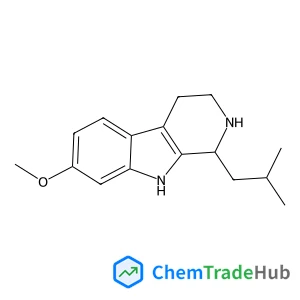
1-Isobutyl-7-methoxy-2,3,4,9-tetrahydro-1H-beta-carboline
CAS Number:
175975-76-5
Molecular Formula:
C16H22N2O
Recommended Suppliers






Disclaimer
This page provides academic journal information for reference and research purposes only. We are not affiliated with any journal publishers and do not handle publication submissions. For publication-related inquiries, please contact the respective journal publishers directly.
If you notice any inaccuracies in the information displayed, please contact us at support@chemtradehub.com. We will promptly review and address your concerns.