



Investigation of the effect of microflow reactor diameter on condensation reactions in l-proline-immobilized polymer monoliths
Literature Information
Publication Date
2021-11-23
DOI
10.1039/D1RE00386K
Impact Factor
4.239
Authors
Seiya Nonaka, Hikaru Matsumoto, Masanori Nagao, Yu Hoshino, Yoshiko Miura
View Original
Abstract
The effect of monolith structure and monolith reactor inner diameter on the residence time distribution (RTD), and the relationship between RTD and the catalytic efficiency of the asymmetric aldol addition reaction between p-nitrobenzaldehyde and cyclohexanone were examined. A monolith column containing L-proline as a catalyst was prepared using poly(ethylene glycol) (PEG) as the porogen. The monolith column prepared with PEG with a molecular weight of 6000 Da displayed a narrow pore size distribution and showed a controlled RTD. The performance of monolith reactors with different inner diameters (micro- and millireactors, 0.53 and 4.00 mm) was compared: the microreactor displayed a narrower RTD and a higher turnover number for the asymmetric aldol addition reaction than the millireactor. The different linear flow velocities in the microreactor did not affect the catalytic reaction efficiency and enantioselectivity, demonstrating that the RTDs can be controlled regardless of the flow velocity.
Recommended Journals

European Journal of Wood and Wood Products

Science

Journal of Organometallic Chemistry

Proceedings of the National Academy of Sciences of the United States of America

Kinetics and Catalysis

Organic Preparations and Procedures International

Journal of Heterocyclic Chemistry

Fibre Chemistry

Journal of Catalysis

Nature
Related Literature
Synthesis of two novel [18F]fluorobenzene-containing radiotracers via spirocyclic iodonium ylides and positron emission tomography imaging of translocator protein (18 kDa) in ischemic brain
Masayuki Fujinaga, Katsushi Kumata, Yiding Zhang, Akiko Hatori, Tomoteru Yamasaki, Wakana Mori, Lin Xie, Ming-Rong Zhang
2018-08-31
Paper
DOI: 10.1039/C8OB01700J
Radical addition to oximeethers for asymmetric synthesis of β-amino acid derivatives
Hideto Miyabe, Kayoko Fujii, Takeaki Naito
2002-12-16
Paper
DOI: 10.1039/B208823A
Silver-catalyzed intermolecular amination of fluoroarenes
Yu Wang, Chenlong Wei, Ruyun Tang, Haosheng Zhan, Jing Lin, Zhenhua Liu, Weihua Tao, Zhongxue Fang
2018-08-15
Communication
DOI: 10.1039/C8OB01749B
Synthesis of 1,3-dithiol-2-ones as proligands related to molybdopterin
Ben Bradshaw, David Collison, C. David Garner, John A. Joule
2002-11-27
Paper
DOI: 10.1039/B209217D
The first synthetic studies on pestalotiopsin A. A stereocontrolled approach to the functionalised bicyclic core
Derek Johnston, Emmanuel Couché, David J. Edmonds, Kenneth W. Muir, David J. Procter
2002-12-13
Paper
DOI: 10.1039/B209066J
Synthesis of 2-trifluoromethylquinolines through rhodium-catalysed redox-neutral [3 + 3] annulation between anilines and CF3-ynones using traceless directing groups
Haichao Huang, Hailong Wang, Chao Gong, Zhenjing Zhuang, Wenmin Feng, Si-Hai Wu, Lianhui Wang
2021-11-29
Research Article
DOI: 10.1039/D1QO01478A
Correction: Synthesis of highly substituted 2-spiropiperidines
Samuel D. Griggs, Nathan Thompson, Daniel T. Tape, Marie Fabre, Paul A. Clarke
2018-08-10
Correction
DOI: 10.1039/C8OB90117A
Androsterone-based gels enable diastereospecific reductions and diastereoselective epoxidations of gelators
Tao Li, Yu Chen, Chunbao Li
2018-09-04
Paper
DOI: 10.1039/C8OB01505H
You might also like
Compound Q&A
What is the market or research trend for N-(4-Methoxybenzyl)-2-pyridinamine (CAS: 52818-63-0)?
N-(4-Methoxybenzyl)-2-pyridinamine (CAS: 52818-63-0) is increasingly being used ...
52818-63-0N-(4-Methoxybenzyl)-...
Compound Q&A
What precautions should be taken when handling Ethyl 4-(2-chlorophenyl)-1,3-thiazole-2-carboxylate (CAS: 1050507-06-6)?
When handling Ethyl 4-(2-chlorophenyl)-1,3-thiazole-2-carboxylate, appropriate p...
1050507-06-6Ethyl 4-(2-chlorophe...
Compound Q&A
What regulatory guidelines apply to diethyldiselane (CAS: 628-39-7)?
Diethyldiselane (CAS: 628-39-7) is classified under the Globally Harmonized Syst...
628-39-7Diethyldiselane
Compound Q&A
What is the market or research trend for oxocopper (CAS: 12053-18-8)?
The market for oxocopper (CAS: 12053-18-8) is primarily driven by its use in cat...
12053-18-8oxocopper; oxo-(oxoc...
Compound Q&A
What is the market or research trend for 5-{[(2-Methyl-2-propanyl)oxy]carbonyl}-5-azaspiro[2.4]heptane-7-carboxylic acid?
The market for 5-{[(2-Methyl-2-propanyl)oxy]carbonyl}-5-azaspiro[2.4]heptane-7-c...
1268519-54-55-{[(2-Methyl-2-prop...
Compound Q&A
What is 2-(1-Pyrrolidinyl)-4-pyridinamine (CAS: 35981-63-6)?
2-(1-Pyrrolidinyl)-4-pyridinamine is a chemical compound with the CAS number 359...
35981-63-62-(1-Pyrrolidinyl)-4...
Compound Q&A
What are the physical and chemical properties of 2-(3-Pyridinyl)-1-azabicyclo[2.2.2]octane (CAS: 91556-75-1)?
2-(3-Pyridinyl)-1-azabicyclo[2.2.2]octane (CAS: 91556-75-1) is a crystalline sol...
91556-75-12-(3-Pyridinyl)-1-az...
Compound Q&A
How is (S)-Alpha-allyl-proline hydrochloride (CAS: 129704-91-2) typically synthesized?
(S)-Alpha-allyl-proline hydrochloride is usually synthesized via a Wittig reacti...
129704-91-2(S)-Alpha-allyl-prol...
Compound Q&A
What is 3-Methyl-1,2-oxazole-5-carboxylic acid (CAS: 4857-42-5)?
3-Methyl-1,2-oxazole-5-carboxylic acid (CAS: 4857-42-5) is an organic compound w...
4857-42-53-Methyl-1,2-oxazole...
Compound Q&A
How is Lys-SMCC-DM1 (CAS: 1281816-04-3) typically synthesized?
Lys-SMCC-DM1 is synthesized via a multi-step process involving the coupling of S...
1281816-04-3Lys-SMCC-DM1
Source Journal
Reaction Chemistry & Engineering

CiteScore:
0
Self-citation Rate:
8.8%
Articles per Year:
284
Reaction Chemistry & Engineering is an interdisciplinary journal reporting cutting-edge research focused on enhancing the understanding and efficiency of reactions. Reaction engineering leverages the interface where fundamental molecular chemistry meets chemical engineering and technology. Challenges in chemistry can be overcome by the application of new technologies, while engineers may find improved solutions for process development from the latest developments in reaction chemistry. Reaction Chemistry & Engineering is a unique forum for researchers whose interests span the broad areas of chemical engineering and chemical sciences to come together in solving problems of importance to wider society. All papers should be written to be approachable by readers across the engineering and chemical sciences. Papers that consider multiple scales, from the laboratory up to and including plant scale, are particularly encouraged.
Recommended Compounds
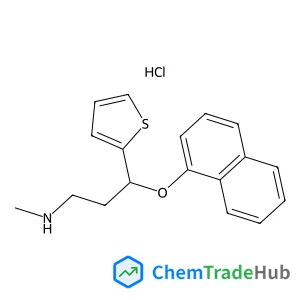
N-Methyl-3-(1-naphthyloxy)-3-(2-thienyl)-1-propanamine hydrochloride (1:1)
CAS Number:
1188266-11-6
Molecular Formula:
C18H20ClNOS
![1,10-bis(3,5-dimethylphenyl)-12-hydroxy-4,5,6,7-tetrahydroiindeno[7,1-de:1',7'-fg][1,3,2]dioxaphosphocine 12-oxide structure](https://static.chemtradehub.com/structs/141/1412439-82-7-b9a9.webp "1,10-bis(3,5-dimethylphenyl)-12-hydroxy-4,5,6,7-tetrahydroiindeno[7,1-de:1',7'-fg][1,3,2]dioxaphosphocine 12-oxide structure")
1,10-bis(3,5-dimethylphenyl)-12-hydroxy-4,5,6,7-tetrahydroiindeno[7,1-de:1',7'-fg][1,3,2]dioxaphosphocine 12-oxide
CAS Number:
1412439-82-7
Molecular Formula:
C33H31O4P
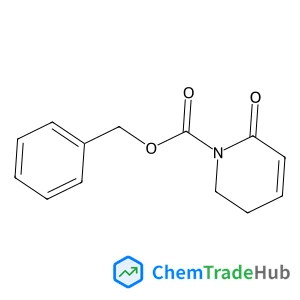
Benzyl 6-oxo-3,6-dihydro-1(2H)-pyridinecarboxylate
CAS Number:
725746-35-0
Molecular Formula:
C13H13NO3
Recommended Suppliers






Disclaimer
This page provides academic journal information for reference and research purposes only. We are not affiliated with any journal publishers and do not handle publication submissions. For publication-related inquiries, please contact the respective journal publishers directly.
If you notice any inaccuracies in the information displayed, please contact us at support@chemtradehub.com. We will promptly review and address your concerns.