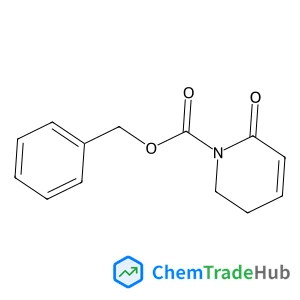
Benzyl 6-oxo-3,6-dihydro-1(2H)-pyridinecarboxylate
CAS Number:
725746-35-0
Molecular Formula:
C13H13NO3
Rolf S. Postma, Leon Lefferts
The effect of addition of ethane and ethylene (C2) on methane coupling at 1000 째C was investigated. A Fe/SiO2 catalyst was used to determine the contributions of catalytic as well as C2 initiated methane activation. The catalyst load as well as the residence times at 1000 째C downstream of the catalyst bed were varied. C2 addition significantly increases methane conversion rates, similarly for both ethane and ethylene, although ethylene is more effective when operating with long residence times in the post-catalytic volume. Methane activation via C2 addition proceeds dominantly in the gas-phase whereas catalytic C2 activation is negligible. The catalyst has no effect on methane conversion when the feed contains more than 2 vol% C2. Product selectivity distribution as well as total hydrocarbon yield at 10% conversion is not influenced by C2 addition, but is influenced by the amount of catalyst as well as residence time in the post-catalytic volume at high temperature. It is proposed that C2 impurities in natural gas change from a nuisance to an advantage by enhancing methane conversion and simplifying purification of the natural gas feed. A process is proposed in which ethylene is recycled back into the reactor to initiate methane coupling, leading to a process converting methane to aromatics.
Per Wiklund, Jan Bergman
DOI: 10.1039/B209505J
Liyu Li, Kunfeng Li, Guangpu Zhang, Yuan Ma, Baobin Cai, Shaohua Li, Hongmei Ding, Jiali Deng, Xiyan Nan, Jing Sun, Yun Wu, Ningsheng Shao, Lihe Zhang, Zhenjun Yang
DOI: 10.1039/C8OB01454J
Eugenius Butkus, Julė Malinauskienė, Sigitas Stončius
DOI: 10.1039/B208422H
Carsten Bolm, Li Xiao, Martin Kesselgruber
DOI: 10.1039/B208345K
Talal F. Al-Azemi, Mickey Vinodh, Fatemeh H. Alipour, Abdirahman A. Mohamod
DOI: 10.1039/C8OB02074D
Girish Singh Bisht, Akanksha M. Pandey, Moreshwar B. Chaudhari, Sandip G. Agalave, Abhishek Kanyal, Krishanpal Karmodiya, Boopathy Gnanaprakasam
DOI: 10.1039/C8OB01852A
Vijay Gupta, Satish K. Pandey, Ravi P. Singh
DOI: 10.1039/C8OB01930D
N-(4-Methoxybenzyl)-2-pyridinamine (CAS: 52818-63-0) is increasingly being used ...
When handling Ethyl 4-(2-chlorophenyl)-1,3-thiazole-2-carboxylate, appropriate p...
Diethyldiselane (CAS: 628-39-7) is classified under the Globally Harmonized Syst...
The market for oxocopper (CAS: 12053-18-8) is primarily driven by its use in cat...
The market for 5-{[(2-Methyl-2-propanyl)oxy]carbonyl}-5-azaspiro[2.4]heptane-7-c...
2-(1-Pyrrolidinyl)-4-pyridinamine is a chemical compound with the CAS number 359...
2-(3-Pyridinyl)-1-azabicyclo[2.2.2]octane (CAS: 91556-75-1) is a crystalline sol...
(S)-Alpha-allyl-proline hydrochloride is usually synthesized via a Wittig reacti...
3-Methyl-1,2-oxazole-5-carboxylic acid (CAS: 4857-42-5) is an organic compound w...
Lys-SMCC-DM1 is synthesized via a multi-step process involving the coupling of S...

Reaction Chemistry & Engineering is an interdisciplinary journal reporting cutting-edge research focused on enhancing the understanding and efficiency of reactions. Reaction engineering leverages the interface where fundamental molecular chemistry meets chemical engineering and technology. Challenges in chemistry can be overcome by the application of new technologies, while engineers may find improved solutions for process development from the latest developments in reaction chemistry. Reaction Chemistry & Engineering is a unique forum for researchers whose interests span the broad areas of chemical engineering and chemical sciences to come together in solving problems of importance to wider society. All papers should be written to be approachable by readers across the engineering and chemical sciences. Papers that consider multiple scales, from the laboratory up to and including plant scale, are particularly encouraged.
![(2R,6S)-6-[(Benzyloxy)methyl]-4-{[(2-methyl-2-propanyl)oxy]carbonyl}-2-morpholinecarboxylic acid structure](https://static.chemtradehub.com/structs/109/1093085-91-6-3382.webp "(2R,6S)-6-[(Benzyloxy)methyl]-4-{[(2-methyl-2-propanyl)oxy]carbonyl}-2-morpholinecarboxylic acid structure")