












![5,10-Dihydroindeno[2,1-a]indene structure](https://static.chemtradehub.com/structs/654/6543-29-9-71ca.webp "5,10-Dihydroindeno[2,1-a]indene structure")
Understanding the origin of structure sensitivity in hydrodechlorination of trichloroethylene on a palladium catalyst
Literature Information
Publication Date
2021-09-17
DOI
10.1039/D1RE00252J
Impact Factor
4.239
Authors
Chaitra S. Shenoy, Tuhin S. Khan, Kirti Verma, Mesfin Tsige, M. Ali Haider, Shelaka Gupta
View Original
Abstract
Periodic density functional theory (DFT) calculations are employed to understand the origin of structure sensitivity in hydrodechlorination (HDC) of trichloroethylene (TCE) over different facets of a palladium catalyst. The HDC reaction is simulated on the terrace (Pd (111) and Pd (100)) and undercoordinated (Pd (211) and Pd (110)) sites of the Pd catalyst. The most stable binding configuration of TCE on the Pd surfaces is observed to be through the di-σ mode of binding, wherein each carbon atom of the TCE molecule is adsorbed atop of the Pd atom. On comparing TCE adsorption over different facets of Pd, a maximum binding energy of −178 kJ mol−1 is calculated over the Pd (110) surface. TCE, upon adsorption on Pd catalyst, undergoes dechlorination followed by hydrogenation of the hydrocarbon intermediates. The activation energies for C–Cl bond dissociation steps are significantly low when compared to the hydrogenation steps. The chlorine released from dechlorination tends to block the active sites, thereby poisoning the surface with high binding energies (B.E > −160 kJ mol−1) on all the surfaces. The trend in chlorine binding energies on Pd facets follows: Pd (110) > Pd (211) > Pd (100) > Pd (111). The removal of surface chlorine is facilitated by its reaction with surface hydrogen to form hydrogen chloride. The activation energy for hydrogen chloride formation is calculated to be 90 kJ mol−1 and 88 kJ mol−1 on Pd (111) and Pd (100) terrace sites, respectively and 109 kJ mol−1 and 118 kJ mol−1 on the step Pd (211) and corrugated Pd (110) facets, respectively. This suggests the ease of removal of Cl as HCl from the terrace sites as compared to the step and corrugated sites. The structure sensitivity in the TCE HDC reaction could possibly arise due to the differences in the energetics of Cl removal on different Pd facets. This mechanistic understanding could provide a rationale for designing suitable catalysts for the HDC of TCE.
Related Literature
Interplay between the spin-selection rule and frontier orbital theory in O2 activation and CO oxidation by single-atom-sized catalysts on TiO2(110)
Xingju Zhao, Jinlei Shi, Yu Jia, Zhengxiao Guo, Jun-Hyung Cho, Zhenyu Zhang
2016-08-09
Paper
DOI: 10.1039/C6CP03168D
Calculation of Raman parameters of real-size zigzag (n, 0) single-walled carbon nanotubes using finite-size models
Teobald Kupka, Michal Stachów, Leszek Stobiński, Jakub Kaminský
2016-08-11
Paper
DOI: 10.1039/C6CP04100K
Nanoshaping field emitters from glassy carbon sheets: a new functionality induced by H-plasma etching
S. Orlanducci, D. Passeri, M. L. Terranova
2016-08-17
Paper
DOI: 10.1039/C6CP03606F
Feynman force components: basis for a solution to the covalent vs. ionic dilemma
Justyna Dominikowska, Mirosław Jabłoński, Marcin Palusiak
2016-08-26
Paper
DOI: 10.1039/C6CP03774G
Bifurcated dissociative photoionization mechanism of acetic acid anhydride revealed by imaging photoelectron photoion coincidence spectroscopy
Krisztina Voronova, Chrissa M. Mozaffari Easter, Krisztián G. Torma, Andras Bodi, Patrick Hemberger, Bálint Sztáray
2016-08-19
Paper
DOI: 10.1039/C6CP05370J
Water-mediated aggregation of 2-butoxyethanol
Shannon R. Pattenaude, Kenji Mochizuki, Dor Ben-Amotz
2016-08-25
Paper
DOI: 10.1039/C6CP04379H
Deciphering the cryptic role of a catalytic electron in a photochemical bond dissociation using excited state aromaticity markers
Ambar Banerjee, Debabrata Halder, Gaurab Ganguly, Ankan Paul
2016-08-12
Paper
DOI: 10.1039/C6CP03789E
Directional dependence of the electronic and transport properties of 2D borophene and borophane
José Eduardo Padilha, Roberto Hiroki Miwa
2016-08-18
Paper
DOI: 10.1039/C6CP05092A
The impact of environment and resonance effects on the site of protonation of aminobenzoic acid derivatives
Jongcheol Seo, Stephan Warnke, Sandy Gewinner, Wieland Schöllkopf, Michael T. Bowers, Gert von Helden
2016-08-22
Paper
DOI: 10.1039/C6CP04941A
Photodissociation dynamics of dinitrite at 355 nm: initiation of a reactive pathway
Lingxuan Wang, Lily Zu
2016-08-17
Paper
DOI: 10.1039/C6CP03049A
You might also like
Compound Q&A
What precautions should be taken when handling lithium chloride hydrate (1:1:1) (CAS: 16712-20-2)?
When handling lithium chloride hydrate (1:1:1) (CAS: 16712-20-2), it is importan...
16712-20-2Lithium chloride hyd...
Compound Q&A
Is 4-(4H-1,2,4-Triazol-4-yl)piperidine (CAS: 690261-92-8) safe?
4-(4H-1,2,4-Triazol-4-yl)piperidine is generally considered safe for use in phar...
690261-92-84-(4H-1,2,4-Triazol-...
Compound Q&A
How should waste containing 1,3-Thiazole-2-carboxamide (CAS: 16733-85-0) be handled?
Waste containing 1,3-Thiazole-2-carboxamide (CAS: 16733-85-0) should be collecte...
16733-85-01,3-Thiazole-2-carbo...
Compound Q&A
What regulatory guidelines apply to 5-(Difluoromethyl)-2-fluorobenzonitrile (CAS: 934175-58-3)?
5-(Difluoromethyl)-2-fluorobenzonitrile (CAS: 934175-58-3) is subject to regulat...
934175-58-35-(Difluoromethyl)-2...
Compound Q&A
How is Methyl 3-acetamido-2-thiophenecarboxylate (CAS: 22288-79-5) typically synthesized?
Methyl 3-acetamido-2-thiophenecarboxylate can be synthesized by the reaction of ...
22288-79-5Methyl 3-acetamido-2...
Compound Q&A
What is 4-Isoquinolinecarbonitrile (CAS: 34846-65-6)?
4-Isoquinolinecarbonitrile is a chemical compound with the CAS number 34846-65-6...
34846-65-64-Isoquinolinecarbon...
Compound Q&A
How should Methyl 1H-1,2,3-triazole-4-carboxylate (CAS: 877309-59-6) be stored?
Store Methyl 1H-1,2,3-triazole-4-carboxylate (CAS: 877309-59-6) in a cool, dry p...
877309-59-6Methyl 1H-1,2,3-tria...
Compound Q&A
What regulatory guidelines apply to 6-Bromo[1,3]thiazolo[5,4-b]pyridin-2-amine (CAS: 1160791-13-8)?
6-Bromo[1,3]thiazolo[5,4-b]pyridin-2-amine (CAS: 1160791-13-8) is subject to the...
1160791-13-86-Bromo[1,3]thiazolo...
Compound Q&A
Is (2S,3S)-2-Ammonio-3-(3,4-dihydroxyphenyl)-3-hydroxypropanoate (CAS: 23651-95-8) safe?
(2S,3S)-2-Ammonio-3-(3,4-dihydroxyphenyl)-3-hydroxypropanoate (CAS: 23651-95-8) ...
23651-95-8(2S,3S)-2-Ammonio-3-...
Compound Q&A
What are the physical and chemical properties of 7-bromo-3-methyl-3,4-dihydroquinazolin-4-one (CAS: 1293987-84-4)?
7-Bromo-3-methyl-3,4-dihydroquinazolin-4-one is a solid with a crystalline form....
1293987-84-47-bromo-3-methyl-3,4...
Source Journal
Reaction Chemistry & Engineering

CiteScore:
0
Self-citation Rate:
8.8%
Articles per Year:
284
Reaction Chemistry & Engineering is an interdisciplinary journal reporting cutting-edge research focused on enhancing the understanding and efficiency of reactions. Reaction engineering leverages the interface where fundamental molecular chemistry meets chemical engineering and technology. Challenges in chemistry can be overcome by the application of new technologies, while engineers may find improved solutions for process development from the latest developments in reaction chemistry. Reaction Chemistry & Engineering is a unique forum for researchers whose interests span the broad areas of chemical engineering and chemical sciences to come together in solving problems of importance to wider society. All papers should be written to be approachable by readers across the engineering and chemical sciences. Papers that consider multiple scales, from the laboratory up to and including plant scale, are particularly encouraged.
Recommended Compounds
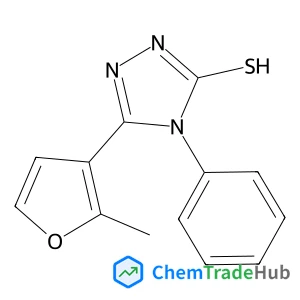
5-(2-Methyl-3-furyl)-4-phenyl-2,4-dihydro-3H-1,2,4-triazole-3-thione
CAS Number:
346464-59-3
Molecular Formula:
C13H11N3OS
Recommended Suppliers






Disclaimer
This page provides academic journal information for reference and research purposes only. We are not affiliated with any journal publishers and do not handle publication submissions. For publication-related inquiries, please contact the respective journal publishers directly.
If you notice any inaccuracies in the information displayed, please contact us at support@chemtradehub.com. We will promptly review and address your concerns.