












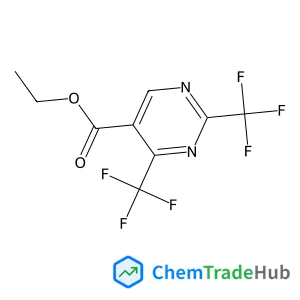
Ethyl 2,4-bis(trifluoromethyl)-5-pyrimidinecarboxylate
CAS Number:
188781-15-9
Molecular Formula:
C9H6F6N2O2
Teobald Kupka, Michal Stachów, Leszek Stobiński, Jakub Kaminský
Structural and selected Raman features of pristine single-walled carbon nanotubes (SWCTNs) with diameters from 0.4 to 1.2 nm and total lengths up to 2.15 nm were studied using the density functional theory (DFT) at the UB3LYP/6-31G* level. Models of different lengths (1, 4, 6 and 10 adjacent bamboo-units) of zigzag (n, 0) SWCNTs, for n ranging from 5 to 15, were studied. Highly systematic changes of individual CC bond lengths and angles along the nanotube axis were observed and described for the longest models. Predicted Raman active radial breathing mode (RBM) vibrational frequencies regularly decreased upon increasing the nanotube diameter and only a negligible effect of the tube length was observed. The changes in calculated RBM frequencies with increasing diameter were close to values estimated using empirical formulas. The experimental G-mode characteristics were reasonably well reproduced using the 4-unit model, especially for tubes with the diameter d > 1 nm. Raman features were also determined for cyclacenes representing the shortest models of SWCNTs. Calculated RBM frequencies of cyclacenes match closely the values for longer SWCNT models but are too inaccurate in the case of the G-mode. For the first time, the Raman properties of SWCNTs were also determined using the Cartesian coordinate tensor (CCT) transfer technique, thus providing reasonable frequencies of Raman active bands for long tubes consisting of 10 bamboo-units.
Ming-Jhe Li, Chien-Chen Lai, Yi-Hung Liu, Shie-Ming Peng, Sheng-Hsien Chiu
DOI: 10.1039/B906075H
Alwin M. D. Wan, Daniel J. Brooks, Abdurrahman Gumus, Claudia Fischbach, George G. Malliaras
DOI: 10.1039/B911130A
Cho-Long Park, Ah Young Jee, Minyung Lee, Sang-gi Lee
DOI: 10.1039/B910836J
Akira Matsumoto, Takashi Endo
DOI: 10.1039/B911689C
Francisco Sarabia, Samy Chammaa, Miguel García-Castro, Francisca Martín-Gálvez
DOI: 10.1039/B912070J
Suseung Lee, Inhee Choi, Surin Hong, Young In Yang, Jeongjin Lee, Taewook Kang, Jongheop Yi
DOI: 10.1039/B910666A
Yun Chen, Hui Li, Shuanglian Cai
DOI: 10.1039/B908853A
Robin B. Bedford, Mark A. Hall, George R. Hodges, Michael Huwe, Mark C. Wilkinson
DOI: 10.1039/B915945B
Binnur Aydogan, Ali Senol Gundogan, Turan Ozturk, Yusuf Yagci
DOI: 10.1039/B914953H
Safa Shoaee, Zesheng An, Xuan Zhang, Stephen Barlow, Seth R. Marder, Warren Duffy, James R. Durrant
DOI: 10.1039/B909071A
When handling lithium chloride hydrate (1:1:1) (CAS: 16712-20-2), it is importan...
4-(4H-1,2,4-Triazol-4-yl)piperidine is generally considered safe for use in phar...
Waste containing 1,3-Thiazole-2-carboxamide (CAS: 16733-85-0) should be collecte...
5-(Difluoromethyl)-2-fluorobenzonitrile (CAS: 934175-58-3) is subject to regulat...
Methyl 3-acetamido-2-thiophenecarboxylate can be synthesized by the reaction of ...
4-Isoquinolinecarbonitrile is a chemical compound with the CAS number 34846-65-6...
Store Methyl 1H-1,2,3-triazole-4-carboxylate (CAS: 877309-59-6) in a cool, dry p...
6-Bromo[1,3]thiazolo[5,4-b]pyridin-2-amine (CAS: 1160791-13-8) is subject to the...
(2S,3S)-2-Ammonio-3-(3,4-dihydroxyphenyl)-3-hydroxypropanoate (CAS: 23651-95-8) ...
7-Bromo-3-methyl-3,4-dihydroquinazolin-4-one is a solid with a crystalline form....

Physical Chemistry Chemical Physics (PCCP) is an international journal co-owned by 19 physical chemistry and physics societies from around the world. This journal publishes original, cutting-edge research in physical chemistry, chemical physics and biophysical chemistry. To be suitable for publication in PCCP, articles must include significant innovation and/or insight into physical chemistry; this is the most important criterion that reviewers and Editors will judge against when evaluating submissions. The journal has a broad scope and welcomes contributions spanning experiment, theory, computation and data science. Topical coverage includes spectroscopy, dynamics, kinetics, statistical mechanics, thermodynamics, electrochemistry, catalysis, surface science, quantum mechanics, quantum computing and machine learning. Interdisciplinary research areas such as polymers and soft matter, materials, nanoscience, energy, surfaces/interfaces, and biophysical chemistry are welcomed if they demonstrate significant innovation and/or insight into physical chemistry. Joined experimental/theoretical studies are particularly appreciated when complementary and based on up-to-date approaches.
![Benzeneacetic acid, 2-bromo-α-[[(1,1-dimethylethoxy)carbonyl]amino]-, (αS)- structure](https://static.chemtradehub.com/structs/122/1228547-87-2-f296.webp "Benzeneacetic acid, 2-bromo-α-[[(1,1-dimethylethoxy)carbonyl]amino]-, (αS)- structure")
![5,10-Dihydroindeno[2,1-a]indene structure](https://static.chemtradehub.com/structs/654/6543-29-9-71ca.webp "5,10-Dihydroindeno[2,1-a]indene structure")



