


Global opportunities and challenges on net-zero CO2 emissions towards a sustainable future
Literature Information
Publication Date
2021-09-21
DOI
10.1039/D1RE00233C
Impact Factor
4.239
Authors
A. Joseph Nathanael, Kumaran Kannaiyan, Aruna K Kunhiraman, Seeram Ramakrishna
View Original
Abstract
In recent years, global warming has been showing its deadliest impact on civilization through natural calamities. Given this situation, sustainable and economically viable CO2 capture, utilization, and storage (CCUS) techniques are the need of the hour more than ever before. Herein, cutting-edge technologies and materials for CO2 capture, conversion, and utilization are briefly discussed. The advances of various carbon capture technologies such as absorption, adsorption, membrane, and biochemical are investigated. Furthermore, the conversion of CO2 into value-added products with the help of single-atom catalysts, plasma technology, metal–organic frameworks (MOFs), and covalent organic frameworks (COFs) is discussed in detail. MOFs and COFs have been receiving a great deal of attention as they offer material design flexibility to enhance the CO2 conversion efficiency. Among the existing methods, plasma technology has received the least attention; however, it has the potential to enhance the conversion rate, as demonstrated. On CO2 utilization, two significant energy-intensive technologies, refrigeration and air-conditioning and the organic Rankine cycle, that have the potential to utilize either pure or blended CO2 as their working fluid, are discussed. Specifically, the blending of CO2 with hydrocarbons has grabbed attention as a potential alternative natural working fluid with minimal environmental impact. The utilization of CO2 in commercial technologies primarily relies on the balance between performance enhancement and environmental benefits. Pilot-scale research projects and opportunities on CCUS technologies have also been discussed.
Recommended Journals

Journal of Organometallic Chemistry

Kinetics and Catalysis

Science

Molecular Pharmacology

Journal of Catalysis

Journal of Heterocyclic Chemistry

Journal of Physics and Chemistry of Solids

Russian Chemical Reviews

Pure and Applied Chemistry

Proceedings of the National Academy of Sciences of the United States of America
Related Literature
Rhodium-catalyzed coupling-cyclization reaction of isocyanides and 2-azidophenyloxyacrylates: synthesis of N-(3-substituted benzo[d]oxazol-2(3H)-ylidene)amines and dihydrobenzo[d]oxazoles
Ming Yang, Xue-Cen Xu, Yue Gong, Yu-Long Zhao
2021-12-06
Research Article
DOI: 10.1039/D1QO01506K
Dependence of selective enclathration on types of cholic acid crystals
Nungruethai Yoswathananont, Kazuki Sada, Mikiji Miyata, Shigendo Akita, Kazunori Nakano
2002-11-29
Paper
DOI: 10.1039/B210544F
Fe-Catalyzed tandem cyclization for the synthesis of 3-nitrofurans from homopropargylic alcohols and Al(NO3)3·9H2O
Ting Wang, Yong Jiang, Yanyan Wang, Rulong Yan
2018-07-02
Communication
DOI: 10.1039/C8OB01184B
Radical addition to oximeethers for asymmetric synthesis of β-amino acid derivatives
Hideto Miyabe, Kayoko Fujii, Takeaki Naito
2002-12-16
Paper
DOI: 10.1039/B208823A
Through-space interactions between face-to-face, center-to-edge oriented arenes: importance of polar–π effects
Franco Cozzi, Rita Annunziata, Maurizio Benaglia, Mauro Cinquini, Laura Raimondi, Kim K. Baldridge, Jay S. Siegel
2002-12-06
Paper
DOI: 10.1039/B208871A
Ruthenium(ii)-catalyzed synthesis of indazolone-fused cinnolines via C–H coupling with diazo compounds
Lin Su, Zheng Yu, Peiling Ren, Zhi Luo, Wei Hou, Hongtao Xu
2018-09-13
Paper
DOI: 10.1039/C8OB02071J
Eugenunilones A–H: rearranged sesquiterpenoids from Eugenia uniflora
Mu Chen, Jia-Qing Cao, Song Ang, Ting-Ni Zeng, Ni-Ping Li, Tang-Jia Yang, Jun-Shan Liu, Yan Wu, Wen-Cai Ye, Lei Wang
2021-12-03
Research Article
DOI: 10.1039/D1QO01629F
Refined methods for the synthesis of meso-substituted A3- and trans-A2B-corroles
Daniel T. Gryko, Beata Koszarna
2002-12-09
Paper
DOI: 10.1039/B208950E
Synthesis and evaluation of N,S-compounds as chiral ligands for transfer hydrogenation of acetophenone
Jenny K. Ekegren, Peter Roth, Klas Källström, Tibor Tarnai, Pher G. Andersson
2002-12-09
Paper
DOI: 10.1039/B208907F
Synthesis of two novel [18F]fluorobenzene-containing radiotracers via spirocyclic iodonium ylides and positron emission tomography imaging of translocator protein (18 kDa) in ischemic brain
Masayuki Fujinaga, Katsushi Kumata, Yiding Zhang, Akiko Hatori, Tomoteru Yamasaki, Wakana Mori, Lin Xie, Ming-Rong Zhang
2018-08-31
Paper
DOI: 10.1039/C8OB01700J
You might also like
Compound Q&A
What is the market or research trend for N-(4-Methoxybenzyl)-2-pyridinamine (CAS: 52818-63-0)?
N-(4-Methoxybenzyl)-2-pyridinamine (CAS: 52818-63-0) is increasingly being used ...
52818-63-0N-(4-Methoxybenzyl)-...
Compound Q&A
What precautions should be taken when handling Ethyl 4-(2-chlorophenyl)-1,3-thiazole-2-carboxylate (CAS: 1050507-06-6)?
When handling Ethyl 4-(2-chlorophenyl)-1,3-thiazole-2-carboxylate, appropriate p...
1050507-06-6Ethyl 4-(2-chlorophe...
Compound Q&A
What regulatory guidelines apply to diethyldiselane (CAS: 628-39-7)?
Diethyldiselane (CAS: 628-39-7) is classified under the Globally Harmonized Syst...
628-39-7Diethyldiselane
Compound Q&A
What is the market or research trend for oxocopper (CAS: 12053-18-8)?
The market for oxocopper (CAS: 12053-18-8) is primarily driven by its use in cat...
12053-18-8oxocopper; oxo-(oxoc...
Compound Q&A
What is the market or research trend for 5-{[(2-Methyl-2-propanyl)oxy]carbonyl}-5-azaspiro[2.4]heptane-7-carboxylic acid?
The market for 5-{[(2-Methyl-2-propanyl)oxy]carbonyl}-5-azaspiro[2.4]heptane-7-c...
1268519-54-55-{[(2-Methyl-2-prop...
Compound Q&A
What is 2-(1-Pyrrolidinyl)-4-pyridinamine (CAS: 35981-63-6)?
2-(1-Pyrrolidinyl)-4-pyridinamine is a chemical compound with the CAS number 359...
35981-63-62-(1-Pyrrolidinyl)-4...
Compound Q&A
What are the physical and chemical properties of 2-(3-Pyridinyl)-1-azabicyclo[2.2.2]octane (CAS: 91556-75-1)?
2-(3-Pyridinyl)-1-azabicyclo[2.2.2]octane (CAS: 91556-75-1) is a crystalline sol...
91556-75-12-(3-Pyridinyl)-1-az...
Compound Q&A
How is (S)-Alpha-allyl-proline hydrochloride (CAS: 129704-91-2) typically synthesized?
(S)-Alpha-allyl-proline hydrochloride is usually synthesized via a Wittig reacti...
129704-91-2(S)-Alpha-allyl-prol...
Compound Q&A
What is 3-Methyl-1,2-oxazole-5-carboxylic acid (CAS: 4857-42-5)?
3-Methyl-1,2-oxazole-5-carboxylic acid (CAS: 4857-42-5) is an organic compound w...
4857-42-53-Methyl-1,2-oxazole...
Compound Q&A
How is Lys-SMCC-DM1 (CAS: 1281816-04-3) typically synthesized?
Lys-SMCC-DM1 is synthesized via a multi-step process involving the coupling of S...
1281816-04-3Lys-SMCC-DM1
Source Journal
Reaction Chemistry & Engineering

CiteScore:
0
Self-citation Rate:
8.8%
Articles per Year:
284
Reaction Chemistry & Engineering is an interdisciplinary journal reporting cutting-edge research focused on enhancing the understanding and efficiency of reactions. Reaction engineering leverages the interface where fundamental molecular chemistry meets chemical engineering and technology. Challenges in chemistry can be overcome by the application of new technologies, while engineers may find improved solutions for process development from the latest developments in reaction chemistry. Reaction Chemistry & Engineering is a unique forum for researchers whose interests span the broad areas of chemical engineering and chemical sciences to come together in solving problems of importance to wider society. All papers should be written to be approachable by readers across the engineering and chemical sciences. Papers that consider multiple scales, from the laboratory up to and including plant scale, are particularly encouraged.
Recommended Compounds
![1-{3-[4-Amino-3-(4-phenoxyphenyl)-1H-pyrazolo[3,4-d]pyrimidin-1-yl]-1-piperidinyl}-2,3-dihydroxy-1-propanone structure](https://static.chemtradehub.com/structs/122/1226872-27-0-e037.webp "1-{3-[4-Amino-3-(4-phenoxyphenyl)-1H-pyrazolo[3,4-d]pyrimidin-1-yl]-1-piperidinyl}-2,3-dihydroxy-1-propanone structure")
1-{3-[4-Amino-3-(4-phenoxyphenyl)-1H-pyrazolo[3,4-d]pyrimidin-1-yl]-1-piperidinyl}-2,3-dihydroxy-1-propanone
CAS Number:
1226872-27-0
Molecular Formula:
C25H26N6O4
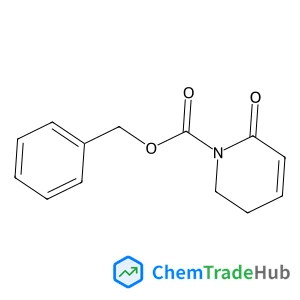
Benzyl 6-oxo-3,6-dihydro-1(2H)-pyridinecarboxylate
CAS Number:
725746-35-0
Molecular Formula:
C13H13NO3
Recommended Suppliers






Disclaimer
This page provides academic journal information for reference and research purposes only. We are not affiliated with any journal publishers and do not handle publication submissions. For publication-related inquiries, please contact the respective journal publishers directly.
If you notice any inaccuracies in the information displayed, please contact us at support@chemtradehub.com. We will promptly review and address your concerns.