












Efficient N-sulfopropylation of chitosan with 1,3-propane sultone in aqueous solutions: neutral pH as the key condition
Literature Information
Publication Date
2021-07-22
DOI
10.1039/D1RE00089F
Impact Factor
4.239
Authors
Abolfazl Heydari, Mahdieh Darroudi
View Original
Abstract
Conjugation of strong anionic sulfonate groups to chitosan (CS) is typically used for converting the weak cationic CS to its polyampholyte derivatives, which are of interest to different areas benefiting from both cationic and anionic groups. The content of anionic charges can be tuned by varying the level of sulfonation, which is a fundamental characteristic expressed as the degree of substitution (DS). The subject of this work is the synthesis of the representative polyampholyte of this class, N-(3-sulfopropyl)chitosan salt (SPCS), by the reaction of CS with 1,3-propane sultone (PrS) in water. According to the literature, this reaction is mostly performed under acidic conditions and should lead to SPCS with high DS values. We found that such DS values are likely overestimated due to the presence of a non-covalently bonded sulfopropyl group, originating from extensive PrS hydrolysis, in the SPCS structure. In this work, the combination of experimental and theoretical approaches resulted in selecting a neutral pH for the SPCS synthesis, which increased the efficiency of the N-sulfopropylation reaction. Quantum chemistry calculations suggest that this finding primarily corresponds with the higher reactivity of PrS to a non-protonated glucosamine unit compared to a protonated one, where the molar fraction of the non-protonated unit at neutral pH is remarkably higher than that at acidic pH. The developed purification conditions make the SPCS free from the non-covalently bonded sulfopropyl groups. We show that true DS values can be obtained by NMR regardless of the level of SPCS purity, and also by elemental analysis for completely pure SPCS. It is noticeable that while the true DS values for SPCS synthesized under acidic conditions are limited to only around 5%, these values range between 25 and 95% for SPCS synthesized under neutral conditions and can be readily controlled by the weight ratio between CS and PrS. Hence, this work provides guidelines for a simple yet feasible and highly effective sulfopropylation reaction with PrS under aqueous conditions.
Related Literature
Deciphering the cryptic role of a catalytic electron in a photochemical bond dissociation using excited state aromaticity markers
Ambar Banerjee, Debabrata Halder, Gaurab Ganguly, Ankan Paul
2016-08-12
Paper
DOI: 10.1039/C6CP03789E
Photoinduced water splitting in pyridine water clusters
Natalia Esteves-López, Stephane Coussan, Claude Dedonder-Lardeux, Christophe Jouvet
2016-08-19
Paper
DOI: 10.1039/C6CP04398D
Evidence of spin-temperature in dynamic nuclear polarization: an exact computation of the EPR spectrum
Filippo Caracciolo, Marta Filibian, Pietro Carretta, Alberto Rosso, Andrea De Luca
2016-08-22
Paper
DOI: 10.1039/C6CP05047F
Ultra-weak interlayer coupling in two-dimensional gallium selenide
R. Longuinhos, J. Ribeiro-Soares
2016-09-01
Paper
DOI: 10.1039/C6CP03806A
Quasi-chemical approximation for polyatomic mixtures
M. V. Dávila, P. M. Pasinetti, A. J. Ramirez-Pastor
2016-08-02
Paper
DOI: 10.1039/C6CP03548E
The study of electron transfer reactions in a dendrimeric assembly: proper utilization of dendrimer fluorescence
Somnath Koley, Subhadip Ghosh
2016-08-18
Communication
DOI: 10.1039/C6CP05054A
Nonresonant electronic transitions induced by vibrational motion in light-induced potentials
Pablo Sampedro, Bo Y. Chang, Ignacio R. Sola
2016-08-24
Paper
DOI: 10.1039/C6CP04761K
The growth and thermal properties of Au deposited on Rh(111): formation of an ordered surface alloy
László Óvári, András Berkó, Gábor Vári, Richárd Gubó, Arnold Péter Farkas
2016-08-17
Paper
DOI: 10.1039/C6CP02128J
Rapid acquisition of wideline MAS solid-state NMR spectra with fast MAS, proton detection, and dipolar HMQC pulse sequences
2016-08-22
Paper
DOI: 10.1039/C6CP04279A
Structure-dependent vibrational dynamics of Mg(BH4)2 polymorphs probed with neutron vibrational spectroscopy and first-principles calculations
James L. White, Wei Zhou, Vitalie Stavila, Leonard E. Klebanoff, Terrence J. Udovic
2016-08-19
Paper
DOI: 10.1039/C6CP04469G
You might also like
Compound Q&A
What precautions should be taken when handling lithium chloride hydrate (1:1:1) (CAS: 16712-20-2)?
When handling lithium chloride hydrate (1:1:1) (CAS: 16712-20-2), it is importan...
16712-20-2Lithium chloride hyd...
Compound Q&A
Is 4-(4H-1,2,4-Triazol-4-yl)piperidine (CAS: 690261-92-8) safe?
4-(4H-1,2,4-Triazol-4-yl)piperidine is generally considered safe for use in phar...
690261-92-84-(4H-1,2,4-Triazol-...
Compound Q&A
How should waste containing 1,3-Thiazole-2-carboxamide (CAS: 16733-85-0) be handled?
Waste containing 1,3-Thiazole-2-carboxamide (CAS: 16733-85-0) should be collecte...
16733-85-01,3-Thiazole-2-carbo...
Compound Q&A
What regulatory guidelines apply to 5-(Difluoromethyl)-2-fluorobenzonitrile (CAS: 934175-58-3)?
5-(Difluoromethyl)-2-fluorobenzonitrile (CAS: 934175-58-3) is subject to regulat...
934175-58-35-(Difluoromethyl)-2...
Compound Q&A
How is Methyl 3-acetamido-2-thiophenecarboxylate (CAS: 22288-79-5) typically synthesized?
Methyl 3-acetamido-2-thiophenecarboxylate can be synthesized by the reaction of ...
22288-79-5Methyl 3-acetamido-2...
Compound Q&A
What is 4-Isoquinolinecarbonitrile (CAS: 34846-65-6)?
4-Isoquinolinecarbonitrile is a chemical compound with the CAS number 34846-65-6...
34846-65-64-Isoquinolinecarbon...
Compound Q&A
How should Methyl 1H-1,2,3-triazole-4-carboxylate (CAS: 877309-59-6) be stored?
Store Methyl 1H-1,2,3-triazole-4-carboxylate (CAS: 877309-59-6) in a cool, dry p...
877309-59-6Methyl 1H-1,2,3-tria...
Compound Q&A
What regulatory guidelines apply to 6-Bromo[1,3]thiazolo[5,4-b]pyridin-2-amine (CAS: 1160791-13-8)?
6-Bromo[1,3]thiazolo[5,4-b]pyridin-2-amine (CAS: 1160791-13-8) is subject to the...
1160791-13-86-Bromo[1,3]thiazolo...
Compound Q&A
Is (2S,3S)-2-Ammonio-3-(3,4-dihydroxyphenyl)-3-hydroxypropanoate (CAS: 23651-95-8) safe?
(2S,3S)-2-Ammonio-3-(3,4-dihydroxyphenyl)-3-hydroxypropanoate (CAS: 23651-95-8) ...
23651-95-8(2S,3S)-2-Ammonio-3-...
Compound Q&A
What are the physical and chemical properties of 7-bromo-3-methyl-3,4-dihydroquinazolin-4-one (CAS: 1293987-84-4)?
7-Bromo-3-methyl-3,4-dihydroquinazolin-4-one is a solid with a crystalline form....
1293987-84-47-bromo-3-methyl-3,4...
Source Journal
Reaction Chemistry & Engineering

CiteScore:
0
Self-citation Rate:
8.8%
Articles per Year:
284
Reaction Chemistry & Engineering is an interdisciplinary journal reporting cutting-edge research focused on enhancing the understanding and efficiency of reactions. Reaction engineering leverages the interface where fundamental molecular chemistry meets chemical engineering and technology. Challenges in chemistry can be overcome by the application of new technologies, while engineers may find improved solutions for process development from the latest developments in reaction chemistry. Reaction Chemistry & Engineering is a unique forum for researchers whose interests span the broad areas of chemical engineering and chemical sciences to come together in solving problems of importance to wider society. All papers should be written to be approachable by readers across the engineering and chemical sciences. Papers that consider multiple scales, from the laboratory up to and including plant scale, are particularly encouraged.
Recommended Compounds
![6,6-Dimethylbicyclo[3.1.1]hept-2-ene-2-carbaldehyde structure](https://static.chemtradehub.com/structs/564/564-94-3-e746.webp "6,6-Dimethylbicyclo[3.1.1]hept-2-ene-2-carbaldehyde structure")
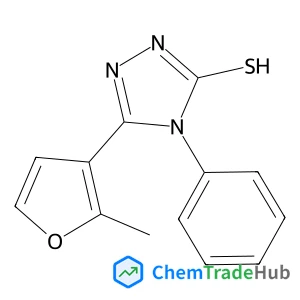
5-(2-Methyl-3-furyl)-4-phenyl-2,4-dihydro-3H-1,2,4-triazole-3-thione
CAS Number:
346464-59-3
Molecular Formula:
C13H11N3OS
![N-[2-(2-Pyridinyl)ethyl]-1-propanamine structure](https://static.chemtradehub.com/structs/554/55496-57-6-22b4.webp "N-[2-(2-Pyridinyl)ethyl]-1-propanamine structure")
Recommended Suppliers








Disclaimer
This page provides academic journal information for reference and research purposes only. We are not affiliated with any journal publishers and do not handle publication submissions. For publication-related inquiries, please contact the respective journal publishers directly.
If you notice any inaccuracies in the information displayed, please contact us at support@chemtradehub.com. We will promptly review and address your concerns.