


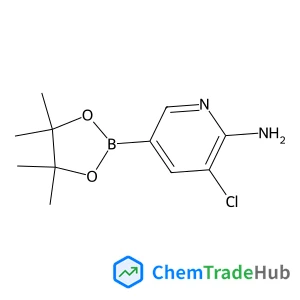
3-Chloro-5-(4,4,5,5-tetramethyl-1,3,2-dioxaborolan-2-yl)-2-pyridinamine
CAS Number:
1032758-99-8
Molecular Formula:
C11H16BClN2O2
Daniel J. Keddie
Bottlebrush polymers are attractive for use in a variety of different applications. Here we report the synthesis of two novel trithiocarbonate RAFT agents bearing either an oxanorbornenyl or norbornenyl moiety for bottlebrush synthesis via ROMP grafting-through polymerization. RAFT polymerization kinetics was evaluated as a function of the monomer type, number-average degree of polymerization (Xn) and RAFT agent structure. The correlation between the oxa/norbornenyl moiety and the type of RAFT monomer (methyl acrylate, n-butyl acrylate, and styrene) has been investigated. The reactivity of the oxa/norbornenyl group of the RAFT agent towards the radical propagating species during RAFT polymerization influences the molar mass, molar mass distribution and the residual olefinic end-group functionality of the resulting polymeric macromonomers. The RAFT synthesized macromonomers (MMs) are subjected to “grafting-through” ROMP using a Grubbs 3rd generation catalyst, resulting in bottlebrush polymers. The ‘defects’ in the MM structures have been found to be responsible for the higher amount of MM residue after the ROMP process and hence affect the microstructures of the synthesized bottlebrush polymers.

Journal of Saudi Chemical Society

Current Opinion in Solid State & Materials Science

New Journal of Chemistry

Crystallography Reports

Acta Materialia

Saudi Pharmaceutical Journal

Chemistry Education Research and Practice

Russian Journal of Coordination Chemistry

Russian Journal of Organic Chemistry

Drug Discovery Today
Stephan Bergmann, Oliver Wrede, Thomas Huser, Thomas Hellweg
DOI: 10.1039/C7CP07648G
Huiyong Sun, Peichen Pan, Feng Zhu, Shan Chang, Lei Xu, Youyong Li
DOI: 10.1039/C7CP08241J
Hengyan Yang, Ding Wang, AiYing Chen, Wei-Lin Dai, Xianglong Zhao
DOI: 10.1039/C8CP03530J
Fahimeh Akbari, Masumeh Foroutan
DOI: 10.1039/C7CP07932J
Markus Kubin, Jan Kern, Meiyuan Guo, Erik Källman, Rolf Mitzner, Vittal K. Yachandra, Marcus Lundberg, Junko Yano, Philippe Wernet
DOI: 10.1039/C8CP03094D
Joonhee Kang, Seung Hyo Noh, Jeemin Hwang, Hoje Chun, Hansung Kim, Byungchan Han
DOI: 10.1039/C8CP03801E
Natalia Rojas-Valencia, Marcela Manrique-Moreno, C. Z. Hadad, Albeiro Restrepo
DOI: 10.1039/C8CP04674C
DOI: 10.1039/C7CP07736J
Henning Schraknepper, Thomas E. Weirich, Roger A. De Souza
DOI: 10.1039/C8CP02191K
Yunyun Huang, Chaoyan Chen, Hongtao Li, Aoxiang Xiao, Tuan Guo, Bai-Ou Guan
DOI: 10.1039/C7CP07915J
This compound is mainly used as an intermediate in the synthesis of antipsychoti...
Waste containing 1-(D-Ribofuranosyl)-1,4-dihydro-3-pyridinecarboxamide (CAS: 191...
2-Methyl-2-propanyl 3-bromo-3-(hydroxymethyl)-1-azetidinecarboxylate (CAS: 20079...
N-(4-Chloro-2-pyridinyl)acetamide (CAS: 245056-66-0) is a chemical compound with...
5-Chloro-2-hydroxybenzoic acid, also known as 5-chlorosalicylic acid, is an arom...
When handling 1,1-Dichloro-1-fluoroethane (CAS: 1717-00-6), it is important to u...
Fmoc-(2S,3R)-3-phenylpyrrolidine-2-carboxylic acid is a white crystalline solid ...
4-Amino-5-bromo-2-pyridinecarboxylic acid is primarily used as a precursor in th...
Handling this compound should be done with personal protective equipment (PPE) i...
When handling 8-bromo-2,2-dimethyl-3,4-dihydro-2H-1,4-benzoxazin-3-one, use prop...

Polymer Chemistry welcomes submissions in all areas of polymer science that have a strong focus on macromolecular chemistry. Manuscripts may cover a broad range of fields, yet no direct application focus is required.
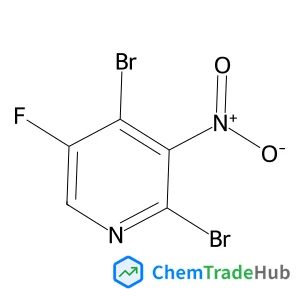
![6-Benzyl-4,5,6,7-tetrahydro-1H-pyrazolo[3,4-c]pyridin-3(2H)-one structure](https://static.chemtradehub.com/structs/909/909187-64-0-f54f.webp "6-Benzyl-4,5,6,7-tetrahydro-1H-pyrazolo[3,4-c]pyridin-3(2H)-one structure")

![2,6-Di(thiophen-2-yl)dithieno[3,2-b:2',3'-d]thiophene structure](https://static.chemtradehub.com/structs/910/910788-24-8-5b70.webp "2,6-Di(thiophen-2-yl)dithieno[3,2-b:2',3'-d]thiophene structure")





