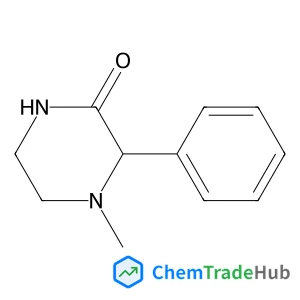
![5-Methyl-4,5,6,7-tetrahydropyrazolo[1,5-a]pyrazin-2-amine structure](https://static.chemtradehub.com/structs/122/1227210-33-4-8d64.webp "5-Methyl-4,5,6,7-tetrahydropyrazolo[1,5-a]pyrazin-2-amine structure")
5-Methyl-4,5,6,7-tetrahydropyrazolo[1,5-a]pyrazin-2-amine
CAS Number:
1227210-33-4
Molecular Formula:
C7H12N4
Yunyun Huang, Chaoyan Chen, Hongtao Li, Aoxiang Xiao, Tuan Guo, Bai-Ou Guan
Recently, although great attention has been paid to the design and exploitation of new classes of near-infrared (NIR) light-induced materials, the photothermal dynamics of these materials have not been fully explored. However, understanding the photothermal dynamics of NIR-light-responsive composites is of fundamental importance from the viewpoint of smart material design and processing at the nanoscale, and for the understanding of a number of related phenomena. Herein, an alternative approach to observe the dynamics of the photothermal process is developed, which relies on probing the local refractive index change in the nanocomposite matrix with a silica microfiber interferometer. In this approach, the light-induced morphological change of the polymer is captured by the microfiber because of the strong evanescent-field interaction, and is translated into a significant wavelength shift in the interferometric fringe. Therefore, probing the matrix to study the local photothermal dynamics is possible. The optical microfiber records various phase-transformation stages of the photothermal nanocomposites induced by different optothermal mechanisms, especially revealing the reconstruction process of Ag@reduced graphene oxide (Ag@G) nanosheets during the initial stage of the photothermal process. The feasibility of using optical fibers for studying the inner mechanism of material phase change is presented herein and it provides a new approach for fundamental investigations into smart material development at the nanoscales.
N. Renaud, M. Hliwa, C. Joachim
DOI: 10.1039/C1CP21221D
Pedro B. Coto, Luis Serrano-Andrés, Thomas Gustavsson, Takashige Fujiwara, Edward C. Lim
DOI: 10.1039/C1CP21089K
Natalya Schmerl, Gunther Andersson
DOI: 10.1039/C1CP20734B
Andrew Das Arulsamy, Zlatko Kregar, Kristina Eleršič, Martina Modic, Uma Shankar Subramani
DOI: 10.1039/C1CP20138G
Tina Ukmar, Miran Gaberšček, Franci Merzel, Aljaž Godec
DOI: 10.1039/C1CP20636B
Nikolaos Bonanos, Jan Rossmeisl, Tejs Vegge
DOI: 10.1039/C1CP20406H
Troels Markussen, Robert Stadler, Kristian S. Thygesen
DOI: 10.1039/C1CP20924H
N. Crivillers, A. Liscio, F. Di Stasio, C. Van Dyck, S. Osella, D. Cornil, S. Mian, G. M. Lazzerini, O. Fenwick, E. Orgiu, F. Reinders, S. Braun, M. Fahlman, J. Cornil, V. Palermo, F. Cacialli, P. Samorì
DOI: 10.1039/C1CP20851A
This compound is mainly used as an intermediate in the synthesis of antipsychoti...
Waste containing 1-(D-Ribofuranosyl)-1,4-dihydro-3-pyridinecarboxamide (CAS: 191...
2-Methyl-2-propanyl 3-bromo-3-(hydroxymethyl)-1-azetidinecarboxylate (CAS: 20079...
N-(4-Chloro-2-pyridinyl)acetamide (CAS: 245056-66-0) is a chemical compound with...
5-Chloro-2-hydroxybenzoic acid, also known as 5-chlorosalicylic acid, is an arom...
When handling 1,1-Dichloro-1-fluoroethane (CAS: 1717-00-6), it is important to u...
Fmoc-(2S,3R)-3-phenylpyrrolidine-2-carboxylic acid is a white crystalline solid ...
4-Amino-5-bromo-2-pyridinecarboxylic acid is primarily used as a precursor in th...
Handling this compound should be done with personal protective equipment (PPE) i...
When handling 8-bromo-2,2-dimethyl-3,4-dihydro-2H-1,4-benzoxazin-3-one, use prop...

Physical Chemistry Chemical Physics (PCCP) is an international journal co-owned by 19 physical chemistry and physics societies from around the world. This journal publishes original, cutting-edge research in physical chemistry, chemical physics and biophysical chemistry. To be suitable for publication in PCCP, articles must include significant innovation and/or insight into physical chemistry; this is the most important criterion that reviewers and Editors will judge against when evaluating submissions. The journal has a broad scope and welcomes contributions spanning experiment, theory, computation and data science. Topical coverage includes spectroscopy, dynamics, kinetics, statistical mechanics, thermodynamics, electrochemistry, catalysis, surface science, quantum mechanics, quantum computing and machine learning. Interdisciplinary research areas such as polymers and soft matter, materials, nanoscience, energy, surfaces/interfaces, and biophysical chemistry are welcomed if they demonstrate significant innovation and/or insight into physical chemistry. Joined experimental/theoretical studies are particularly appreciated when complementary and based on up-to-date approaches.
![tert-Butyl N-[(2-chloropyridin-4-yl)methyl]carbamate structure](https://static.chemtradehub.com/structs/916/916210-27-0-9f95.webp "tert-Butyl N-[(2-chloropyridin-4-yl)methyl]carbamate structure")