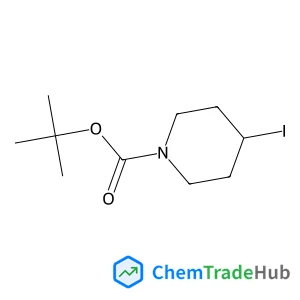
2-Methyl-2-propanyl 4-iodo-1-piperidinecarboxylate
CAS Number:
301673-14-3
Molecular Formula:
C10H18INO2
Tian-Jun Yue, Li-Yang Wang, Wei-Min Ren
Sulfur-containing polymers are polymers containing at least one sulfur atom in the repeat units of their main chains. The incorporation of sulfur atoms into the polymer main chains endows polymers with enhanced properties in many areas, including improved mechanical properties, optical properties, thermal properties, and adhesive abilities toward metal ions. Such enhanced properties make sulfur-containing polymers promising polymeric materials. In terms of environmental issues caused by waste plastic, the utilization of sulfur-containing polymers is also appealing from the aspect of degradability. Hence, degradable sulfur-containing polymers, including poly(thiocarbonate)s, poly(thioester)s, and poly(sulfite)s, are drawing more and more attention. However, the synthesis of these polymers involves problems like mixed structures and weak stereochemistry control of the resultant polymers due to the intrinsic properties of sulfur atoms, such as strong nucleophilicity and coordinative abilities. Thus, tackling the problems caused by sulfur chemistry is the main challenge relating to the precise synthesis of sulfur-containing polymers. Herein, this review describes recent progress made regarding the precise synthesis of sulfur-containing polymers from the perspectives of structure control, stereochemistry control, and topological structure modification.
DOI: 10.1039/C004156B
B. Sivaraman, A. M. Mebel, N. J. Mason, D. Babikov
DOI: 10.1039/C0CP00448K
Teng Wang, Xueguang Shao, Wensheng Cai, Yonglai Xue, Shuai Wang, Xizeng Feng
DOI: 10.1039/C0CP00678E
Nelly Bonnet, David O'Hagan, Georg Hähner
DOI: 10.1039/B923065N
Priyanka Dhage, Divya Repala, Evert C. Duin, Bruce J. Tatarchuk
DOI: 10.1039/C0CP01355B
Carlos A. Silvera-Batista, Randy K. Wang, Philip Weinberg
DOI: 10.1039/B927053A
Guang Feng, Rui Qiao, Jingsong Huang, Sheng Dai, Bobby G. Sumpter, Vincent Meunier
DOI: 10.1039/C0CP02077J
DOI: 10.1039/C0CP01318H
Satoshi Kokubu, Ryoji Kusaka, Yoshiya Inokuchi, Takeharu Haino, Takayuki Ebata
DOI: 10.1039/B924822F
Matthew J. Tucker, Xin Sonia Gai, Edward E. Fenlon, Scott H. Brewer, Robin M. Hochstrasser
DOI: 10.1039/C0CP01625J
Waste containing (6-Bromo-2-naphthyl)oxy](dimethyl)(2-methyl-2-propanyl)silane (...
7-Fluoro-4-isoquinolinecarboxylic acid can be synthesized via a multi-step proce...
2,3,5,6-Tetrabromothieno[3,2-b]thiophene is a crystalline compound with a high m...
1-[4-(Benzylamino)-7,8-dihydro-5H-pyrano[4,3-d]pyrimidin-2-yl]-2-methyl-1H-indol...
The market for imidazo[5,1-d]-1,2,3,5-tetrazine-8-carboxylic acid, 3,4-dihydro-3...
3-(Triisopropylsilyl)propiolaldehyde is a synthetic organic compound with the CA...
6-Nitro-2H-1,4-benzoxazin-3(4H)-one (CAS: 81721-87-1) is subject to various regu...
Waste containing (3-Fluorophenyl)(4-{[(2-methyl-2-propanyl)oxy]carbonyl}-1-piper...
N,N'-4,4'-Biphenyldiyldiisonicotinamide is a white crystalline solid with a mole...
6-Bromo-8-fluoro-2-quinazolinol is primarily used in the pharmaceutical industry...

Polymer Chemistry welcomes submissions in all areas of polymer science that have a strong focus on macromolecular chemistry. Manuscripts may cover a broad range of fields, yet no direct application focus is required.
![2,2'-{2,2-Propanediylbis[(2,6-dibromo-4,1-phenylene)oxy]}diethanol structure](https://static.chemtradehub.com/structs/416/4162-45-2-b3d6.webp "2,2'-{2,2-Propanediylbis[(2,6-dibromo-4,1-phenylene)oxy]}diethanol structure")