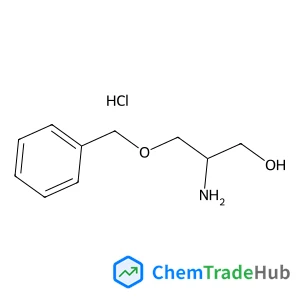
(R)-2-amino-3-(benzyloxy)propan-1-ol hydrochloride
CAS Number:
58577-95-0
Molecular Formula:
C10H16ClNO2
Priyanka Dhage, Divya Repala, Evert C. Duin, Bruce J. Tatarchuk
Fe- and Mn-promoted H2S sorbents Fex–Mny–Zn1−x−yO/SiO2 (x, y = 0, 0.025) for desulfurization of model fuel reformates at room temperature were prepared, tested and characterized. Sulfur uptake capacity at 25 °C significantly exceeds that of both commercial unsupported ZnO sorbents and un-promoted supported ZnO/SiO2 sorbents. Sulfur capacity and breakthrough characteristics remain satisfactory after multiple (∼10) cycles of adsorption/regeneration, with regeneration performed by a simple and robust heating in air. XRD shows that both “calcined” and “spent” sorbents contain nano-dispersed ZnO, and XPS confirms conversion of ZnO to ZnS. “Calcined” sorbent contains Fe3+ and Mn3+ that are reduced to Mn2+ upon reaction with H2S, but not with H2. Operando ESR is used for the first time to study dynamics of reduction of Mn3+ promoter sites simultaneously with measuring sulfidation dynamics of the Fex–Mny–Zn1−x−yO/SiO2 sorbent. Fe cations are believed to occupy the surface of supported ZnO nanocrystallites, while Mn cations are distributed within ZnO.
Jian-Qiang Zhao, Lei Yang, Yong You, Zhen-Hua Wang, Ke-Xin Xie, Xiao-Mei Zhang, Xiao-Ying Xu, Wei-Cheng Yuan
DOI: 10.1039/C9OB00775J
Hwee Ting Ang, Jason P. G. Rygus, Dennis G. Hall
DOI: 10.1039/C9OB01043B
Shinichi Sato, Hiroya Asami, Tomoko Hasegawa, Jun-Ya Kohno, Hiroyuki Nakamura
DOI: 10.1039/C9OB00584F
Claire L. McMullin, Nasir A. Rajabi, James S. Hammerton
DOI: 10.1039/C9OB01092K
Mustafa Uygur, Olga García Mancheño
DOI: 10.1039/C9OB00834A
Anton S. Abel, Andrey V. Cheprakov, Vitaly A. Roznyatovsky, Franck Denat, Alla Bessmertnykh-Lemeune
DOI: 10.1039/C9OB00259F
Julien Malassis, Jean-Baptiste Vendeville, Qui-Hien Nguyen, Marie Boujon, Quentin Gaignard-Gaillard, Mark Light, Bruno Linclau
DOI: 10.1039/C9OB00707E
Jekaterina Hermane, Simone Eichner, Lena Mancuso, Benjamin Schröder, Florenz Sasse, Carsten Zeilinger, Andreas Kirschning
DOI: 10.1039/C9OB00892F
1-(2,4,6-Trifluorophenyl)ethanol is an organic compound with the CAS number 1250...
1-(2,4-Dimethoxybenzyl)-4-(hydroxymethyl)-2-pyrrolidinone (CAS: 919111-34-5) is ...
(7S,15R)-6β,15-Diacetoxy-7α,20-epoxy-7-hydroxykaura-2,16-dien-1-one is a crystal...
The compound rac-ethyl (1r,4r)-4-hydroxycyclohexane-1-carboxylate, trans (CAS: 3...
The market for 2-(2,4-Difluorophenoxy)-3-nitropyridine (CAS: 175135-62-3) is cur...
The main uses of 6-Diazo-5-oxo-L-norleucine (CAS: 157-03-9) include research in ...
When handling 2-Aminoethyl-mono-amide-DOTA-tris(tBu ester) (CAS: 173308-19-5), i...
5-Methylimidazo[1,2-a]pyridine-3-carbaldehyde (CAS: 178488-37-4) can be synthesi...
There are alternative reagents that can be used in the synthesis of 2,4,6-Trihyd...
(2Z)-3-(5-Fluoro-1H-indol-3-yl)-2-sulfanylacrylic acid is a chemical compound wi...

Physical Chemistry Chemical Physics (PCCP) is an international journal co-owned by 19 physical chemistry and physics societies from around the world. This journal publishes original, cutting-edge research in physical chemistry, chemical physics and biophysical chemistry. To be suitable for publication in PCCP, articles must include significant innovation and/or insight into physical chemistry; this is the most important criterion that reviewers and Editors will judge against when evaluating submissions. The journal has a broad scope and welcomes contributions spanning experiment, theory, computation and data science. Topical coverage includes spectroscopy, dynamics, kinetics, statistical mechanics, thermodynamics, electrochemistry, catalysis, surface science, quantum mechanics, quantum computing and machine learning. Interdisciplinary research areas such as polymers and soft matter, materials, nanoscience, energy, surfaces/interfaces, and biophysical chemistry are welcomed if they demonstrate significant innovation and/or insight into physical chemistry. Joined experimental/theoretical studies are particularly appreciated when complementary and based on up-to-date approaches.

![2-Methyl-2-propanyl 1,6-diazaspiro[3.4]octane-6-carboxylate structure](https://static.chemtradehub.com/structs/115/1158749-79-1-81ee.webp "2-Methyl-2-propanyl 1,6-diazaspiro[3.4]octane-6-carboxylate structure")