












Synthesis of telechelic polyolefins
Literature Information
Publication Date
2021-09-01
DOI
10.1039/D1PY00819F
Impact Factor
5.582
Authors
Tianwei Yan
View Original
Abstract
Telechelic polymers, polymers with two reactive end-groups, are sought after for their role in synthesizing macromolecules with complex structures such as multiblock copolymers and graft polymers. Many strategies for the synthesis of telechelic polymers from vinyl monomers using controlled radical polymerizations and anionic polymerizations exist. However, polyolefins—which account for the major fraction of polymer production—are not easily synthesized with two reactive end-groups. This difficulty is related to the sensitivity of olefin polymerization catalysts and their propensity for intramolecular chain transfer reactions. As a result, the most common strategies to access telechelic polyethylene and polypropylene (the two major polyolefins) do not rely on the insertion polymerization of ethylene nor propylene but rather on the polymerization of dienes or cyclic olefins. Nonetheless, recent advances in insertion polymerization and post-polymerization functionalization have resulted in the emergence of novel synthetic methods to access telechelic polyolefins. We here present a comprehensive review of all of these strategies to synthesize telechelic polyolefins.
Related Literature
High-pressure reactivity of clathrate hydrates by two-photon dissociation of water
2010-12-13
Perspective
DOI: 10.1039/C0CP01318H
Laser spectroscopic study on (dibenzo-24-crown-8-ether)–water and –methanol complexes in supersonic jets
Satoshi Kokubu, Ryoji Kusaka, Yoshiya Inokuchi, Takeharu Haino, Takayuki Ebata
2010-02-25
Paper
DOI: 10.1039/B924822F
A detailed TPD study of H2O and pre-adsorbed O on the stepped Pt(553) surface
Maria J. T. C. van der Niet, Angela den Dunnen, Ludo B. F. Juurlink, Marc T. M. Koper
2010-12-01
Paper
DOI: 10.1039/C0CP01162B
Photoionization of 2-pyridone and 2-hydroxypyridine
J. C. Poully, J. P. Schermann, N. Nieuwjaer, F. Lecomte, G. Grégoire, C. Desfrançois, G. A. Garcia, L. Nahon, D. Nandi, L. Poisson, M. Hochlaf
2010-03-02
Paper
DOI: 10.1039/B923630A
Surface reaction and transport in mixed conductors with electrochemically-active surfaces: a 2-D numerical study of ceria
Francesco Ciucci, William C. Chueh, David G. Goodwin, Sossina M. Haile
2010-11-30
Paper
DOI: 10.1039/C0CP01219J
On the electron-induced isotope fractionation in low temperature 32O2/36O2 ices—ozone as a case study
B. Sivaraman, A. M. Mebel, N. J. Mason, D. Babikov
2010-11-15
Communication
DOI: 10.1039/C0CP00448K
Conformations and vibrational spectra of a model tripeptide: change of secondary structure upon micro-solvation
Hui Zhu, Martine Blom, Isabel Compagnon, Anouk M. Rijs, Santanu Roy, Gert von Helden, Burkhard Schmidt
2010-02-23
Paper
DOI: 10.1039/B926413B
Insulin dimer dissociation and unfolding revealed by amide I two-dimensional infrared spectroscopy
Ziad Ganim, Kevin C. Jones, Andrei Tokmakoff
2010-03-05
Paper
DOI: 10.1039/B923515A
You might also like
Compound Q&A
How should waste containing (6-Bromo-2-naphthyl)oxy](dimethyl)(2-methyl-2-propanyl)silane be handled?
Waste containing (6-Bromo-2-naphthyl)oxy](dimethyl)(2-methyl-2-propanyl)silane (...
100751-65-3[(6-Bromo-2-naphthyl...
Compound Q&A
How is 7-Fluoro-4-isoquinolinecarboxylic acid (CAS: 1841081-40-0) typically synthesized?
7-Fluoro-4-isoquinolinecarboxylic acid can be synthesized via a multi-step proce...
1841081-40-07-Fluoro-4-isoquinol...
Compound Q&A
What are the physical and chemical properties of 2,3,5,6-Tetrabromothieno[3,2-b]thiophene (CAS: 124638-53-5)?
2,3,5,6-Tetrabromothieno[3,2-b]thiophene is a crystalline compound with a high m...
124638-53-52,3,5,6-Tetrabromoth...
Compound Q&A
Is 1-[4-(Benzylamino)-7,8-dihydro-5H-pyrano[4,3-d]pyrimidin-2-yl]-2-methyl-1H-indole-4-carboxamide (CAS: 1542705-92-9) safe?
1-[4-(Benzylamino)-7,8-dihydro-5H-pyrano[4,3-d]pyrimidin-2-yl]-2-methyl-1H-indol...
1542705-92-91-[4-(Benzylamino)-7...
Compound Q&A
What is the market or research trend for imidazo[5,1-d]-1,2,3,5-tetrazine-8-carboxylic acid, 3,4-dihydro-3-methyl-4-oxo- (CAS: 113942-30-6)?
The market for imidazo[5,1-d]-1,2,3,5-tetrazine-8-carboxylic acid, 3,4-dihydro-3...
113942-30-6Imidazo[5,1-d]-1,2,3...
Compound Q&A
What is 3-(Triisopropylsilyl)propiolaldehyde (CAS: 163271-80-5)?
3-(Triisopropylsilyl)propiolaldehyde is a synthetic organic compound with the CA...
163271-80-53-(Triisopropylsilyl...
Compound Q&A
What regulatory guidelines apply to 6-Nitro-2H-1,4-benzoxazin-3(4H)-one (CAS: 81721-87-1)?
6-Nitro-2H-1,4-benzoxazin-3(4H)-one (CAS: 81721-87-1) is subject to various regu...
81721-87-16-Nitro-2H-1,4-benzo...
Compound Q&A
How should waste containing (3-Fluorophenyl)(4-{[(2-methyl-2-propanyl)oxy]carbonyl}-1-piperazinyl)acetic acid (CAS: 885272-91-3) be handled?
Waste containing (3-Fluorophenyl)(4-{[(2-methyl-2-propanyl)oxy]carbonyl}-1-piper...
885272-91-3(3-Fluorophenyl)(4-{...
Compound Q&A
What are the physical and chemical properties of N,N'-4,4'-Biphenyldiyldiisonicotinamide (CAS: 55119-40-9)?
N,N'-4,4'-Biphenyldiyldiisonicotinamide is a white crystalline solid with a mole...
55119-40-9N,N'-4,4'-Biphenyldi...
Compound Q&A
What industries use 6-Bromo-8-fluoro-2-quinazolinol (CAS: 1036756-15-6)?
6-Bromo-8-fluoro-2-quinazolinol is primarily used in the pharmaceutical industry...
1036756-15-66-Bromo-8-fluoro-2-q...
Source Journal
Polymer Chemistry

CiteScore:
8.6
Self-citation Rate:
7.3%
Articles per Year:
457
Polymer Chemistry welcomes submissions in all areas of polymer science that have a strong focus on macromolecular chemistry. Manuscripts may cover a broad range of fields, yet no direct application focus is required.
Recommended Compounds
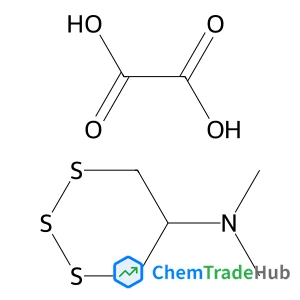
Oxalic acid compound with cyclohexylsulfamothioic O-acid (11)
CAS Number:
31895-22-4
Molecular Formula:
C7H13NO4S3
Recommended Suppliers




Disclaimer
This page provides academic journal information for reference and research purposes only. We are not affiliated with any journal publishers and do not handle publication submissions. For publication-related inquiries, please contact the respective journal publishers directly.
If you notice any inaccuracies in the information displayed, please contact us at support@chemtradehub.com. We will promptly review and address your concerns.